Translated from French (please notify us of errors)
In high summer, an hour in the Roman world could last nearly seventy-five minutes. In winter, it lasted only forty-five. The Romans set their days by the sun, with hours that lengthened or shortened with the seasons. It is a puzzling system for us, which our simulator will help explain.
“May the gods destroy the man who first invented hours!” The man who utters this curse is hungry. In the old days, he explains, his stomach served as his sundial. He ate as soon as it demanded, provided he had something to sink his teeth into. But since sundials were installed, he has to wait for mealtime, even when the food is ready.
This tirade comes from a comedy entitled Boeotia, attributed to Plautus, of which Aulus Gellius preserved a few lines[1]. The character is a parasite, always on the lookout for a free dinner. He concludes that Rome is now so cluttered with sundials that its inhabitants drag themselves through the streets, shrivelled with hunger.
The joke assumes that the audience knew these instruments well. Yet the Romans had not always lived by numbered hours. For a long time, sunrise, noon and nightfall had been enough to provide the main reference points. Pliny the Elder relates that an attendant of the consuls was tasked with announcing noon when he caught sight of the sun, from the Curia, between the Rostra and the Graecostasis, two monuments of the Forum[2].
The arrival of sundials changed people’s habits. Still, one had to know what time they were showing.
Hours that lengthen with the days
The Romans divided the period between sunrise and sunset into twelve equal parts, from the hora prima to the hora duodecima. The night also had twelve hours, from sunset to sunrise. This division into twelve hours of day and twelve hours of night came from Egypt, where the movement of the stars was used, among other methods, to track the hours of the night. The Greeks adopted and refined it before it took hold in Rome. Censorinus, in the third century CE, presents this system as something known to all[3].
Days are longer in summer than in winter. The length of each hour therefore varied over the seasons. The sixth hour, hora sexta, thus covered the period before solar noon, while the seventh began at noon. Systematically translating the sixth hour as “noon” therefore confuses an interval with its end point. In high summer in Rome, the hora sexta could begin at around 10.45am local solar time, whereas in winter it began at around 11.15am.
The length of the day also depended on latitude. On 21 June, the sun shone longer in Londinium, present-day London, than in Alexandria.
Ninety-nine years at the wrong time
The Romans themselves ran into some difficulties with their clocks. Pliny relates that in 263 BCE the consul Manius Valerius Messalla had a sundial brought back from Catania, in Sicily, set up near the Rostra. The instrument, however, had been built for a different latitude: its hour lines did not correctly match the course of the sun in the Roman sky.
According to Pliny, the people of Rome nevertheless went on relying on it for ninety-nine years. It was not until 164 BCE that a censor had a better-calibrated sundial installed nearby[4].
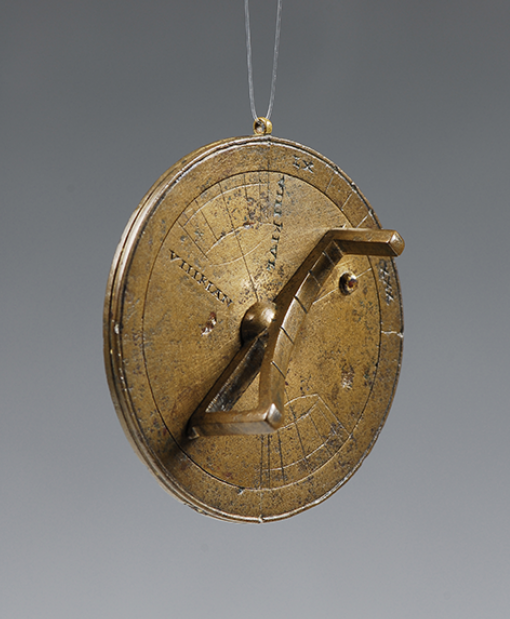
There was nothing improvised, however, about the making of these instruments. On ancient sundials, the shadow of a rod, called a gnomon, travelled across a network of hour lines and seasonal curves drawn according to geometric principles. Some models were small enough to be carried around.
Their weakness lay elsewhere: no sun, no shadow. To measure time in bad weather or at night, water clocks, or clepsydras, were also used. Some were fitted with mechanisms that adapted their readings to the varying length of the hours. Vitruvius describes several of them in his treatise on architecture[5].
At night, soldiers also used a division into four vigiliae, or watches. Each represented a quarter of the night, that is, three night hours. A watch was therefore considerably longer in December than in June.
A time to work, to eat and to rest
Having clocks did not, moreover, guarantee knowing the exact time. Seneca, in his satire on the death of the emperor Claudius, admits that he cannot specify the moment of death: “It would be easier to get philosophers to agree than clocks.” He merely places the event between the sixth and the seventh hour[6].
Petronius takes the joke even further. His extravagant Trimalchio keeps a clock in his dining room and employs a trumpeter whose job is to tell him at regular intervals how much of his life he has already lost[7].
A Roman day by Martial’s clock
At the end of the first century CE, Martial amuses himself by setting out Rome’s daily timetable in a few lines of verse. Here is the day as he tells it in his Epigrams (4, 8).
| 1st and 2nd hours | Courtesy calls |
| 3rd hour | Lawyers’ pleadings |
| 4th and 5th hours | Work and business |
| 6th and 7th hours | Rest |
| 8th hour | Physical exercise |
| 9th hour | Meal |
| 10th hour | A good moment to present one’s poems to the emperor |
Martial is not describing the day of every Roman. He evokes the habits of certain urban circles, with a literary aim: finding the right moment to submit his verses to the emperor[8]. The sixth hour, devoted to rest, has left a trace in our vocabulary: the word “siesta” comes from the Spanish siesta, itself derived from the Latin sexta.
[1] Aulus Gellius, Attic Nights, 3, 3, 5. Fragment of the Boeotia, a comedy attributed to Plautus:
Ut illum di perdant, primus qui horas repperit, / quique adeo primus statuit hic solarium! / Qui mihi comminuit misero articulatim diem. / Nam me puero venter erat solarium / multo omnium istorum optimum et verissimum: / ubi is te monebat, esses, nisi cum nihil erat. / Nunc etiam quod est, non estur, nisi soli libet; / itaque adeo iam oppletum oppidum est solariis, / maior pars populi aridi reptant fame.
“May the gods destroy the man who first invented hours, and the man who first set up a sundial here! It was he who, to my misfortune, chopped my day into little pieces. When I was a boy, my stomach was my sundial, far better and more accurate than all the others. When it gave me warning, I ate, provided there was something to eat. Now, even when there is something to eat, no one eats unless the sun allows it. The town is now so full of sundials that most of its inhabitants drag themselves about, shrivelled with hunger.”[2] Pliny the Elder, Natural History, 7, 212:
XII tabulis ortus tantum et occasus nominantur, post aliquot annos adiectus est et meridies, accenso consulum id pronuntiante, cum a curia inter Rostra et Graecostasin prospexisset solem.
“In the law of the Twelve Tables, only sunrise and sunset are mentioned. A few years later, noon was added, announced by an attendant of the consuls when, from the Curia, he caught sight of the sun between the Rostra and the Graecostasis.”[3] Censorinus, De die natali, 23, 6:
In horas XII diem divisum esse noctemque in totidem vulgo notum est; sed hoc credo Romae post reperta solaria observatum. Quorum antiquissimum quod fuerit, inventu difficile est: alii enim apud aedem Quirini primum statutum dicunt, alii in Capitolio, nonnulli ad aedem Dianae in Aventino.
“Everyone knows that the day is divided into twelve hours and the night into as many. But I believe that this practice was observed in Rome only after sundials appeared. It is difficult to determine which was the oldest: some say that the first was set up near the temple of Quirinus, others on the Capitol, others still near the temple of Diana on the Aventine.”[4] Pliny the Elder, Natural History, 7, 214:
Nec congruebant ad horas eius lineae, paruerunt tamen ei annis undecentum, donec Q. Marcius Philippus, qui cum L. Paulo fuit censor, diligentius ordinatum iuxta posuit.
“Its lines did not, however, match the hours, yet people followed it for ninety-nine years, until Quintus Marcius Philippus, censor with Lucius Paulus, set up another beside it, calibrated with greater care.”[5] Vitruvius, De architectura, 9, 8, 7:
In columella horae ex analemmatos transverse describantur, menstruaeque lineae columella signentur. Eaque columna versatilis perficiatur, uti ad sigillum virgulamque, qua virgula egrediens sigillum ostendit horas, columna versando continenter sui cuiusque mensis brevitates et crescentias faciat horarum.
“Let the hours be drawn crosswise on the small column according to the analemma, and let the lines of the months also be marked on it. This column shall be made to rotate, so that, as it turns before the figurine and the rod with which the figurine, as it rises, indicates the hours, it makes the shortening or lengthening of their duration correspond to each month.”[6] Seneca, Apocolocyntosis of the Divine Claudius, 2:
Puto magis intellegi, si dixero: mensis erat October, dies III idus Octobris. Horam non possum certam tibi dicere, facilius inter philosophos quam inter horologia conveniet, tamen inter sextam et septimam erat.
“I think I shall be better understood if I say that it was October, the third day before the Ides, that is, 13 October. I cannot tell you the exact hour: it would be easier to get philosophers to agree than clocks. It was, however, between the sixth and the seventh hour.”[7] Petronius, Satyricon, 26:
Trimalchio, lautissimus homo. Horologium in triclinio et bucinatorem habet subornatum, ut subinde sciat quantum de vita perdiderit!
“Trimalchio is a man of extraordinary luxury. He has a clock in his dining room and a trumpeter whose job is to tell him at regular intervals how much of his life he has already lost!”[8] Martial, Epigrams, 4, 8, lines 1–6:
Prima salutantes atque altera conterit hora, / exercet raucos tertia causidicos, / in quintam varios extendit Roma labores, / sexta quies lassis, septima finis erit, / sufficit in nonam nitidis octava palaestris, / imperat extructos frangere nona toros.
“The first and second hours are worn away in courtesy calls; the third keeps the lawyers busy until they are hoarse. Rome stretches out its various occupations until the fifth hour. The sixth is the hour of rest for the weary, the seventh will mark its end. The eighth is enough for exercise in the gymnasium, until the ninth. The ninth bids us lie down on the couches set out for the meal.”
Roman date calculator
Convert a date into Kalends, Nones and Ides
The Roman calendar
Understand the months, festivals and favourable days
Number converter
Convert Arabic numerals into Roman numerals
Greek abacus
Calculate with counters like a Greek
Other articles in English from the Nunc est bibendum blog