Translated from french (please notify us of errors)
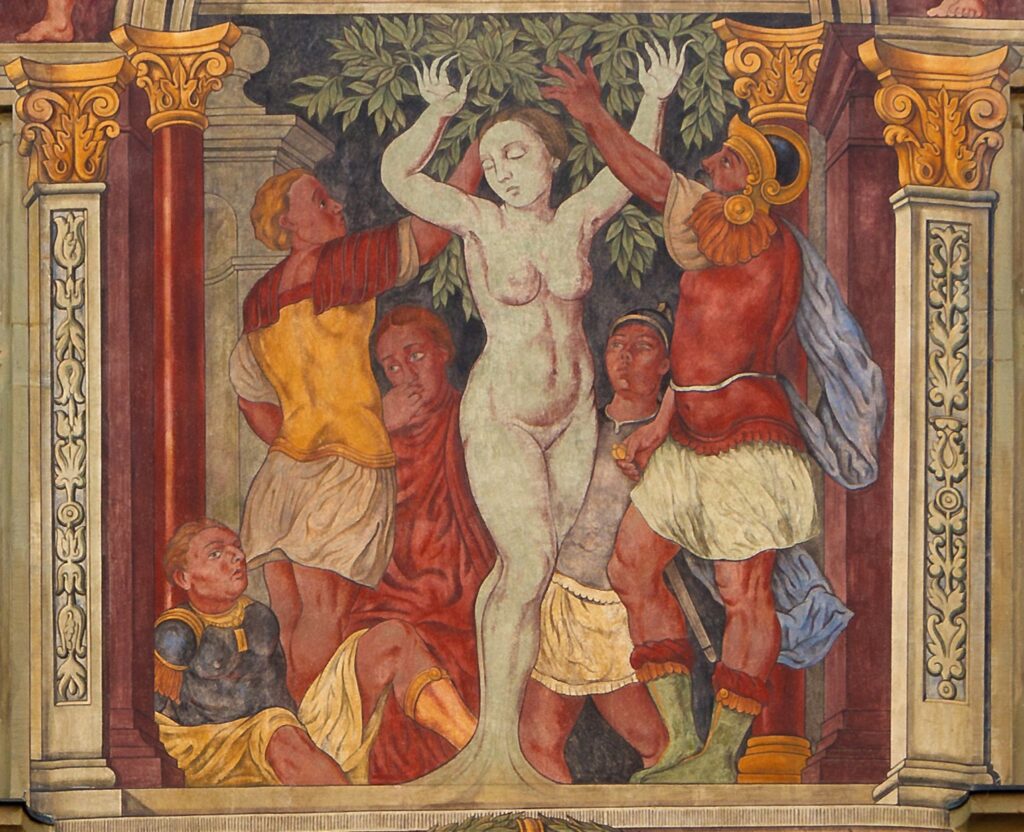
One readily imagines the Lotus-eaters offering Odysseus a flower of the Egyptian lotus, its pale blue petals contrasting with yellow stamens. A mistake: what the Homeric hero’s companions eat, to the point of forgetting even their desire to return home, is certainly not the flower of an aquatic water-lily, but the fruit of a shrub. The Ancients, for their part, already knew the difference.
Odysseus tells Alcinous how, on rounding Cape Malea, a contrary wind drove him off course for nine days, far from any known route, until it cast his squadron upon an unknown land: that of the Lotus-eaters.
‘Whoever among them ate the honey-sweet fruit of the lotus no longer wished to bring back word or return home; they wanted to stay there among the Lotus-eaters, feeding on lotus, forgetting their homecoming.’[1]
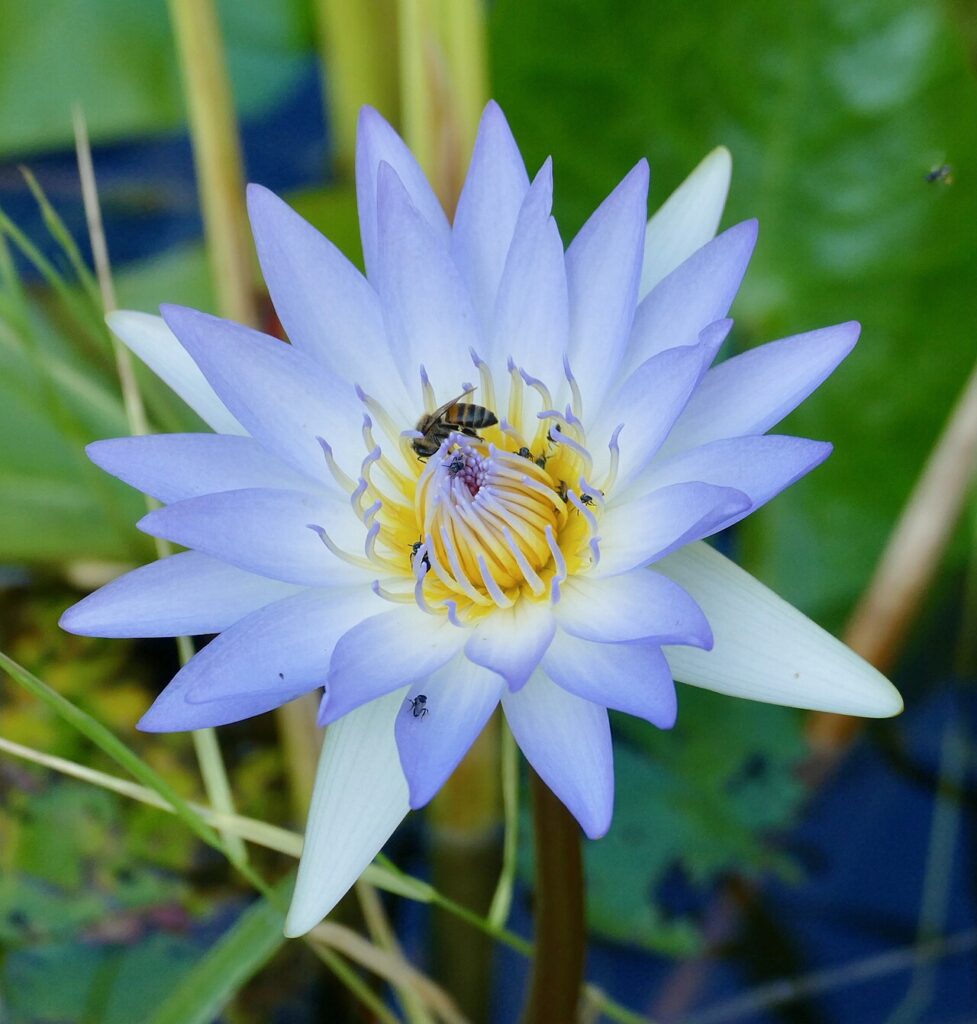
Nothing hostile in the Lotus-eaters’ welcome. The inhabitants simply offer Odysseus’s scouts the fruit that nourishes them. Those who taste it no longer wish to leave: they forget even the wish to return home, and Odysseus has to drag them back to the ships in tears, to bind them beneath the rowers’ benches.
The Greek text does not say that these men lose their memory. What they abandon, quite precisely, is the nostos (νόστος), the homecoming – not the recollection of who they are.
Homer describes the Lotus-eaters literally as those who ‘eat a flowery food’. The qualifier may evoke its appearance or its scent. But that was enough for many modern commentators to conjure the image of a people feeding on flowers, and in particular those of an aquatic plant: the sacred lotus of the banks of the Nile. Ten lines further on, however, the text of the Odyssey specifies: ‘the fruit of the lotus, sweet as honey’. A fruit, then, not a bouquet.
The Ancients were already investigating
The authors who, after Homer, sought to locate and describe this lotus were no more inclined to confuse it with the Egyptian water-lily. Herodotus places the Lotus-eaters on the Libyan coast and compares the sweetness of their fruit to that of the date, noting that wine was also made from it[2]. Theophrastus, in his Enquiry into Plants, gives the fullest description we still possess: a tree or shrub the size of a pear tree, with jagged leaves like those of the holm oak, its fruit as large as a bean, ripening by changing colour like a bunch of grapes, growing close together on the branches in the manner of myrtle berries[3]. Nothing in this description recalls, however remotely, an aquatic plant.
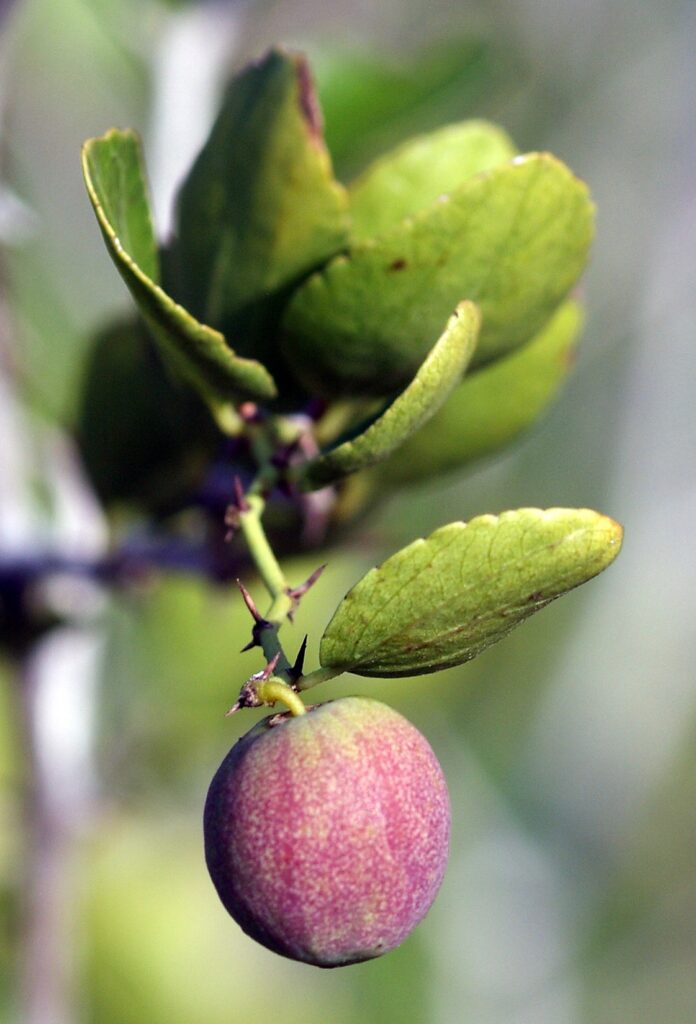
Polybius goes further still: having seen the plant with his own eyes, if we are to believe Athenaeus, who has passed this account down to us, he describes a thorny shrub with leaves resembling those of the buckthorn. Its fruit, at first comparable to a white myrtle berry, turns purple as it grows, until it reaches the size of a round olive. It was prepared differently depending on whether it was intended for slaves or for free men; a sweet wine, comparable to a honeyed wine, was also made from it, as well as vinegar[4]. In Polybius too, there is no trace of any power of forgetting.
The Periplus attributed to Scylax, composed in the 4th century BCE, locates an island – the Bracheiôn of the Ancients, traditionally identified with present-day Djerba – where two kinds of lotus were found: one that was eaten, the other from which wine was made, one of the two bearing a fruit the size of an arbutus berry[5]. Strabo, centuries later, places the same land at Meninx and states that an altar of Odysseus was still shown there in his day[6]. Pliny the Elder, finally, sums up the tradition: the tree grows around the Syrtes and among the Nasamones; its fruit is the colour of saffron, and its sweetness, he writes, gave its name to the people and the land – a land ‘too welcoming’, which made strangers forget even their own homeland[7].
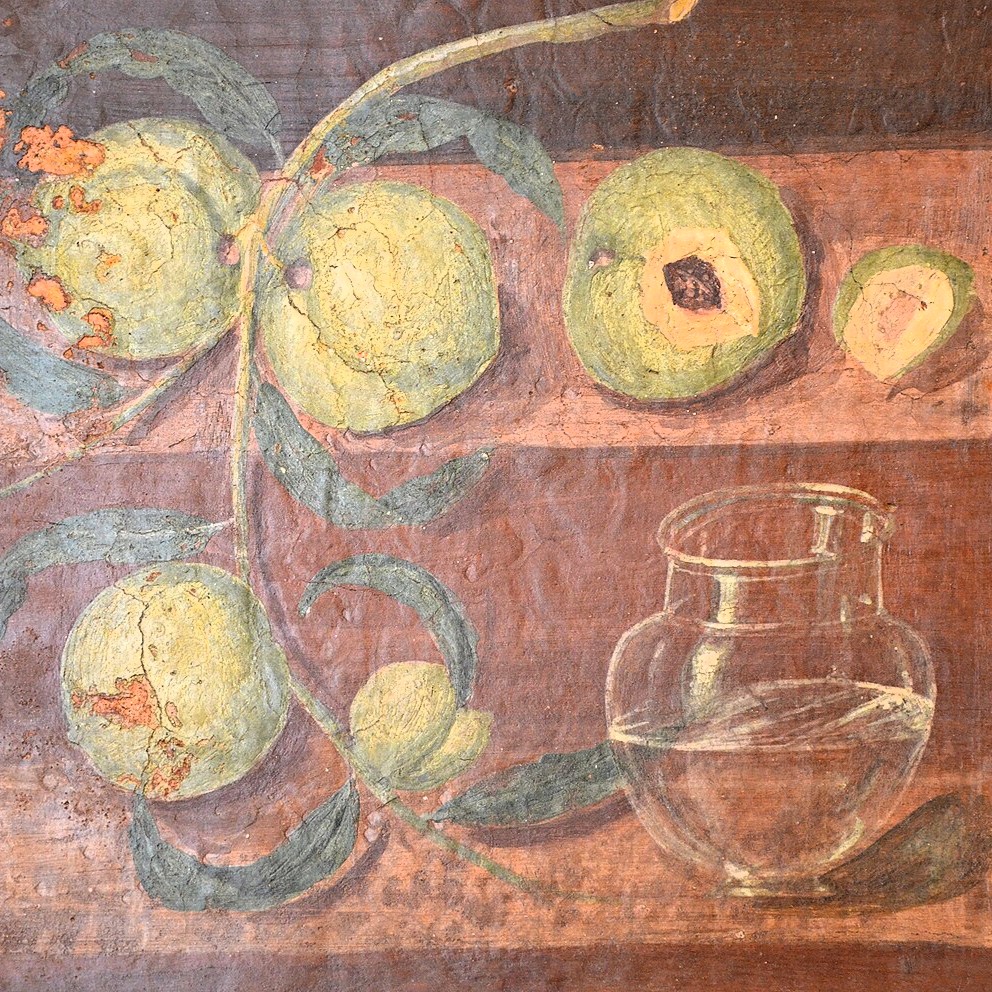
The word lôtos (λωτός), in Greek, never denoted a single plant: the lexicons recognise several meanings for it, from the jujube of the Lotus-eaters to the Egyptian lotus (Nymphaea caerulea). Homer himself uses it for quite different herbaceous plants: on the plains of Troy, Achilles’s horses graze on a lotus that grows near the marshes, while on the slopes of Mount Ida, another lotus, this one covered in dew, grows alongside saffron and hyacinth[8]. Later, the Greeks would still weave garlands from a ‘lotus’ whose yellow, fragrant flower has nothing to do with either the shrub of the Lotus-eaters or the aquatic flower of the Nile – not to mention yet another North African ‘lotus’, whose wood was so hard that flutes were carved from it. A single name for all this: enough to blur the trail even for the Ancients themselves.
The jujube reclaims its rights
At the end of the 18th century, the French botanist René Desfontaines gave a botanical description of this Libyan lotus that contributed greatly to identifying it with the wild jujube. Fruit resembling myrtle, thorny shrub, wine that turned quickly – two or three days according to Theophrastus, up to ten according to Polybius, Pliny and Cornelius Nepos: these concordant descriptions all pointed to the same species, very real and still found today on the coasts of North Africa: the wild jujube (Ziziphus lotus). It produces numerous small fruits, spherical drupes the size of a sloe, known as lotus jujubes. Harvested in October at full ripeness, they have a flavour reminiscent of candied apple and a texture close to that of the date.
Forgetting, a user’s guide
But why would so common a fruit have made sailors forget even their desire to return home? Homer speaks only of a fruit eaten as it is: nothing to suggest a compound preparation, nor the slightest mention of intoxication, drowsiness or euphoria, only the loss of any wish to leave.
Ancient sources attest that the jujube was used to make a fermented drink. This could offer a material explanation for the forgetting of homecoming – an interpretation, however, that the Homeric text does not allow us to confirm.
A more speculative line of enquiry, drawn from Maghrebi ethnobotany, proposes to go further. Among the Beni Bou Ifrah, on the Rif coast, a man interviewed in 2015 recalled a preparation that young shepherds consumed recreationally during his childhood: a mixture of crushed jujubes and hemp (Cannabis sativa). Nothing, however, allows us to claim that these two plants were already associated in antiquity. Above all, the Greek text describes only a fruit that is eaten, never a mixture.
After all, the sweetness of a fruit may be enough to make anyone lose their bearings, once they no longer really wish to go home.
Modern studies consulted
- Prigioniero A., Scarano P., Ruggieri V., Marziano M., Tartaglia M., Sciarrillo R., Guarino C., ‘Plants Named “Lotus” in Antiquity: Historiography, Biogeography, and Ethnobotany’, Harvard Papers in Botany, vol. 25, no. 1, 2020, pp. 59-71.
- Bellakhdar J., ‘Que mangeaient les Lotophages? Contribution de l’ethnobotanique maghrébine à l’interprétation d’un passage de l’Odyssée’, Revue des Études Anciennes, vol. 118, 2016, no. 1, pp. 5-27.
[1] Homer, Odyssey, IX, 82-84 and 94-97.
ἔνθεν δ᾽ ἐννῆμαρ φερόμην ὀλοοῖς ἀνέμοισιν πόντον ἐπ᾽ ἰχθυόεντα· ἀτὰρ δεκάτῃ ἐπέβημεν γαίης Λωτοφάγων, οἵ τ᾽ ἄνθινον εἶδαρ ἔδουσιν. […] τῶν δ᾽ ὅς τις λωτοῖο φάγοι μελιηδέα καρπόν, οὐκέτ᾽ ἀπαγγεῖλαι πάλιν ἤθελεν οὐδὲ νέεσθαι, ἀλλ᾽ αὐτοῦ βούλοντο μετ᾽ ἀνδράσι Λωτοφάγοισι λωτὸν ἐρεπτόμενοι μενέμεν νόστου τε λαθέσθαι.
‘For nine days baleful winds bore me over the teeming sea; but on the tenth we set foot on the land of the Lotus-eaters, who eat a flowery food. […] Whoever among them ate the honey-sweet fruit of the lotus no longer wished to bring back word or return home; they wanted to stay there among the Lotus-eaters, feeding on lotus, forgetting their homecoming.’[2] Herodotus, Histories, IV, 177.
ἀκτὴν δὲ προέχουσαν ἐς τὸν πόντον τούτων τῶν Γινδάνων νέμονται Λωτοφάγοι, οἳ τὸν καρπὸν μοῦνον τοῦ λωτοῦ τρώγοντες ζώουσι. ὁ δὲ τοῦ λωτοῦ καρπὸς ἐστὶ μέγαθος ὅσον τε τῆς σχίνου, γλυκύτητα δὲ τοῦ φοίνικος τῷ καρπῷ προσείκελος. ποιεῦνται δὲ ἐκ τοῦ καρποῦ τούτου οἱ Λωτοφάγοι καὶ οἶνον.
‘On a headland jutting into the sea, beyond the Gindanes, live the Lotus-eaters, who live on nothing but the fruit of the lotus. This fruit is the size of that of the mastic tree, and its sweetness resembles that of the date. The Lotus-eaters also make wine from it.’[3] Theophrastus, Enquiry into Plants, IV, 3, 1-4.
ἔστι δὲ τοῦ λωτοῦ τὸ μὲν ὅλον δένδρον ἴδιον εὐμέγεθες ἡλίκον ἄπιος ἤ μικρὸν ἔλαττον· φύλλον δὲ ἐντομὰς ἔχον καὶ πρινῶδες· τὸ μὲν ξύλον μέλαν […] ὁ δὲ καρπὸς ἡλίκος κύαμος, πεπαινεται δέ, ὥσπερ οἱ βότρυες, μεταβάλλων τὰς χροιάς· φύεται δέ, καθάπερ τὰ μύρτα, παρ ἄλληλα πυκνὸ ἐπὶ τῶν βλαστῶν· ἐσθιόμενος δ ὁ ἐν τοῖς Λωτοφάγοις καλουμένοις γλυκὺς καὶ ἡδὺς καὶ ἀσινὴς. […] καὶ τὸν οἶνον ὃν ἐξ αὐτοῦ ποιοῦσιν οὐ διαμένειν ἀλλ᾽ ἢ δύο ἢ τρεῖς ἡμέρας εἶτ᾽ ὀξύνειν.
‘The lotus tree, taken as a whole, is of fairly great size, like a pear tree, or a little less; its leaf is jagged and recalls that of the holm oak; the wood is black […] The fruit is as large as a bean; it ripens by changing colour, as bunches of grapes do; it grows, closely packed on the branches, in the manner of myrtle berries. That which is eaten by the people called Lotus-eaters is sweet, pleasant and harmless. […] And the wine made from it does not keep for more than two or three days, after which it turns sour.’[4] Polybius, Histories, XII, 2, 1-8, fragment preserved by Athenaeus, Deipnosophists, XIV, 651d-e.
Τὰ παραπλήσια τοῖς περὶ τὸν Ἡρόδοτον ἱστορεῖ περὶ τοῦ ἐν Λιβύῃ καλουμένου λωτοῦ αὐτόπτης γενόμενος ὁ Μεγαλοπολίτης Πολύβιος ἐν τῇ ιβʹ τῶν Ἱστοριῶν λέγων οὕτως· Ἔστι δὲ τὸ δένδρον ὁ λωτὸς οὐ μέγα, τραχὺ δὲ καὶ ἀκανθῶδες, ἔχει δὲ φύλλον χλωρὸν παραπλήσιον τῇ ῥάμνῳ, μικρὸν βαθύτερον καὶ πλατύτερον. ὁ δὲ καρπὸς τὰς μὲν ἀρχὰς ὅμοιός ἐστι καὶ τῇ χρόᾳ καὶ τῷ μεγέθει ταῖς λευκαῖς μυρτίσι ταῖς τετελειωμέναις, αὐξανόμενος δὲ τῷ μὲν χρώματι γίνεται φοινικοῦς, τῷ δὲ μεγέθει ταῖς γογγύλαις ἐλαίαις παραπλήσιος, πυρῆνα δὲ ἔχει τελέως μικρόν. ἐπὰν δὲ πεπανθῇ, συνάγουσι, καὶ τὸν μὲν τοῖς οἰκέταις μετὰ χόνδρου κόψαντες σάττουσιν εἰς ἀγγεῖα, τὸν δὲ τοῖς ἐλευθέροις ἐξελόντες τὸν πυρῆνα συντιθέασιν ὡσαύτως, καὶ σιτεύονται τοῦτον. γίνεται δὲ καὶ οἶνος ἐξ αὐτοῦ βρεχομένου καὶ τριβομένου δι᾽ ὕδατος, κατὰ μὲν τὴν γεῦσιν ἡδὺς καὶ ἀπολαυστικός, οἰνομέλιτι χρηστῷ παραπλήσιος, ᾧ χρῶνται χωρὶς ὕδατος. οὐ δύναται δὲ πλέον δέκα μένειν ἡμερῶν· διὸ καὶ ποιοῦσι κατὰ βραχὺ πρὸς τὴν χρείαν. ποιοῦσι δὲ καὶ ὄξος ἐξ αὐτῶν.
‘Polybius of Megalopolis, who had himself seen what is called in Libya the lotus, gives, in the twelfth book of his Histories, an account similar to that of Herodotus, in these terms: the lotus is a low tree, rough and thorny; its leaf is green, resembling that of the buckthorn, but a little deeper and broader. At first, its fruit resembles, in colour and size, the ripe berries of the white myrtle; as it grows it turns purple and reaches the size of a round olive, with a very small stone. When it is ripe, it is gathered: the portion intended for slaves is pounded with groats and packed into vessels; that for free men, with the stone removed, is preserved in the same way. Wine is also made from it, by soaking and then crushing it in water: the drink is sweet and pleasant, comparable to a good honeyed wine, drunk without diluting it with water. But it does not keep for more than ten days; which is why only small quantities are prepared, as needed. Vinegar is also made from it.’[5] Pseudo-Scylax, Periplus, 3, 110.
Οὗτοι λωτῷ χρῶνται σίτῳ καὶ ποτῷ […] Ἐν δὲ τῇ νήσῳ γίνεται λωτὸς, ὃν ἐσθίουσι, καὶ ἕτερος, ἐξ οὗ οἶνον ποιοῦσιν. Ὁ δὲ τοῦ λωτοῦ καρπός ἐστι τῷ μεγέθει ὅσον μιμαίκυλον.
‘These people use the lotus as food and as drink […] On the island grows a lotus that is eaten, and another from which wine is made. The fruit of the lotus is, in size, like that of the arbutus.’[6] Strabo, Geography, XVII, 3, 17.
τὴν δὲ Μήνιγγα νομίζουσιν εἶναι τὴν τῶν Λωτοφάγων γῆν τὴν ὑφ᾽ Ὁμήρου λεγομένην, καὶ δείκνυταί τινα σύμβολα, καὶ βωμὸς Ὀδυσσέως καὶ αὐτὸς ὁ καρπός· πολὺ γάρ ἐστι τὸ δένδρον ἐν αὐτῇ τὸ καλούμενον λωτόν, ἔχον ἥδιστον καρπόν.
‘Meninx is thought to be the land of the Lotus-eaters spoken of by Homer; certain tokens are shown there, an altar of Odysseus, and the fruit itself: the tree there called lotus is indeed abundant, and its fruit among the most pleasant.’[7] Pliny the Elder, Natural History, XIII, 104-106.
Eadem Africa, qua vergit ad nos, insignem arborem loton gignit, quam vocat celthim […] Praecipua est circa Syrtis atque Nasimonas. Magnitudo quae piro […] Magnitudo huic fabae, color croci […] Nascitur densus in ramis myrti modo […] tam dulcis ibi cibo, ut nomen etiam genti terraeque dederit nimis hospitali advenarum oblivione patriae. […] Vinum quoque exprimitur illi simile mulso, quod ultra denos dies negat durare idem Nepos.
‘This same Africa, on the side facing us, produces a remarkable tree, the lotus, which it also calls celtis […] It is especially widespread around the Syrtes and among the Nasamones. Its size is that of the pear tree […] The fruit is the size of a bean, the colour of saffron […] It grows closely packed on the branches in the manner of myrtle […] so sweet to the taste that it has given its name to the people and the land, too welcoming, through the forgetting of their homeland which it inspires in strangers. […] A wine similar to honeyed wine is also drawn from it, which, according to this same Nepos, does not last more than ten days.’[8] Homer, Iliad, II, 776 and XIV, 348.
λωτὸν ἐρεπτόμενοι ἐλεόθρεπτόν τε σέλινον […] λωτόν θ᾽ ἑρσήεντα ἰδὲ κρόκον ἠδ᾽ ὑάκινθον
‘[The horses], grazing on lotus and marsh celery […] on dewy lotus, saffron and hyacinth.’
Other articles in English from the Nunc est bibendum blog