Cet événement se répètedécembre 17, 2025
202417décToute la journée23SaturnaliaType:Fête romaine
Description
Ante diem sextum decimum Kalendas Ianuarias – Ante diem decimum Kalendas Ianuarias
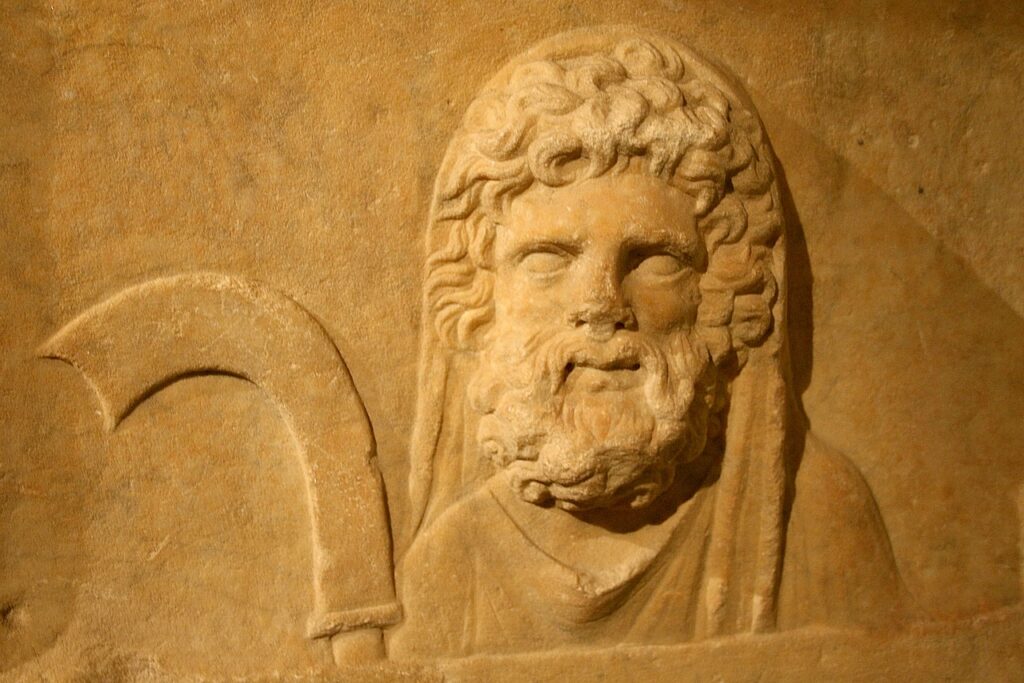
Saturnalia: le retour symbolique de l’âge d’or
Les Saturnalia étaient parmi les célébrations les plus populaires et emblématiques de la Rome antique, honorant Saturne, le dieu associé au temps et à l’âge d’or. Ces fêtes se déroulaient chaque année à la mi-décembre, commençant officiellement le 17 décembre et pouvant se prolonger jusqu’au 23. Elles évoquaient symboliquement le retour de l’âge d’or de Saturne, un temps mythique d’abondance et d’égalité.
La fête débutait par un sacrifice rituel au temple de Saturne, dans le Forum romain. Les liens de laine entourant la statue du dieu étaient dénoués pour l’occasion. Durant les Saturnalia, le travail était suspendu, les tribunaux fermés, et la vie quotidienne laissait place à des banquets animés où nourriture et vin étaient largement partagés.
Un des aspects les plus caractéristiques de la fête était l’inversion temporaire des rôles sociaux. Les esclaves bénéficiaient d’une liberté inhabituelle: ils étaient servis par leurs maîtres, pouvaient plaisanter ou se moquer d’eux, et participaient pleinement aux réjouissances. Cette période de licence rituelle instaurait un climat volontairement renversé, rappelant l’égalité supposée de l’âge d’or.
L’échange de cadeaux était également une tradition bien établie. Les Romains offraient notamment des figurines en cire ou en terre cuite (sigillaria) ainsi que des denrées alimentaires, gestes symboliques renforçant les liens familiaux et amicaux.
À long terme, les Saturnalia ont laissé une empreinte durable dans la culture romaine et dans certaines traditions hivernales ultérieures. Plusieurs coutumes des fêtes de fin d’année, comme les repas festifs ou l’échange de cadeaux, présentent des parallèles avec les Saturnalia, sans qu’une filiation directe soit assurée.
Lire nos articles:
- Et pourtant, Saturne!
- Les Saturnales sous le regard critique de Lucien
- Fêter les Saturnales au 21e siècle!
👉 Toutes les fêtes du calendrier romain
Versione italiana
Saturnalia: il ritorno simbolico dell’età dell’oro
Le Saturnalia erano tra le celebrazioni più popolari ed emblematiche della Roma antica, in onore di Saturno, il dio associato al tempo e all’età dell’oro. Queste feste si svolgevano ogni anno a metà dicembre, iniziando ufficialmente il 17 dicembre e potendo protrarsi fino al 23. Esse evocavano simbolicamente il ritorno dell’età dell’oro di Saturno, un tempo mitico di abbondanza e uguaglianza.
La festa cominciava con un sacrificio rituale nel tempio di Saturno, nel Foro Romano. I legacci di lana che avvolgevano la statua del dio venivano sciolti per l’occasione. Durante i Saturnalia, il lavoro era sospeso, i tribunali chiusi e la vita quotidiana lasciava il posto a banchetti animati, in cui cibo e vino venivano condivisi generosamente.
Uno degli aspetti più caratteristici della festa era l’inversione temporanea dei ruoli sociali. Gli schiavi godevano di una libertà insolita: venivano serviti dai loro padroni, potevano scherzare con loro o persino prendersene gioco, e partecipavano pienamente ai festeggiamenti. Questo periodo di licenza rituale instaurava un clima volutamente rovesciato, richiamando l’uguaglianza supposta dell’età dell’oro.
Lo scambio di doni era anch’esso una tradizione ben consolidata. I Romani offrivano in particolare figurine in cera o in terracotta (sigillaria), così come generi alimentari: gesti simbolici che rafforzavano i legami familiari e amicali.
A lungo termine, i Saturnalia hanno lasciato un’impronta duratura nella cultura romana e in alcune tradizioni invernali successive. Diverse usanze delle festività di fine anno, come i banchetti o lo scambio di doni, presentano paralleli con i Saturnalia, pur senza attestare una filiazione diretta.
Leggi i nostri articoli:
- I Saturnali davano agli schiavi le ali
- I Saturnales sotto il sgardo critico di Luciano
- Celebrare le Saturnali nel XXI secolo!
👉 Tutte le feste del calendario romano
English version
Saturnalia: the symbolic return of the Golden Age
The Saturnalia were among the most popular and emblematic celebrations of ancient Rome, honoring Saturn, the god associated with time and the Golden Age. These festivities took place each year in mid-December, beginning officially on 17 December and sometimes extending until the 23rd. They symbolically evoked the return of Saturn’s Golden Age, a mythical time of abundance and equality.
The festival opened with a ritual sacrifice at the Temple of Saturn in the Roman Forum. The woolen bonds that surrounded the statue of the god were untied for the occasion. During the Saturnalia, work was suspended, the courts were closed, and daily life gave way to lively banquets where food and wine were generously shared.
One of the most characteristic aspects of the festival was the temporary inversion of social roles. Enslaved people enjoyed an unusual degree of freedom: they were served by their masters, could joke with them or even mock them, and took full part in the celebrations. This period of ritual license created a deliberately overturned atmosphere, recalling the presumed equality of the Golden Age.
The exchange of gifts was also a well-established tradition. Romans offered figurines made of wax or terracotta (sigillaria), as well as foodstuffs—symbolic gestures that strengthened family and friendship bonds.
In the long term, the Saturnalia left a lasting mark on Roman culture and on certain later winter traditions. Several features of present-day end-of-year festivities, such as celebratory meals or the exchange of gifts, show parallels with the Saturnalia, even though no direct lineage can be firmly established.
Read our articles:
- Saturnalia, Roman society upside down
- The Saturnalia under Lucian’s critical gaze
- Celebrating Saturnalia in the 21st Century!
👉 All the festivals of the Roman calendar