Cet événement se répètedécembre 5, 2025
202405décToute la journéeFaunalia RusticaType:Fête romaine
Description
Nonis Decembribus
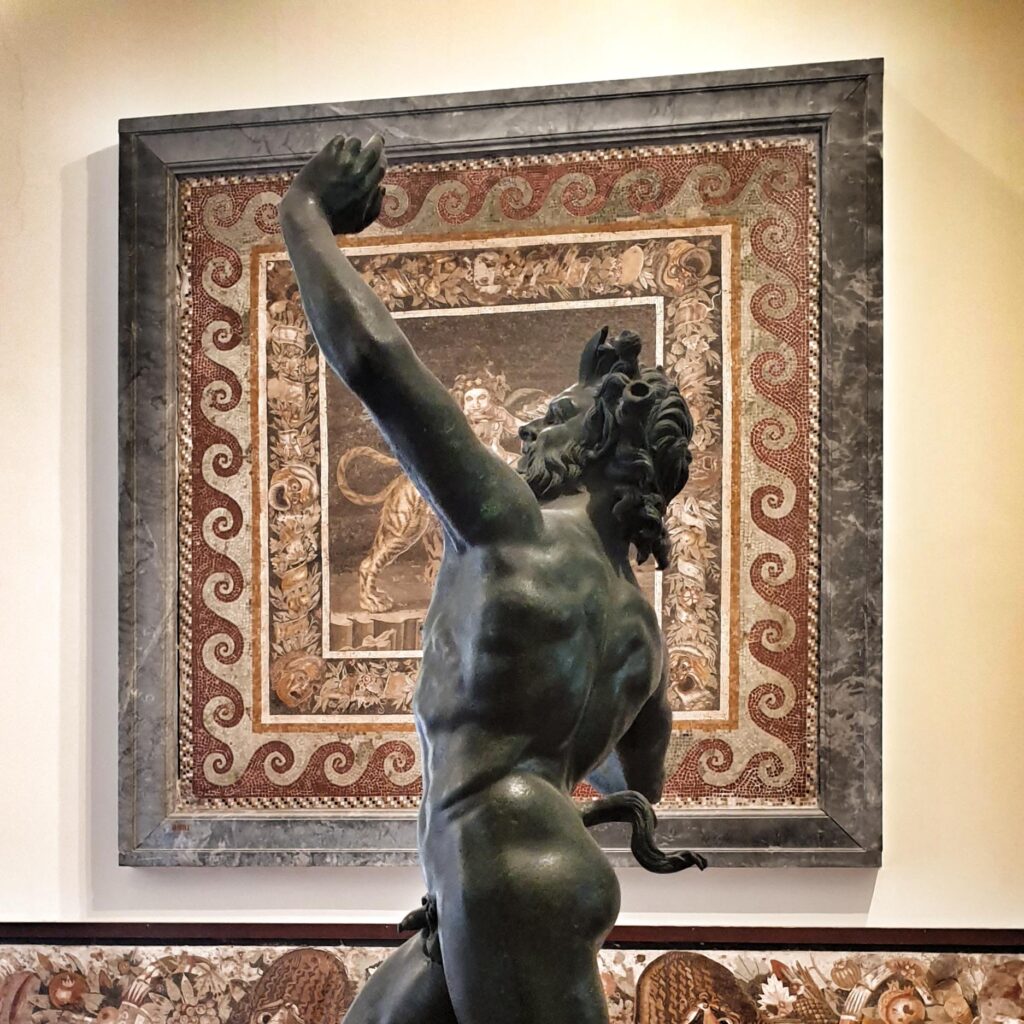
EN BREF. Faunus, ancien dieu romain des forêts et des troupeaux, était honoré le 5 décembre lors des Faunalia Rustica : les paysans lui offraient sacrifices et libations pour protéger leur bétail et leurs récoltes. Oracle mystérieux parlant en songes dans les bosquets sacrés, il fut plus tard assimilé à Pan et acquit ses cornes légendaires. Son culte perdura jusqu’au 4e siècle de notre ère.
Faunalia: célébrer le dieu des bois au cœur de l’hiver
Les Faunalia étaient des fêtes religieuses célébrées en l’honneur de Faunus, le dieu romain des bois, des champs et des créatures sauvages. Divinité rustique et pastorale, Faunus était perçu comme le protecteur des troupeaux, des agriculteurs, et plus largement des campagnes. Les Faunalia, souvent fêtées en milieu rural, constituaient un moment important pour les communautés agraires, soucieuses de maintenir un équilibre entre la nature sauvage et les activités humaines.
Le dieu Faunus
Faunus, souvent comparé à Pan dans la mythologie grecque, était une figure complexe dont le culte remonte aux origines de Rome. Il appartenait aux di indigetes, les plus anciennes divinités du panthéon romain. Dieu des forêts et des espaces sauvages, il symbolisait à la fois la fertilité de la terre et la puissance incontrôlée de la nature.
Avec l’hellénisation progressive de la religion romaine aux 3e et 2e siècles avant notre ère, Faunus fut assimilé au dieu grec Pan dans la littérature et l’iconographie. Cette assimilation transforma profondément sa représentation : alors que le Faunus archaïque n’était pas représenté avec des attributs animaux, les artistes romains commencèrent à le figurer avec des cornes et des pieds de chèvre, à l’image de Pan. Les apparitions spectrales et les sons mystérieux qu’on lui attribuait dans les régions boisées contribuèrent à cette métamorphose visuelle.
Ce dieu protégeait non seulement les troupeaux et les cultures, mais il possédait également une dimension oraculaire remarquable, pouvant délivrer des prophéties à ceux qui le consultaient. Ses pouvoirs étaient cependant ambivalents : Faunus pouvait être à la fois bienveillant, en garantissant la fertilité et la prospérité des terres, ou redoutable, en envoyant des calamités naturelles ou des maladies si on négligeait de l’honorer.
Dans les bosquets sacrés près de Tibur (l’actuelle Tivoli) et sur la colline de l’Aventin à Rome, Faunus révélait l’avenir à travers des rêves et des voix surnaturelles. Ceux qui sollicitaient ses oracles devaient pratiquer l’incubation : ils s’endormaient dans son enceinte sacrée, couchés sur des toisons d’agneaux fraîchement sacrifiés, et le dieu leur parlait en songes. Selon l’érudit Varron, ces réponses oraculaires étaient formulées en vers saturniens, l’ancien mètre de la poésie latine archaïque. Cette fonction prophétique explique son épithète de Fatuus, « le Devin », dérivé du verbe latin fari, qui signifie à la fois «parler» et «prophétiser».
Les Faunalia Rustica
Les Faunalia Rustica, célébrées le 5 décembre, étaient la principale fête dédiée à Faunus. Leur nom fait référence à la campagne (rusticus, en latin), et elles avaient lieu dans les villages et hameaux des zones rurales. Les habitants de la campagne, principalement des agriculteurs et des bergers, rendaient hommage à Faunus en tant que protecteur des troupeaux et des terres agricoles. Cette date coïncidait avec le retour du bétail des pâturages d’altitude vers les étables d’hiver, moment crucial dans le calendrier pastoral.
Les festivités comprenaient des sacrifices d’animaux, généralement des chèvres ou des chevreaux, animaux particulièrement associés à Faunus. Les sacrifices avaient pour but de garantir la bienveillance du dieu pour l’année à venir, notamment en ce qui concerne la protection des troupeaux contre les prédateurs ou les maladies. Les paysans faisaient aussi brûler des offrandes de fruits, de céréales et de vin en l’honneur du dieu, dans l’espoir d’assurer la fertilité des terres.
Une fois les sacrifices accomplis, la fête se poursuivait par des danses, des chants et des banquets, où les villageois s’abandonnaient à la joie collective, souvent dans une atmosphère de relâchement. Cette festivité incarnait un moment de répit et de convivialité au sein des communautés rurales, renforçant leurs liens sociaux après une année de labeur dans les champs.
Faunus à Rome: entre culte urbain et Lupercales
Si les Faunalia Rustica du 5 décembre étaient célébrées surtout dans les campagnes, Rome honorait aussi Faunus par une autre fête le 13 février, dans son temple situé sur l’île Tibérine. Ce jour marquait également le début du souffle de Favonius, le vent d’ouest fructifiant annonçant le retour du printemps. Le culte urbain de Faunus se distinguait ainsi du culte rural par sa dimension plus officielle et organisée.
Deux jours plus tard, le 15 février, se déroulaient les célèbres Lupercales, où Faunus était vénéré sous l’épithète de Lupercus, «celui qui écarte le loup». Douze prêtres appelés luperques sacrifiaient un bouc dans la grotte du Lupercal, au pied du mont Palatin, lieu légendaire où la louve aurait allaité Romulus et Rémus. Puis, vêtus uniquement d’un pagne en peau de bouc, ils couraient dans toute la ville de Rome, armés de lanières de peau de bouc avec lesquelles ils fouettaient les femmes qu’ils rencontraient sur leur passage pour les rendre fécondes. Ils figuraient les esprits de la nature dont Faunus était le chef de file. Ces rites mêlaient des éléments purificatoires et fécondants, certains demeurant énigmatiques même pour les Romains eux-mêmes.
Faunus dans l’imaginaire romain
Faunus occupait une place importante dans l’imaginaire romain, bien au-delà de son statut de divinité rustique. Sa figure symbolisait l’équilibre fragile entre la nature sauvage et l’activité humaine, rappelant aux Romains que, malgré leurs conquêtes et leur maîtrise technique du territoire, ils demeuraient dépendants des forces naturelles.
Des recherches récentes en mythologie comparée ont même suggéré que Faunus pourrait partager une origine indo-européenne commune avec le dieu védique Rudra, ancêtre de Shiva. Les deux divinités présentent en effet des traits similaires: nature sauvage et redoutable, mais aussi aspect «favorable» ou «propice» une fois apaisées. Cette ambivalence se reflète dans leurs noms mêmes: Faunus vient d’une racine signifiant «favorable», tandis que Rudra est invoqué sous les épithètes Bhava et Shiva, qui signifient également «favorable, propice».
Dans un monde où la nature était à la fois une source de subsistance et une force indomptable, Faunus représentait cette dualité. Il était à la fois celui qui veille et protège, et celui qui doit être apaisé pour éviter des calamités. Le caractère rituel des Faunalia montre combien la religion romaine était liée aux réalités quotidiennes des populations, notamment rurales, où le respect des forces naturelles passait par des pratiques religieuses régulières.
Le culte de Faunus persista bien au-delà de la période républicaine. Des témoignages archéologiques, comme la découverte en 1979 près de Thetford en Angleterre d’un ensemble de trente-deux cuillères du 4e siècle de notre ère gravées du nom « Faunus » avec différentes épithètes, attestent que ce dieu était encore vénéré en pleine période de christianisation de l’Empire romain.
Sources antiques
- Virgile, Énéide, VII.81-106
- Horace, Odes, III.18
- Ovide, Fastes, IV.649
- Cicéron, De Divinatione, I.101
- Varron, De Lingua Latina, VII.36
👉 Toutes les fêtes du calendrier romain
Versione italiana
IN BREVE. Fauno, antico dio romano delle foreste e delle greggi, veniva onorato il 5 dicembre durante i Faunalia Rustica: i contadini gli offrivano sacrifici e libagioni per proteggere il loro bestiame e i loro raccolti. Oracolo misterioso che parlava in sogno nei boschi sacri, fu in seguito assimilato a Pan e acquisì le sue leggendarie corna. Il suo culto perdurò fino al 4° secolo della nostra era.
Faunalia: celebrare il dio dei boschi nel cuore dell’inverno
I Faunalia erano feste religiose celebrate in onore di Fauno, il dio romano dei boschi, dei campi e delle creature selvatiche. Divinità rustica e pastorale, Fauno era percepito come il protettore delle greggi, degli agricoltori e, più in generale, delle campagne. I Faunalia, spesso celebrati in ambiente rurale, costituivano un momento importante per le comunità agrarie, desiderose di mantenere un equilibrio tra la natura selvaggia e le attività umane.
Il dio Fauno
Fauno, spesso paragonato a Pan nella mitologia greca, era una figura complessa il cui culto risale alle origini di Roma. Apparteneva ai di indigetes, le più antiche divinità del pantheon romano. Dio delle foreste e degli spazi selvaggi, simboleggiava al tempo stesso la fertilità della terra e la potenza incontrollata della natura.
Con l’ellenizzazione progressiva della religione romana nel 3° e 2° secolo prima della nostra era, Fauno fu assimilato al dio greco Pan nella letteratura e nell’iconografia. Questa assimilazione trasformò profondamente la sua rappresentazione: mentre il Fauno arcaico non era rappresentato con attributi animali, gli artisti romani cominciarono a raffigurarlo con corna e piedi di capra, a immagine di Pan. Le apparizioni spettrali e i suoni misteriosi che gli venivano attribuiti nelle regioni boscose contribuirono a questa metamorfosi visiva.
Questo dio proteggeva non soltanto le greggi e le colture, ma possedeva anche una notevole dimensione oracolare, potendo rivelare profezie a coloro che lo consultavano. I suoi poteri erano tuttavia ambivalenti: Fauno poteva essere al tempo stesso benevolo, garantendo la fertilità e la prosperità delle terre, o temibile, inviando calamità naturali o malattie se si trascurava di onorarlo.
Nei boschi sacri presso Tibur (l’attuale Tivoli) e sul colle Aventino a Roma, Fauno rivelava il futuro attraverso sogni e voci soprannaturali. Coloro che sollecitavano i suoi oracoli dovevano praticare l’incubazione: si addormentavano nel suo recinto sacro, sdraiati su velli di agnelli appena sacrificati, e il dio parlava loro in sogno. Secondo l’erudito Varrone, queste risposte oracolari erano formulate in versi saturnii, l’antico metro della poesia latina arcaica. Questa funzione profetica spiega il suo epiteto di Fatuus, « l’Indovino », derivato dal verbo latino fari, che significa al tempo stesso « parlare » e « profetizzare ».
I Faunalia Rustica
I Faunalia Rustica, celebrati il 5 dicembre, erano la principale festa dedicata a Fauno. Il loro nome fa riferimento alla campagna (rusticus, in latino), e si svolgevano nei villaggi e borghi delle zone rurali. Gli abitanti della campagna, principalmente agricoltori e pastori, rendevano omaggio a Fauno in quanto protettore delle greggi e delle terre agricole. Questa data coincideva con il ritorno del bestiame dai pascoli d’altura alle stalle invernali, momento cruciale nel calendario pastorale.
Le festività comprendevano sacrifici di animali, generalmente capre o capretti, animali particolarmente associati a Fauno. I sacrifici avevano lo scopo di garantire la benevolenza del dio per l’anno a venire, in particolare per quanto riguarda la protezione delle greggi contro i predatori o le malattie. I contadini facevano anche bruciare offerte di frutti, cereali e vino in onore del dio, nella speranza di assicurare la fertilità delle terre.
Una volta compiuti i sacrifici, la festa proseguiva con danze, canti e banchetti, dove gli abitanti del villaggio si abbandonavano alla gioia collettiva, spesso in un’atmosfera di rilassamento. Questa festività incarnava un momento di tregua e convivialità in seno alle comunità rurali, rafforzando i loro legami sociali dopo un anno di lavoro nei campi.
Fauno a Roma: tra culto urbano e Lupercali
Se i Faunalia Rustica del 5 dicembre erano celebrati soprattutto nelle campagne, Roma onorava anche Fauno con un’altra festa il 13 febbraio, nel suo tempio situato sull’isola Tiberina. Questo giorno segnava anche l’inizio del soffio di Favonio, il vento d’occidente fecondante che annunciava il ritorno della primavera. Il culto urbano di Fauno si distingueva così dal culto rurale per la sua dimensione più ufficiale e organizzata.
Due giorni più tardi, il 15 febbraio, si svolgevano i celebri Lupercali, dove Fauno era venerato sotto l’epiteto di Lupercus, « colui che allontana il lupo ». Dodici sacerdoti chiamati luperci sacrificavano un caprone nella grotta del Lupercale, ai piedi del monte Palatino, luogo leggendario dove la lupa avrebbe allattato Romolo e Remo. Poi, vestiti unicamente di un perizoma in pelle di capra, correvano per tutta la città di Roma, armati di strisce di pelle di capra con le quali fustigavano le donne che incontravano sul loro passaggio per renderle feconde. Essi rappresentavano gli spiriti della natura di cui Fauno era il capofila. Questi riti mescolavano elementi purificatori e fecondanti, alcuni rimanendo enigmatici anche per gli stessi Romani.
Fauno nell’immaginario romano
Fauno occupava un posto importante nell’immaginario romano, ben oltre il suo statuto di divinità rustica. La sua figura simboleggiava il fragile equilibrio tra la natura selvaggia e l’attività umana, ricordando ai Romani che, nonostante le loro conquiste e il loro dominio tecnico del territorio, rimanevano dipendenti dalle forze naturali.
Ricerche recenti in mitologia comparata hanno persino suggerito che Fauno potrebbe condividere un’origine indoeuropea comune con il dio vedico Rudra, antenato di Shiva. Le due divinità presentano infatti tratti simili: natura selvaggia e temibile, ma anche aspetto « favorevole » o « propizio » una volta placate. Questa ambivalenza si riflette nei loro stessi nomi: Fauno deriva da una radice che significa « favorevole », mentre Rudra è invocato con gli epiteti Bhava e Shiva, che significano ugualmente « favorevole, propizio ».
In un mondo dove la natura era al tempo stesso una fonte di sussistenza e una forza indomabile, Fauno rappresentava questa dualità. Era al tempo stesso colui che veglia e protegge, e colui che deve essere placato per evitare calamità. Il carattere rituale dei Faunalia mostra quanto la religione romana fosse legata alle realtà quotidiane delle popolazioni, in particolare rurali, dove il rispetto delle forze naturali passava attraverso pratiche religiose regolari.
Il culto di Fauno persistette ben oltre il periodo repubblicano. Testimonianze archeologiche, come la scoperta nel 1979 presso Thetford in Inghilterra di un insieme di trentadue cucchiai del 4° secolo della nostra era incisi con il nome « Fauno » con diversi epiteti, attestano che questo dio era ancora venerato in pieno periodo di cristianizzazione dell’Impero romano.
Fonti antiche
- Virgilio, Eneide, VII.81-106
- Orazio, Odi, III.18
- Ovidio, Fasti, IV.649
- Cicerone, De Divinatione, I.101
- Varrone, De Lingua Latina, VII.36
👉 Tutte le feste del calendario romano
English version
IN BRIEF. Faunus, ancient Roman god of forests and flocks, was honored on December 5th during the Faunalia Rustica: peasants offered him sacrifices and libations to protect their livestock and crops. A mysterious oracle speaking in dreams within sacred groves, he was later assimilated to Pan and acquired his legendary horns. His cult persisted until the 4th century CE.
Faunalia: celebrating the god of the woods in the heart of winter
The Faunalia were religious festivals celebrated in honor of Faunus, the Roman god of woods, fields, and wild creatures. A rustic and pastoral deity, Faunus was perceived as the protector of flocks, farmers, and more broadly, the countryside. The Faunalia, often celebrated in rural settings, constituted an important moment for agrarian communities, concerned with maintaining a balance between wild nature and human activities.
The god Faunus
Faunus, often compared to Pan in Greek mythology, was a complex figure whose cult dates back to the origins of Rome. He belonged to the di indigetes, the most ancient deities of the Roman pantheon. God of forests and wild spaces, he symbolized both the fertility of the earth and the uncontrolled power of nature.
With the progressive Hellenization of Roman religion in the 3rd and 2nd centuries BCE, Faunus was assimilated to the Greek god Pan in literature and iconography. This assimilation profoundly transformed his representation: whereas the archaic Faunus was not depicted with animal attributes, Roman artists began to portray him with horns and goat’s feet, in the image of Pan. The spectral appearances and mysterious sounds attributed to him in wooded regions contributed to this visual metamorphosis.
This god protected not only flocks and crops, but also possessed a remarkable oracular dimension, able to deliver prophecies to those who consulted him. His powers were however ambivalent: Faunus could be both benevolent, guaranteeing the fertility and prosperity of lands, or formidable, sending natural calamities or diseases if one neglected to honor him.
In the sacred groves near Tibur (modern-day Tivoli) and on the Aventine Hill in Rome, Faunus revealed the future through dreams and supernatural voices. Those who sought his oracles had to practice incubation: they fell asleep in his sacred precinct, lying on the fleeces of freshly sacrificed lambs, and the god spoke to them in dreams. According to the scholar Varro, these oracular responses were formulated in Saturnian verses, the ancient meter of archaic Latin poetry. This prophetic function explains his epithet Fatuus, « the Seer, » derived from the Latin verb fari, which means both « to speak » and « to prophesy. »
The Faunalia Rustica
The Faunalia Rustica, celebrated on December 5th, were the main festival dedicated to Faunus. Their name refers to the countryside (rusticus, in Latin), and they took place in villages and hamlets of rural areas. The inhabitants of the countryside, mainly farmers and shepherds, paid homage to Faunus as protector of flocks and agricultural lands. This date coincided with the return of livestock from high pastures to winter stables, a crucial moment in the pastoral calendar.
The festivities included animal sacrifices, generally goats or kids, animals particularly associated with Faunus. The sacrifices were intended to guarantee the god’s benevolence for the coming year, particularly concerning the protection of flocks against predators or diseases. Peasants also burned offerings of fruits, grains, and wine in honor of the god, hoping to ensure the fertility of the lands.
Once the sacrifices were completed, the festival continued with dances, songs, and banquets, where villagers abandoned themselves to collective joy, often in an atmosphere of relaxation. This festivity embodied a moment of respite and conviviality within rural communities, strengthening their social bonds after a year of labor in the fields.
Faunus in Rome: between urban cult and Lupercalia
While the Faunalia Rustica of December 5th were celebrated mainly in the countryside, Rome also honored Faunus with another festival on February 13th, in his temple located on the Tiber Island. This day also marked the beginning of the breath of Favonius, the fructifying west wind announcing the return of spring. The urban cult of Faunus was thus distinguished from the rural cult by its more official and organized dimension.
Two days later, on February 15th, the famous Lupercalia took place, where Faunus was venerated under the epithet Lupercus, « he who wards off the wolf. » Twelve priests called Luperci sacrificed a goat in the Lupercal cave, at the foot of the Palatine Hill, the legendary place where the she-wolf would have nursed Romulus and Remus. Then, dressed only in a loincloth of goatskin, they ran throughout the city of Rome, armed with strips of goatskin with which they whipped the women they encountered on their way to make them fertile. They represented the spirits of nature of which Faunus was the leader. These rites mixed purificatory and fecundating elements, some remaining enigmatic even for the Romans themselves.
Faunus in the Roman imagination
Faunus occupied an important place in the Roman imagination, well beyond his status as a rustic deity. His figure symbolized the fragile balance between wild nature and human activity, reminding the Romans that, despite their conquests and technical mastery of the territory, they remained dependent on natural forces.
Recent research in comparative mythology has even suggested that Faunus might share a common Indo-European origin with the Vedic god Rudra, ancestor of Shiva. The two deities indeed present similar traits: wild and formidable nature, but also a « favorable » or « propitious » aspect once appeased. This ambivalence is reflected in their very names: Faunus comes from a root meaning « favorable, » while Rudra is invoked under the epithets Bhava and Shiva, which also mean « favorable, propitious. »
In a world where nature was both a source of subsistence and an indomitable force, Faunus represented this duality. He was both the one who watches and protects, and the one who must be appeased to avoid calamities. The ritual character of the Faunalia shows how much Roman religion was linked to the daily realities of populations, particularly rural ones, where respect for natural forces passed through regular religious practices.
The cult of Faunus persisted well beyond the Republican period. Archaeological evidence, such as the discovery in 1979 near Thetford in England of a set of thirty-two 4th-century CE spoons engraved with the name « Faunus » with different epithets, attests that this god was still venerated in the midst of the Christianization of the Roman Empire.
Ancient sources
- Virgil, Aeneid, VII.81-106
- Horace, Odes, III.18
- Ovid, Fasti, IV.649
- Cicero, De Divinatione, I.101
- Varro, De Lingua Latina, VII.36