Cet événement se répète15 août 2027
202615aoûtToute la journée(Feriæ Augusti)Type:Fête romaine
Description
Ante diem octavum decimum Kalendas Septembres
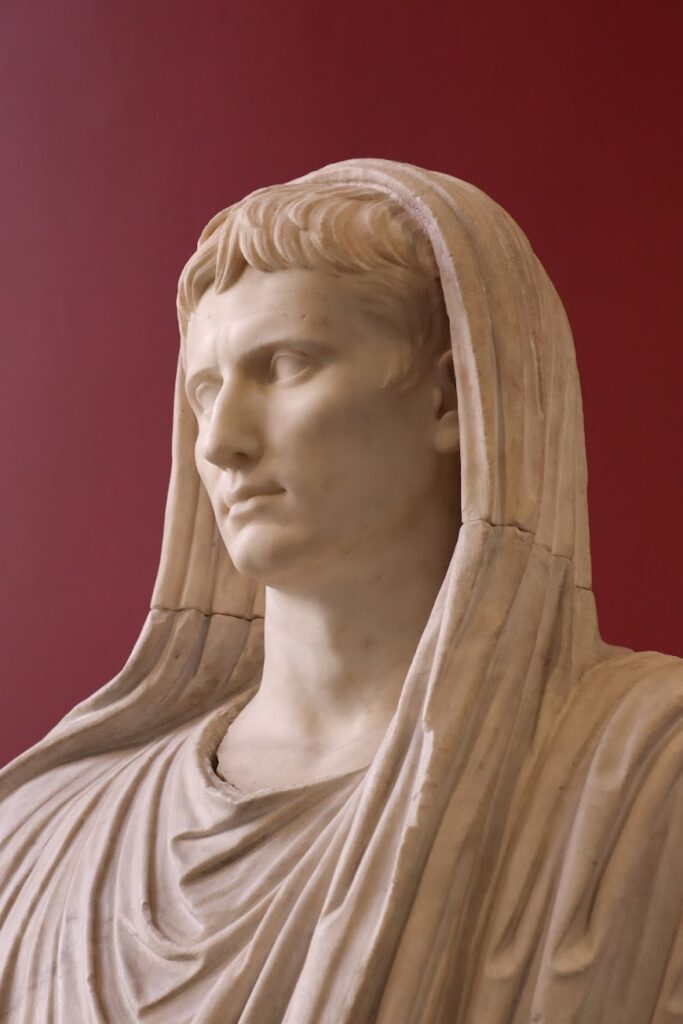
EN BREF. La tradition attribue au 15 août des fêtes «Feriae Augusti» qu’Auguste aurait instituées en 18 avant notre ère. L’examen des sources antiques ne confirme rien de tel: aucun calendrier romain conservé ne connaît ce nom. Ce jour-là, en 29 avant notre ère, Rome a célébré le troisième jour du triomphe d’Octavien, celui sur l’Égypte – un événement réel, mais sans lien avec ce que disent les récits modernes…
Feriae Augusti – Ferragosto: la fête qu’Auguste n’a pas créée
Chaque 15 août, l’Italie s’arrête pour le Ferragosto, fête catholique dédiée à l’Assomption de Marie. Mais cette journée devrait son nom et son origine à une fête romaine institué en 18 avant notre ère par Auguste, les «Feriae Augusti». Cette version de l’histoire a même trouvé sa place dans quelques travaux universitaires, où l’on affirme qu’Auguste aurait institué à cette date une fête des récoltes de la mi-août. Ces publications ne citent pourtant aucune source antique et pour cause: elle n’apparaît dans aucun texte romain conservé.
Ce que les Romains ont vraiment célébré le 15 août
Le 15 août possède bien un lien réel avec Auguste, mais celui-ci n’a rien d’une institution religieuse annuelle. En 29 avant notre ère, de retour à Rome après la victoire d’Actium et la mort de Cléopâtre, Octavien a célébré trois triomphes consécutifs. Suétone les résume ainsi dans sa Vie du divin Auguste: «Il a célébré trois triomphes curules, le dalmate, celui d’Actium et celui d’Alexandrie, tous pendant trois jours consécutifs[1].» Les Fasti Triumphales, calendrier officiel des triomphes romains, situent précisément le troisième jour au 15 août: «Imperator César a triomphé sur l’Égypte[2].» C’est ce jour-là, une seule fois, que la victoire sur l’Égypte et la mort de Cléopâtre ont été célébrées dans les rues de Rome.
Rien n’indique que ce jour soit devenu par la suite une fête religieuse répétée chaque année. Les historiens Gian Luca Gregori et Giovanni Almagno, dans leur étude consacrée aux calendriers impériaux, notent au contraire que le 15 août figurait dans le calendrier romain comme l’un des jours prévus pour une réunion ordinaire du Sénat, un senatus legitimus, pas comme un jour férié.
Une fête absente de tous les calendriers romains
Les Romains tenaient des calendriers précis, où chaque jour férié devait être justifié par une décision du Sénat. Le spécialiste allemand Jörg Rüpke a reconstitué la liste des commémorations ajoutées au calendrier sous Auguste: la conquête d’Alexandrie le 1er août, le triple triomphe du 13 au 15 août, la dédicace du temple du Divus Caesar le 18 août, celle de l’autel de la Victoire le 28 août. Aucune «Feriae Augusti» n’y figure. L’historien Ralf Behrwald arrive à la même conclusion dans une étude spécialement consacrée aux nouvelles fêtes du calendrier impérial: il y recense la fermeture du temple de Janus, l’anniversaire du 23 septembre, le triomphe du 13 au 15 août, sans jamais mentionner ni les «Feriae Augusti» ni la date de 18 avant notre ère. Le terme n’apparaît nulle part dans son étude.
La légende attribue aussi à cette fête inventée le rôle d’avoir réuni les célébrations agricoles du mois d’août pour créer une période de repos unique. Varron, qui décrit précisément les fêtes de ce mois, les nomme au contraire séparément – Vinalia rustica, Consualia, Volcanalia, Opiconsivia –, chacune avec son nom, sa divinité et sa date propres: «Les Consualia tirent leur nom de Consus, parce qu’il y a alors des fêtes publiques en l’honneur de ce dieu[3].» Rien, chez Varron, n’indique qu’une fête augustéenne les aurait reliées entre elles, ni qu’un jour férié général en aurait résulté dans tout l’Empire romain.
Le nom même du mois d’août pose un problème supplémentaire de chronologie. Sextilis n’est devenu Augustus qu’en 8 avant notre ère, par sénatus-consulte, comme le rapporte l’antiquaire Censorinus, qui date l’événement en nommant les consuls en exercice: «Quant au mois qui avait été Sextilis, par sénatus-consulte […] il a été appelé Augustus en l’honneur d’Auguste[4].» Une fête «Feriae Augusti» instituée en 18 avant notre ère, soit dix ans avant que le mois ne porte ce nom, pose donc un problème chronologique.
Quand une fête a réellement porté le nom d’Auguste, les sources le disent sans détour. Auguste raconte lui-même, dans ses Res Gestae, qu’après son retour de Syrie le Sénat a consacré un autel à Fortuna Redux et institué un jour commémoratif: «Et [le Sénat] a appelé ce jour Augustalia, d’après notre surnom[5].» Cette fête, les Augustalia, existe bel et bien, mais elle se situe le 12 octobre, pas au 15 août, et remonte à 19 avant notre ère, pas à 18.
Comment le 20e siècle a fabriqué une origine antique
Si les «Feriae Augusti» n’apparaissent dans aucune source romaine, d’où vient alors la date de 18 avant notre ère? Les recherches menées dans les textes imprimés ne permettent pas de remonter avant 1938. Cette année-là, l’ethnologue Raffaele Corso a publié dans l’Enciclopedia Italiana un article «Ferragosto» où il avance que «l’Église a transporté et absorbé la fête du ferragosto dans celle de l’Assomption» – expliquant ainsi comment une fête plus ancienne, célébrée au début du mois, se serait déplacée vers le 15 août chrétien. Corso ne cite cependant aucun document médiéval attestant ce transfert.
Ce récit d’un transfert vers l’Assomption, au même jour, se heurte d’ailleurs à la documentation lexicographique. En 1814, le lexicographe Francesco Cherubini explique encore le mot milanais Faravost par le Ferragosto, célébré alors le premier jour d’août. En 1930, l’archiviste Adriano Cappelli constate que le mot désigne toujours le 1er août «dans beaucoup de régions d’Italie», et seulement le 15 en Lombardie et dans quelques autres régions. Le Ferragosto italien a donc longtemps désigné le début du mois, pas le jour de l’Assomption; le glissement vers le 15 août a été progressif et régional, et non un transfert unique survenu lors de la christianisation.
La date de 18 avant notre ère apparaît ensuite chez l’écrivain Alfredo Cattabiani, dans son Calendario publié en 1988: «En 18 avant notre ère, Auguste […] a institué aux calendes du mois les Feriae Augusti.» Mais Cattabiani situe encore cette institution au 1er août – les calendes – et précise séparément: «Aujourd’hui le Ferragosto, déplacé au 15…» Les deux dates restent distinctes chez lui. Ce n’est qu’en 1999, chez Pasquale Martucci et Antonio Di Rienzo, que l’association devient plus abrupte: «Les Feriae Augusti […] ont été instituées en 18 avant notre ère», sans référence antique et à proximité immédiate du récit de l’Assomption.
Entre 2006 et 2009, des contributeurs de Wikipédia en italien ont assemblé ces différents éléments en un seul récit: 18 avant notre ère, «Feriae Augusti», fêtes agricoles, et l’idée qu’Auguste aurait voulu les relier pour procurer une longue période de repos (inventant ainsi quasiment les congés payés!), une intention qu’aucune source antique ne lui attribue. Cet ajout n’appuyait sur aucune référence. Le même ajout a doté les «Feriae Augusti» de chevaux et de bêtes de somme dispensés de travail et couronnés de fleurs: un détail réel, mais emprunté sans le dire à une tout autre fête, les Consualia, décrite par Denys d’Halicarnasse (Antiquités romaines, I, 33, 2), qui ne mentionne que des chevaux et des mulets. La fusion finale est intervenue dans la presse: en 2022, le quotidien La Nazione a titré «15 août 18 avant notre ère, institution du jour des Féries d’Auguste: naissance du Ferragosto» – une date et un jour qu’aucune source antique n’a jamais associés.
Études modernes consultées
- Jörg Rüpke, «Calendriers romains d’époque augustéenne: politique calendaire», dans Ivana Savalli-Lestrade et Isabelle Cogitore (dir.), Des rois au Prince. Pratiques du pouvoir monarchique dans l’Orient hellénistique et romain, Grenoble, ELLUG, 2010, p. 85-96 (texte intégral consulté).
- Ralf Behrwald, «Festkalender der frühen Kaiserzeit als Medien der Erinnerung», dans Hans Beck et Hans-Ulrich Wiemer (dir.), Feiern und Erinnern. Geschichtsbilder im Spiegel antiker Feste, Studien zur Alten Geschichte, Bd. 12, Berlin, Verlag Antike, 2009, p. 141-160 (résumé consulté).
- Gian Luca Gregori et Giovanni Almagno, Roman Calendars: Imperial Birthdays, Victories and Triumphs, édité par Tommaso Spinelli, Beau Bassin, LAP LAMBERT Academic Publishing, 2019 (édition révisée), notamment le chapitre «The Triumph of Octavian», p. 105-112 (texte consulté).
[1] Suétone, Divus Augustus, 22: Curulis triumphos tris egit, Delmaticum, Actiacum, Alexandrinum, continuo triduo omnes.
[2] Fasti Triumphales (tabula Barberiniana), entrée du 15 août 29 avant notre ère (texte cité par G. L. Gregori et G. Almagno, Roman Calendars: Imperial Birthdays, Victories and Triumphs, 2019, p. 109, d’après A. Degrassi, Inscriptiones Italiae, XIII.1, 1947, p. 345): Imp(erator) Caesar ex A[egy]pto XIIX K(alendas) Sept(embres) triumph(avit).
[3] Varron, De lingua Latina, VI, 20: Consualia dicta a Conso, quod tum feriae publicae ei deo […].
[4] Censorinus, De die natali, 22, 16: qui autem Sextilis fuerat, ex S.C. […] in Augusti honorem dictus est Augustus.
[5] Auguste, Res Gestae Divi Augusti, 11: et diem Augustalia ex cognomine nostro appellavit.
👉 Toutes les fêtes du calendrier romain
 Versione italiana
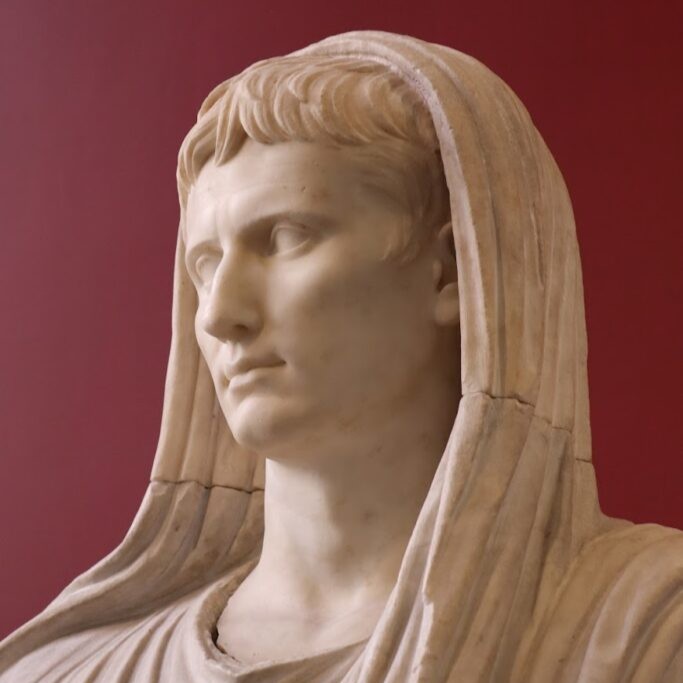 IN BREVE. La tradizione attribuisce al 15 agosto delle festività, le «Feriae Augusti», che Augusto avrebbe istituito nel 18 a.C. L’esame delle fonti antiche non conferma nulla di tutto ciò: nessun calendario romano conservato conosce questo nome. Quel giorno, nel 29 a.C., Roma celebrò il terzo giorno del trionfo di Ottaviano, quello sull’Egitto – un evento reale, ma senza alcun legame con quanto raccontano i resoconti moderni…
Feriae Augusti – Ferragosto: la festa che Augusto non ha creato
Ogni 15 agosto, l’Italia si ferma per il Ferragosto, festa cattolica dedicata all’Assunzione di Maria. Ma questa giornata dovrebbe il suo nome e la sua origine a una festa romana istituita nel 18 a.C. da Augusto, le «Feriae Augusti». Questa versione della storia ha persino trovato posto in alcuni lavori universitari, dove si afferma che Augusto avrebbe istituito a quella data una festa dei raccolti di metà agosto. Queste pubblicazioni non citano tuttavia alcuna fonte antica, e per un buon motivo: essa non compare in nessun testo romano conservato.
Ciò che i Romani celebrarono realmente il 15 agosto
Il 15 agosto ha davvero un legame reale con Augusto, ma questo non ha nulla a che vedere con un’istituzione religiosa annuale. Nel 29 a.C., di ritorno a Roma dopo la vittoria di Azio e la morte di Cleopatra, Ottaviano celebrò tre trionfi consecutivi. Svetonio li riassume così nella sua Vita del divo Augusto: «Celebrò tre trionfi curuli, quello dalmatico, quello di Azio e quello d’Alessandria, tutti nell’arco di tre giorni consecutivi[1].» I Fasti Triumphales, calendario ufficiale dei trionfi romani, collocano con precisione il terzo giorno al 15 agosto: «Il comandante Cesare ha trionfato sull’Egitto[2].» Fu quel giorno, una sola volta, che la vittoria sull’Egitto e la morte di Cleopatra furono celebrate per le strade di Roma.
Nulla indica che quel giorno sia poi diventato una festa religiosa ripetuta ogni anno. Gli storici Gian Luca Gregori e Giovanni Almagno, nel loro studio dedicato ai calendari imperiali, notano al contrario che il 15 agosto figurava nel calendario romano come uno dei giorni previsti per una riunione ordinaria del Senato, un senatus legitimus, non come un giorno festivo.
Una festa assente da tutti i calendari romani
I Romani tenevano calendari precisi, in cui ogni giorno festivo doveva essere giustificato da una decisione del Senato. Lo specialista tedesco Jörg Rüpke ha ricostruito l’elenco delle commemorazioni aggiunte al calendario sotto Augusto: la conquista di Alessandria il 1° agosto, il triplice trionfo dal 13 al 15 agosto, la dedica del tempio del Divus Caesar il 18 agosto, quella dell’altare della Vittoria il 28 agosto. Nessuna «Feriae Augusti» vi figura. Lo storico Ralf Behrwald giunge alla stessa conclusione in uno studio dedicato specificamente alle nuove festività del calendario imperiale: vi elenca la chiusura del tempio di Giano, l’anniversario del 23 settembre, il trionfo dal 13 al 15 agosto, senza mai menzionare né le «Feriae Augusti» né la data del 18 a.C. Il termine non compare in nessun punto del suo studio.
La leggenda attribuisce inoltre a questa festa inventata il ruolo di aver riunito le celebrazioni agricole del mese di agosto per creare un unico periodo di riposo. Varrone, che descrive con precisione le festività di questo mese, le nomina al contrario separatamente – Vinalia rustica, Consualia, Volcanalia, Opiconsivia –, ciascuna con il proprio nome, la propria divinità e la propria data: «I Consualia traggono il loro nome da Conso, perché allora si tengono festività pubbliche in onore di questo dio[3].» Nulla, in Varrone, indica che una festa augustea le avrebbe collegate tra loro, né che ne sarebbe risultato un giorno festivo generale in tutto l’Impero romano.
Lo stesso nome del mese di agosto pone un ulteriore problema cronologico. Sextilis divenne Augustus solo nell’8 a.C., per senatoconsulto, come riferisce l’antiquario Censorino, che data l’evento nominando i consoli in carica: «Quanto al mese che era stato Sextilis, per senatoconsulto […] fu chiamato Augustus in onore di Augusto[4].» Una festa, le «Feriae Augusti», istituita nel 18 a.C., cioè dieci anni prima che il mese portasse questo nome, pone dunque un problema cronologico.
Quando una festa ha realmente portato il nome di Augusto, le fonti lo dicono senza ambiguità. Augusto stesso racconta, nelle sue Res Gestae, che dopo il suo ritorno dalla Siria il Senato consacrò un altare alla Fortuna Redux e istituì un giorno commemorativo: «E [il Senato] chiamò questo giorno Augustalia, dal nostro soprannome[5].» Questa festa, gli Augustalia, esiste davvero, ma cade il 12 ottobre, non il 15 agosto, e risale al 19 a.C., non al 18.
Come il XX secolo ha fabbricato un’origine antica
Se le «Feriae Augusti» non compaiono in nessuna fonte romana, da dove viene allora la data del 18 a.C.? Le ricerche condotte nei testi a stampa non permettono di risalire oltre il 1938. Quell’anno, l’etnologo Raffaele Corso pubblicò nell’Enciclopedia Italiana una voce «Ferragosto» in cui sostiene che «la Chiesa ha trasportato e assorbito la festa del ferragosto in quella dell’Assunzione» – spiegando così come una festa più antica, celebrata all’inizio del mese, si sarebbe spostata verso il 15 agosto cristiano. Corso non cita tuttavia alcun documento medievale che attesti questo trasferimento.
Questo racconto di un trasferimento verso l’Assunzione, nello stesso giorno, si scontra peraltro con la documentazione lessicografica. Nel 1814, il lessicografo Francesco Cherubini spiega ancora la parola milanese Faravost con il Ferragosto, allora celebrato il primo giorno di agosto. Nel 1930, l’archivista Adriano Cappelli constata che la parola designa ancora il 1° agosto «in molte regioni d’Italia», e solo il 15 in Lombardia e in alcune altre regioni. Il Ferragosto italiano ha dunque a lungo designato l’inizio del mese, non il giorno dell’Assunzione; lo slittamento verso il 15 agosto è stato progressivo e regionale, e non un trasferimento unico avvenuto al momento della cristianizzazione.
La data del 18 a.C. compare poi presso lo scrittore Alfredo Cattabiani, nel suo Calendario pubblicato nel 1988: «Nel 18 a.C., Augusto […] istituì alle calende del mese le Feriae Augusti.» Ma Cattabiani colloca ancora questa istituzione al 1° agosto – le calende – e precisa separatamente: «Oggi il Ferragosto, spostato al 15…» Le due date restano distinte nel suo testo. Solo nel 1999, presso Pasquale Martucci e Antonio Di Rienzo, l’associazione diventa più brusca: «Le Feriae Augusti […] furono istituite nel 18 a.C.», senza riferimento antico e in prossimità immediata del racconto dell’Assunzione.
Tra il 2006 e il 2009, alcuni contributori di Wikipedia in italiano hanno assemblato questi diversi elementi in un unico racconto: 18 a.C., «Feriae Augusti», festività agricole, e l’idea che Augusto avrebbe voluto collegarle per procurare un lungo periodo di riposo (inventando così quasi le ferie pagate!), un’intenzione che nessuna fonte antica gli attribuisce. Questa aggiunta non si basava su alcun riferimento. La stessa aggiunta ha dotato le «Feriae Augusti» di cavalli e bestie da soma esonerati dal lavoro e incoronati di fiori: un dettaglio reale, ma preso in prestito senza dirlo da una festa del tutto diversa, i Consualia, descritta da Dionigi di Alicarnasso (Antichità romane, I, 33, 2), che menziona solo cavalli e muli. La fusione finale è avvenuta sulla stampa: nel 2022, il quotidiano La Nazione ha titolato «15 agosto 18 a.C., istituzione del giorno delle Ferie di Augusto: nascita del Ferragosto» – una data e un giorno che nessuna fonte antica ha mai associato.
Studi moderni consultati
- Jörg Rüpke, «Calendriers romains d’époque augustéenne: politique calendaire», in Ivana Savalli-Lestrade e Isabelle Cogitore (a cura di), Des rois au Prince. Pratiques du pouvoir monarchique dans l’Orient hellénistique et romain, Grenoble, ELLUG, 2010, p. 85–96 (testo integrale consultato).
- Ralf Behrwald, «Festkalender der frühen Kaiserzeit als Medien der Erinnerung», in Hans Beck e Hans-Ulrich Wiemer (a cura di), Feiern und Erinnern. Geschichtsbilder im Spiegel antiker Feste, Studien zur Alten Geschichte, Bd. 12, Berlin, Verlag Antike, 2009, p. 141–160 (riassunto consultato).
- Gian Luca Gregori e Giovanni Almagno, Roman Calendars: Imperial Birthdays, Victories and Triumphs, a cura di Tommaso Spinelli, Beau Bassin, LAP LAMBERT Academic Publishing, 2019 (edizione riveduta), in particolare il capitolo «The Triumph of Octavian», p. 105–112 (testo consultato).
[1] Svetonio, Divus Augustus, 22: Curulis triumphos tris egit, Delmaticum, Actiacum, Alexandrinum, continuo triduo omnes.
[2] Fasti Triumphales (tabula Barberiniana), voce del 15 agosto 29 a.C. (testo citato da G. L. Gregori e G. Almagno, Roman Calendars: Imperial Birthdays, Victories and Triumphs, 2019, p. 109, secondo A. Degrassi, Inscriptiones Italiae, XIII.1, 1947, p. 345): Imp(erator) Caesar ex A[egy]pto XIIX K(alendas) Sept(embres) triumph(avit).
[3] Varrone, De lingua Latina, VI, 20: Consualia dicta a Conso, quod tum feriae publicae ei deo […].
[4] Censorino, De die natali, 22, 16: qui autem Sextilis fuerat, ex S.C. […] in Augusti honorem dictus est Augustus.
[5] Augusto, Res Gestae Divi Augusti, 11: et diem Augustalia ex cognomine nostro appellavit.
👉 Tutte le feste del calendario romano
 English version
IN BRIEF. Tradition credits Augustus with instituting festivities called the “Feriae Augusti” on 15 August, supposedly founded in 18 BCE. Examination of the ancient sources confirms nothing of the sort: no surviving Roman calendar knows this name. On that day, in 29 BCE, Rome did celebrate the third day of Octavian’s triumph – the one over Egypt – a real event, but unconnected to what modern accounts claim…
Feriae Augusti – Ferragosto: the festival Augustus never created
Every 15 August, Italy comes to a halt for Ferragosto, a Catholic festival dedicated to the Assumption of Mary. But this day is said to owe its name and origin to a Roman festival instituted in 18 BCE by Augustus, the “Feriae Augusti”. This version of events has even found its way into some academic works, which claim that Augustus instituted a mid-August harvest festival on this date. These publications, however, cite no ancient source – and for good reason: the phrase appears in no surviving Roman text.
What the Romans actually celebrated on 15 August
15 August does have a genuine connection to Augustus, but it has nothing to do with an annual religious institution. In 29 BCE, on his return to Rome after the victory at Actium and the death of Cleopatra, Octavian celebrated three consecutive triumphs. Suetonius sums them up in his Life of the Divine Augustus: “He celebrated three curule triumphs, the Dalmatian, the Actian and the Alexandrian, all within three consecutive days[1].” The Fasti Triumphales, the official Roman register of triumphs, place the third day precisely on 15 August: “Imperator Caesar triumphed over Egypt[2].” It was on that day, and only that once, that the victory over Egypt and the death of Cleopatra were celebrated in the streets of Rome.
Nothing indicates that this day later became a religious festival repeated every year. Historians Gian Luca Gregori and Giovanni Almagno, in their study of the imperial calendars, note on the contrary that 15 August appeared in the Roman calendar as one of the days set aside for an ordinary meeting of the Senate, a senatus legitimus, not as a public holiday.
A festival absent from every Roman calendar
The Romans kept precise calendars, in which every holiday had to be justified by a decision of the Senate. The German scholar Jörg Rüpke has reconstructed the list of commemorations added to the calendar under Augustus: the conquest of Alexandria on 1 August, the triple triumph from 13 to 15 August, the dedication of the temple of the Divus Caesar on 18 August, and that of the altar of Victory on 28 August. No “Feriae Augusti” appears there. The historian Ralf Behrwald reaches the same conclusion in a study devoted specifically to the new festivals of the imperial calendar: he lists the closing of the temple of Janus, the anniversary of 23 September, and the triumph from 13 to 15 August, without ever mentioning either the “Feriae Augusti” or the date 18 BCE. The term does not appear anywhere in his study.
The legend also credits this invented festival with having brought together August’s agricultural celebrations to create a single period of rest. Varro, who describes the festivals of this month in detail, names them, on the contrary, separately – Vinalia rustica, Consualia, Volcanalia, Opiconsivia – each with its own name, its own deity and its own date: “The Consualia take their name from Consus, because at that time there are public festivities in honour of that god[3].” Nothing in Varro indicates that an Augustan festival linked them together, nor that a general holiday resulted from it throughout the Roman Empire.
The very name of the month of August raises a further chronological problem. Sextilis did not become Augustus until 8 BCE, by decree of the Senate, as reported by the antiquarian Censorinus, who dates the event by naming the consuls then in office: “As for the month that had been Sextilis, by decree of the Senate […] it was named Augustus in honour of Augustus[4].” A festival called the “Feriae Augusti”, instituted in 18 BCE – ten years before the month bore this name – therefore poses a chronological problem.
When a festival really did bear the name of Augustus, the sources say so plainly. Augustus himself recounts, in his Res Gestae, that after his return from Syria the Senate consecrated an altar to Fortuna Redux and instituted a commemorative day: “And [the Senate] called this day the Augustalia, after our surname[5].” This festival, the Augustalia, does indeed exist, but it falls on 12 October, not 15 August, and dates from 19 BCE, not 18.
How the twentieth century manufactured an ancient origin
If the “Feriae Augusti” appear in no Roman source, where, then, does the date 18 BCE come from? Research into printed texts cannot trace it back further than 1938. That year, the ethnologist Raffaele Corso published an entry, “Ferragosto”, in the Enciclopedia Italiana, in which he argues that “the Church transferred and absorbed the festival of ferragosto into that of the Assumption” – thereby explaining how an older festival, celebrated at the start of the month, supposedly moved to the Christian 15 August. Corso, however, cites no medieval document attesting to this shift.
This account of a shift to the Assumption, on the very same day, moreover runs up against the lexicographical record. In 1814, the lexicographer Francesco Cherubini still explained the Milanese word Faravost by reference to Ferragosto, then celebrated on the first day of August. In 1930, the archivist Adriano Cappelli noted that the word still denoted 1 August “in many regions of Italy”, and only the 15th in Lombardy and a few other regions. Italian Ferragosto therefore long denoted the start of the month, not the day of the Assumption; the shift towards 15 August was gradual and regional, not a single transfer that occurred at the time of Christianisation.
The date 18 BCE next appears in the writer Alfredo Cattabiani’s Calendario, published in 1988: “In 18 BCE, Augustus […] instituted the Feriae Augusti on the calends of the month.” Cattabiani, however, still places this institution on 1 August – the calends – and notes separately: “Today, Ferragosto, moved to the 15th…” The two dates remain distinct in his account. It was only in 1999, with Pasquale Martucci and Antonio Di Rienzo, that the association became more abrupt: “The Feriae Augusti […] were instituted in 18 BCE”, with no ancient reference and placed immediately alongside the account of the Assumption.
Between 2006 and 2009, contributors to the Italian-language Wikipedia assembled these various elements into a single narrative: 18 BCE, the “Feriae Augusti”, agricultural festivals, and the idea that Augustus had wanted to link them together to provide a long period of rest (thereby practically inventing paid holidays!) – an intention no ancient source attributes to him. This addition rested on no reference at all. The same addition equipped the “Feriae Augusti” with horses and pack animals excused from work and crowned with flowers: a genuine detail, but borrowed, without acknowledgement, from an entirely different festival, the Consualia, described by Dionysius of Halicarnassus (Roman Antiquities, I, 33, 2), who mentions only horses and mules. The final fusion took place in the press: in 2022, the newspaper La Nazione ran the headline “15 August 18 BCE, institution of the day of the Feriae of Augustus: the birth of Ferragosto” – a date and a day that no ancient source ever associated.
Modern studies consulted
- Jörg Rüpke, “Calendriers romains d’époque augustéenne: politique calendaire”, in Ivana Savalli-Lestrade and Isabelle Cogitore (eds), Des rois au Prince. Pratiques du pouvoir monarchique dans l’Orient hellénistique et romain, Grenoble, ELLUG, 2010, pp. 85–96 (full text consulted).
- Ralf Behrwald, “Festkalender der frühen Kaiserzeit als Medien der Erinnerung”, in Hans Beck and Hans-Ulrich Wiemer (eds), Feiern und Erinnern. Geschichtsbilder im Spiegel antiker Feste, Studien zur Alten Geschichte, Bd. 12, Berlin, Verlag Antike, 2009, pp. 141–160 (summary consulted).
- Gian Luca Gregori and Giovanni Almagno, Roman Calendars: Imperial Birthdays, Victories and Triumphs, edited by Tommaso Spinelli, Beau Bassin, LAP LAMBERT Academic Publishing, 2019 (revised edition), especially the chapter “The Triumph of Octavian”, pp. 105–112 (text consulted).
[1] Suetonius, Divus Augustus, 22: Curulis triumphos tris egit, Delmaticum, Actiacum, Alexandrinum, continuo triduo omnes.
[2] Fasti Triumphales (tabula Barberiniana), entry for 15 August 29 BCE (text cited by G. L. Gregori and G. Almagno, Roman Calendars: Imperial Birthdays, Victories and Triumphs, 2019, p. 109, after A. Degrassi, Inscriptiones Italiae, XIII.1, 1947, p. 345): Imp(erator) Caesar ex A[egy]pto XIIX K(alendas) Sept(embres) triumph(avit).
[3] Varro, De lingua Latina, VI, 20: Consualia dicta a Conso, quod tum feriae publicae ei deo […].
[4] Censorinus, De die natali, 22, 16: qui autem Sextilis fuerat, ex S.C. […] in Augusti honorem dictus est Augustus.
[5] Augustus, Res Gestae Divi Augusti, 11: et diem Augustalia ex cognomine nostro appellavit.