Cet événement se répète19 août 2027
202619aoûtToute la journéeVinalia RusticaType:Fête romaine
Description
Ante diem quartum decimum Kalendas septembres
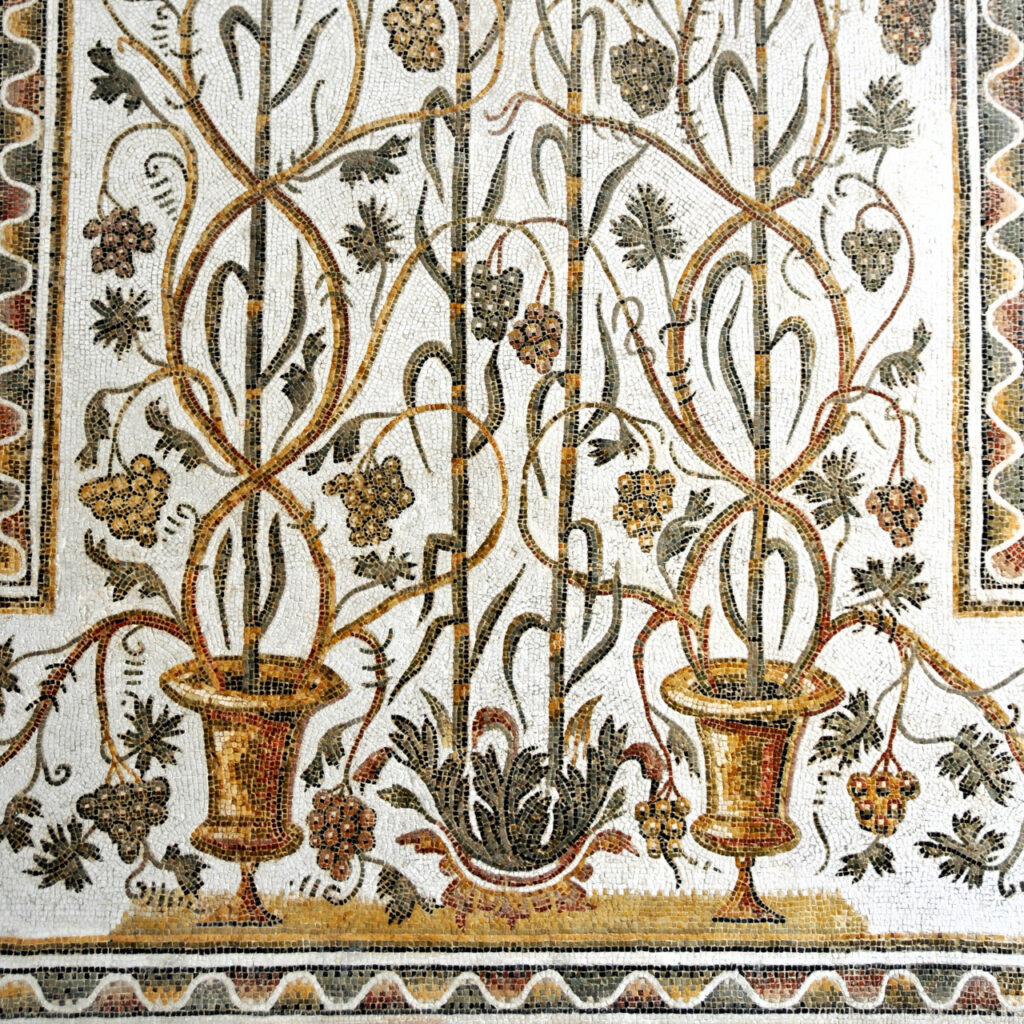
EN BREF. Le 19 août, Rome a célébré les Vinalia rustica. Les calendriers républicains associent ce jour à la fois à Jupiter et à Vénus, sans trancher. Varron, Festus et Pline en donnent des versions différentes: rite du flamen Dialis, protection contre les intempéries, légende du roi étrusque Mézence. Les chercheurs discutent encore de ce que ce jour inaugurait vraiment.
Vinalia rustica: quand Vénus dispute la vigne à Jupiter
Les calendriers romains n’indiquent qu’un mot: Vinalia. C’est la tradition savante – celle des antiquaires comme Varron ou des naturalistes comme Pline l’Ancien – qui distingue deux fêtes du même nom: les Vinalia priora, le 23 avril, et les Vinalia rustica (ou altera chez Pline), le 19 août, soit le quatorzième jour avant les calendes de septembre. Le calendrier préjulien d’Antium, daté d’environ 67 à 55 avant notre ère, porte à cette date l’entrée «Vinalia […] à Vénus[1]». C’est l’un des témoignages les plus anciens sur cette fête, contemporain de la fin de la République.
Un jour, deux dieux
Le patronage de cette date n’a rien d’évident. Festus, dans son dictionnaire De verborum significatu, est catégorique: «On appelle Vinalia rustica [la fête célébrée] au mois d’août, le quatorzième jour avant les calendes de septembre. C’est un jour de fête de Jupiter, parce que les Latins […] consacrèrent à ce dieu la libation de tout le vin[2].» Les Fasti Allifani donnent d’ailleurs Feriae Iovi.
Mais le même jour est aussi celui de Vénus. Les Fasti Vallenses portent Veneri ad Circum Maximum, et Varron explique, dans le sixième livre de son traité De lingua Latina: «On appelle Vinalia rustica le quatorzième jour avant les calendes de septembre, parce qu’alors un temple a été dédié à Vénus et que les jardins sont consacrés à cette déesse[3].» Il ajoute que les holitores – les maraîchers – sont en congé ce jour-là. Dans son traité d’agriculture, Res rusticae, Varron va plus loin: il invoque Vénus comme protectrice des jardins et affirme que c’est «à ce titre qu’ont été instituées les Vinalia rustica[4]».
Les historiens du 20e et du 21e siècle ne s’accordent pas sur la manière de faire cohabiter ces deux dieux. Une première lecture, datant de 1941, y voit une ancienne fête jovienne à laquelle la protection horticole de Vénus se serait greffée plus tard. Une étude de 1954 refuse cette hiérarchie: Jupiter resterait le destinataire souverain de l’offrande, mais Vénus – honorée ce jour-là sous le nom de Venus Obsequens – jouerait un rôle d’intercession, une puissance qui favorise la bienveillance divine. Des travaux plus récents, consacrés spécifiquement aux sanctuaires de Vénus, ont montré que plusieurs d’entre eux, liés au vin – à Rome, mais aussi à Lavinium, Terracine ou Capoue – occupent des positions périphériques associées à des lieux de transformation du vin, comme le Cécube produit près du sanctuaire de Venus Obsequens de Terracine.
La grappe qui n’appartient pas encore aux hommes
Le rituel le plus souvent associé à cette fête est celui que décrit Varron un peu plus tôt dans le même livre: «Les Vinalia tirent leur nom du vin; ce jour appartient à Jupiter, non à Vénus […] car le flamine de Jupiter prend les auspices pour les vendanges […] et sacrifie une agnelle à Jupiter[5].» Pendant que les entrailles de la victime sont traitées, le flamen Dialis cueille lui-même la première grappe. Une inscription de Tusculum, que Varron cite dans la foulée, interdisait d’apporter le vin nouveau dans la ville avant que les Vinalia n’aient été proclamées.
Ce passage pose toutefois un problème philologique que les études récentes prennent au sérieux: dans le texte de Varron, il se trouve dans la séquence consacrée aux fêtes d’avril (entre les Fordicidia et les Robigalia) et non dans celle d’août. Rien, dans ce passage précis, ne prouve donc que ce rite se déroulait le 19 août plutôt que le 23 avril. Plusieurs études l’ont malgré tout rattaché aux Vinalia rustica d’août, jugeant qu’une ouverture cultuelle de la vendange y a plus de sens qu’en plein printemps. D’autres séparent nettement la cueillette rituelle de la première grappe – qu’elles situent bien en août – de la vendange proprement dite, dont la date reste variable et dépend de la maturité du raisin.
Une étude de 1988 va dans le même sens en distinguant les Vinalia rustica, fête fixe du 19 août, de ce qu’elle appelle l’auspicatio vindemiae, l’ouverture effective de la vendange. Des travaux plus récents, parus en 2024, reprennent et formalisent cette distinction: le 19 août protégerait rituellement les grappes dans leur dernière phase de maturation, tandis que l’ouverture réelle de la récolte dépendrait du climat local, du cépage et du type de vin recherché.
Pline l’Ancien propose une autre explication à la fête: «cette fête a été instituée pour apaiser les intempéries[6]», écrit-il, rapportant une tradition selon laquelle les Vinalia rustica protégeaient les grappes des orages à l’approche de l’automne. Cette fonction météorologique a été placée par certains chercheurs au cœur de l’interprétation de la fête. D’autres invitent toutefois à la prudence: Pline lui-même critique, dans le passage qui précède, l’explication astronomique que Varron donnait à cette date.
Mézence, un roi qui réclamait le vin des dieux
Mais l’explication la plus intéressante de la fête est certainement celle de la légende concernant le roi étrusque Mézence.
Selon la version la plus ancienne conservée, transmise par Macrobe et attribuée à Caton l’Ancien, «Mézence avait ordonné aux Rutules de lui offrir les prémices qu’ils offraient normalement aux dieux[7]». Face à cette exigence, les Latins auraient voué à Jupiter, plutôt qu’au roi étrusque, les prémices dues aux dieux s’il leur accordait la victoire.
Ovide développe le récit dans ses Fastes, mais sous la date du 23 avril: Mézence aurait exigé la future vendange comme prix de son aide militaire, et Énée aurait promis le vin à Jupiter à sa place: «La vendange ennemie a été promise au roi tyrrhénien; Jupiter, c’est toi qui recevras le moût des vignes du Latium[8].» Festus, en revanche, rattache expressément ce même récit aux Vinalia rustica d’août. Pline l’Ancien confirme que Varron faisait remonter à Mézence cette tradition, sans toutefois nommer la fête: «Marcus Varron rapporte que Mézence, roi d’Étrurie, apporta son aide aux Rutules contre les Latins en échange de leur vin[9].»
Cette hésitation entre avril et août n’est pas un détail mineur.
Des travaux de 2024 reprennent une hypothèse déjà formulée trente ans avant selon laquelle le premier épisode du récit, Mézence réclamant une récolte encore sur pied, correspond mieux au moment d’avant-vendange du mois d’août que le second, la libation du vin déjà fait, célébrée en avril. Une lecture plus large du mythe envisage la piété comme le fait de vouer le vin avant la vendange, puis d’en faire libation avant de le boire; l’impiété, à l’inverse, consisterait à s’approprier d’abord ce qui revient aux dieux. Les Vinalia, dans cette lecture, mettent en scène chaque année ce partage entre la part divine et la part humaine.
Un sanctuaire archaïque de Lavinium apporte un indice supplémentaire, à manier avec précaution. Les premiers autels monumentaux du site, construits au 6e siècle avant notre ère, sont orientés selon un axe qui correspond, une fois transposé dans le calendrier julien, à une date très proche du 19 août – à deux ou trois jours près selon des calculs récents. Le mobilier retrouvé dans les niveaux correspondants comprend une proportion inhabituelle de vases à boire, notamment des kantharoi, que ces mêmes travaux comparent à d’autres sanctuaires comme Satricum ou Sant’Omobono. Un calice étrusque en impasto provenant de Caere, daté du 7e siècle avant notre ère, porte par ailleurs le nom de Mezentius – sans qu’on puisse en tirer de conclusion sur le mythe lui-même.
Ces éléments ne prouvent pas que les Vinalia rustica, sous ce nom, existaient déjà à cette époque: notre première datation calendaire assurée reste celle des Fasti Antiates, à la fin de la République. Ils indiquent seulement qu’un repère saisonnier proche du 19 août organisait, plusieurs siècles avant Varron, des pratiques liées au vin.
Études modernes consultées
- Franz Bömer, «Iuppiter und die römischen Weinfeste», Rheinisches Museum für Philologie, 90, 1941, p. 30–58.
- Robert Schilling, La religion romaine de Vénus depuis les origines jusqu’au temps d’Auguste, Paris, De Boccard, 1954, en particulier p. 91–155.
- John Scheid, «Conférence de M. John Scheid», Annuaire de l’École pratique des hautes études, Section des sciences religieuses, 88, 1979–1980, p. 327–333.
- Olivier de Cazanove, «Jupiter, Liber et le vin latin», Revue de l’histoire des religions, 205/3, 1988, p. 245–265.
- Francesco Marcattili, «I santuari di Venere e i Vinalia», Rendiconti dell’Accademia Nazionale dei Lincei, série 9, vol. 28, 2017, p. 425–444.
- Claudia Moser, «Ritual time: the seasonal calendar and religious festivals in Archaic and Republican central Italy», Journal of Roman Archaeology, 37, 2024, p. 449–477.
[1] Fasti Antiates Maiores, Inscriptiones Italiae XIII, 2, no 1 = ILLRP 9:
Vina(lia), f(—) p(—), Venere.
«Vinalia […] à Vénus.» (Inscription fragmentaire; les sigles entre parenthèses correspondent à des lettres abrégées sur la pierre dont le développement complet n’est pas assuré.)[2] Sextus Pompeius Festus, De verborum significatu, s.v. Rustica vinalia:
Rustica vinalia appellantur mense Augusto XIIII Kal. Sept. Iovis dies festus, quia Latini bellum gerentes adversus Mezentium, omnis vini libationem ei deo dedicaverunt. Eodem autem die Veneri templa sunt consecrata, alterum ad Circum Maximum, alterum in luco Libitinensi, quia in eius deae tutela sunt horti.
«On appelle Vinalia rustica [la fête célébrée] au mois d’août, le quatorzième jour avant les calendes de septembre. C’est un jour de fête de Jupiter, parce que les Latins, en guerre contre Mézence, consacrèrent à ce dieu la libation de tout le vin. Le même jour, des temples ont été consacrés à Vénus, l’un près du Cirque Maxime, l’autre dans le bois de Libitina, parce que les jardins sont placés sous la protection de cette déesse.»[3] Varron, De lingua Latina, VI, 20:
Vinalia rustica dicuntur ante diem XIIII Kalendas Septembres, quod tum Veneri dedicata aedes et horti ei deae dicantur ac tum sunt feriati holitores.
«On appelle Vinalia rustica le quatorzième jour avant les calendes de septembre, parce qu’alors un temple a été dédié à Vénus et que les jardins sont consacrés à cette déesse, et que les maraîchers sont alors en congé.»[4] Varron, Rerum rusticarum libri, I, 1, 6:
Item adveneror Minervam et Venerem, quarum unius procuratio oliveti, alterius hortorum; quo nomine rustica Vinalia instituta.
«Je révère également Minerve et Vénus, dont l’une a la charge de l’oliveraie, l’autre des jardins; c’est à ce titre qu’ont été instituées les Vinalia rustica.»[5] Varron, De lingua Latina, VI, 16:
Vinalia a vino; hic dies Iovis, non Veneris; huius rei cura non levis in Latio: nam aliquot locis vindemiae primum ab sacerdotibus publice fiebant, ut Romae etiam nunc; nam flamen Dialis auspicatur vindemiam, et ut iussit vinum legere, agna Iovi facit, inter cuius exta caesa et porrecta flamen primus vinum legit. In Tusculanis portis est scriptum: Vinum novum ne vehatur in urbem ante quam Vinalia kalentur.
«Les Vinalia tirent leur nom du vin; ce jour appartient à Jupiter, non à Vénus. Cette fête est l’objet d’une grande solennité dans le Latium, où autrefois, en certaines contrées, les prêtres présidaient publiquement à la vendange, comme cela se pratique encore aujourd’hui dans le territoire de Rome. C’est un flamine dial qui inaugure la vendange: après avoir recueilli les grappes, il sacrifie une brebis à Jupiter, et, au cours de l’immolation et de l’offrande, il choisit la première grappe de raisin. Il est écrit dans les livres sacrés de Tusculum qu’on n’emmène point de vin nouveau à la ville avant la proclamation des Vinalia.»[6] Pline l’Ancien, Naturalis historia, XVIII, 289 (XVIII, 69 dans certaines éditions):
extra has causas sunt Vinalia altera, quae aguntur a. d. XIIII kal. Sept. Varro ea fidicula incipiente occidere mane determinat, quod vult initium autumni esse et hunc diem festum tempestatibus leniendis institutum.
«À part ces circonstances, il y a les secondes Vinalia, qui sont célébrées le quatorzième jour avant les calendes de septembre. Varron fixe ce moment au lever matinal de la constellation de la Lyre, qu’il considère comme marquant le début de l’automne; et cette fête a été instituée pour apaiser les intempéries.»[7] Caton l’Ancien, Origines, I (fragment transmis par Macrobe, Saturnalia, III, 5, 10):
Ait enim Mezentium Rutulis imperasse ut sibi offerrent quas dis primitias offerebant, et Latinos omnes similis imperii metu ita vovisse: Iuppiter, si tibi magis cordi est nos ea tibi dare potius quam Mezentio, uti nos victores facias.
«Il dit en effet que Mézence avait ordonné aux Rutules de lui offrir les prémices qu’ils offraient normalement aux dieux, et que tous les Latins, craignant un ordre semblable, firent ce vœu: Jupiter, s’il te plaît davantage que nous te donnions cela plutôt qu’à Mézence, fais que nous soyons vainqueurs.»[8] Ovide, Fastes, IV, 877–900:
hostica Tyrrheno vota est vindemia regi: Iuppiter, e Latio palmite musta feres.
«La vendange ennemie a été promise au roi tyrrhénien; Jupiter, c’est toi qui recevras le moût des vignes du Latium.»[9] Pline l’Ancien, Naturalis historia, XIV, 88:
M. Varro auctor est Mezentium Etruriae regem auxilium Rutulis contra Latinos tulisse vini mercede quod tum in Latino agro fuisset.
«Marcus Varron rapporte que Mézence, roi d’Étrurie, apporta son aide aux Rutules contre les Latins en échange du vin qui se trouvait alors sur le territoire latin.»
👉🗓️ Toutes les fêtes du calendrier romain
🇮🇹 Versione italiana
IN BREVE. Il 19 agosto, Roma celebrava i Vinalia rustica. I calendari repubblicani associano questo giorno sia a Giove sia a Venere, senza sciogliere il dubbio. Varrone, Festo e Plinio ne danno versioni diverse: rito del flamen Dialis, protezione contro le intemperie, leggenda del re etrusco Mezenzio. Gli studiosi discutono ancora su cosa inaugurasse realmente questo giorno.
Vinalia rustica: quando Venere contende la vigna a Giove
I calendari romani indicano solo una parola: Vinalia. È la tradizione erudita – quella degli antiquari come Varrone o dei naturalisti come Plinio il Vecchio – a distinguere due feste dello stesso nome: i Vinalia priora, il 23 aprile, e i Vinalia rustica (o altera in Plinio), il 19 agosto, ovvero il quattordicesimo giorno prima delle calende di settembre. Il calendario preguliano di Anzio, databile a circa il 67-55 a.C., riporta a questa data la voce «Vinalia […] a Venere[1]». Si tratta di una delle testimonianze più antiche su questa festa, coeva della fine della Repubblica.
Un giorno, due dei
Il patrocinio di questa data non è affatto scontato. Festo, nel suo dizionario De verborum significatu, è categorico: «Si chiamano Vinalia rustica [la festa celebrata] nel mese di agosto, il quattordicesimo giorno prima delle calende di settembre. È un giorno di festa di Giove, perché i Latini […] consacrarono a questo dio la libagione di tutto il vino[2].» I Fasti Allifani riportano peraltro Feriae Iovi.
Ma lo stesso giorno è anche quello di Venere. I Fasti Vallenses riportano Veneri ad Circum Maximum, e Varrone spiega, nel sesto libro del suo trattato De lingua Latina: «Si chiamano Vinalia rustica il quattordicesimo giorno prima delle calende di settembre, perché allora un tempio fu dedicato a Venere e i giardini sono consacrati a questa dea[3].» Aggiunge che gli holitores – gli ortolani – sono in congedo quel giorno. Nel suo trattato di agricoltura, Res rusticae, Varrone va oltre: invoca Venere come protettrice degli orti e afferma che è «a questo titolo che sono stati istituiti i Vinalia rustica[4]».
Gli storici del XX e del XXI secolo non concordano sul modo di far convivere questi due dei. Una prima lettura, risalente al 1941, vi vede un’antica festa gioviana a cui si sarebbe innestata più tardi la protezione orticola di Venere. Uno studio del 1954 respinge questa gerarchia: Giove resterebbe il destinatario sovrano dell’offerta, ma Venere – onorata quel giorno sotto il nome di Venus Obsequens – svolgerebbe un ruolo di intercessione, un potere che favorisce la benevolenza divina. Lavori più recenti, dedicati specificamente ai santuari di Venere, hanno mostrato che diversi di essi, legati al vino – a Roma, ma anche a Lavinium, Terracina o Capua – occupano posizioni periferiche associate a luoghi di trasformazione del vino, come il Cecubo prodotto vicino al santuario di Venus Obsequens di Terracina.
Il grappolo che non appartiene ancora agli uomini
Il rituale più spesso associato a questa festa è quello che Varrone descrive poco prima nello stesso libro: «I Vinalia traggono il loro nome dal vino; questo giorno appartiene a Giove, non a Venere […] poiché il flamine di Giove prende gli auspici per la vendemmia […] e sacrifica un’agnella a Giove[5].» Mentre le viscere della vittima vengono trattate, il flamen Dialis coglie egli stesso il primo grappolo. Un’iscrizione di Tuscolo, che Varrone cita subito dopo, vietava di portare il vino nuovo in città prima che i Vinalia fossero stati proclamati.
Questo passo pone tuttavia un problema filologico che gli studi recenti prendono sul serio: nel testo di Varrone, esso si trova nella sequenza dedicata alle feste di aprile (tra i Fordicidia e i Robigalia) e non in quella di agosto. Nulla, in questo passo preciso, dimostra dunque che questo rito si svolgesse il 19 agosto piuttosto che il 23 aprile. Diversi studi lo hanno comunque ricollegato ai Vinalia rustica di agosto, ritenendo che un’apertura cultuale della vendemmia abbia più senso lì che in piena primavera. Altri separano nettamente la raccolta rituale del primo grappolo – che collocano proprio in agosto – dalla vendemmia vera e propria, la cui data resta variabile e dipende dalla maturazione dell’uva.
Uno studio del 1988 va nella stessa direzione distinguendo i Vinalia rustica, festa fissa del 19 agosto, da quella che definisce l’auspicatio vindemiae, l’apertura effettiva della vendemmia. Lavori più recenti, pubblicati nel 2024, riprendono e formalizzano questa distinzione: il 19 agosto proteggerebbe ritualmente i grappoli nella loro ultima fase di maturazione, mentre l’apertura reale del raccolto dipenderebbe dal clima locale, dal vitigno e dal tipo di vino ricercato.
Plinio il Vecchio propone un’altra spiegazione della festa: «questa festa fu istituita per placare le intemperie[6]», scrive, riportando una tradizione secondo cui i Vinalia rustica proteggevano i grappoli dai temporali con l’avvicinarsi dell’autunno. Questa funzione meteorologica è stata posta da alcuni studiosi al centro dell’interpretazione della festa. Altri invitano tuttavia alla prudenza: lo stesso Plinio critica, nel passo che precede, la spiegazione astronomica che Varrone dava a questa data.
Mezenzio, un re che reclamava il vino degli dei
Ma la spiegazione più interessante della festa è certamente quella della leggenda riguardante il re etrusco Mezenzio.
Secondo la versione più antica conservata, tramandata da Macrobio e attribuita a Catone il Censore, «Mezenzio aveva ordinato ai Rutuli di offrirgli le primizie che normalmente offrivano agli dei[7]». Di fronte a questa pretesa, i Latini avrebbero votato a Giove, piuttosto che al re etrusco, le primizie dovute agli dei se avesse concesso loro la vittoria.
Ovidio sviluppa il racconto nei suoi Fasti, ma sotto la data del 23 aprile: Mezenzio avrebbe preteso la futura vendemmia come prezzo del suo aiuto militare, ed Enea avrebbe promesso il vino a Giove al suo posto: «La vendemmia nemica è stata promessa al re tirreno; Giove, sarai tu a ricevere il mosto delle vigne del Lazio[8].» Festo, invece, ricollega espressamente questo stesso racconto ai Vinalia rustica di agosto. Plinio il Vecchio conferma che Varrone faceva risalire a Mezenzio questa tradizione, senza tuttavia nominare la festa: «Marco Varrone racconta che Mezenzio, re d’Etruria, portò il suo aiuto ai Rutuli contro i Latini in cambio del loro vino[9].»
Questa esitazione tra aprile e agosto non è un dettaglio secondario.
Lavori del 2024 riprendono un’ipotesi già formulata trent’anni prima secondo cui il primo episodio del racconto, Mezenzio che reclama un raccolto ancora sui tralci, corrisponde meglio al momento pre-vendemmiale del mese di agosto rispetto al secondo, la libagione del vino già fatto, celebrata in aprile. Una lettura più ampia del mito concepisce la pietà come il fatto di votare il vino prima della vendemmia, per poi farne libagione prima di berlo; l’empietà, al contrario, consisterebbe nell’appropriarsi prima di ciò che spetta agli dei. I Vinalia, in questa lettura, mettono in scena ogni anno questa spartizione tra la parte divina e la parte umana.
Un santuario arcaico di Lavinium fornisce un indizio supplementare, da maneggiare con cautela. I primi altari monumentali del sito, costruiti nel VI secolo a.C., sono orientati secondo un asse che corrisponde, una volta trasposto nel calendario giuliano, a una data molto vicina al 19 agosto – con uno scarto di due o tre giorni secondo calcoli recenti. I reperti rinvenuti nei livelli corrispondenti comprendono una proporzione insolita di vasi da bere, in particolare kantharoi, che questi stessi lavori confrontano con altri santuari come Satricum o Sant’Omobono. Un calice etrusco in impasto proveniente da Caere, databile al VII secolo a.C., porta peraltro il nome di Mezentius – senza che se ne possa trarre alcuna conclusione sul mito stesso.
Questi elementi non dimostrano che i Vinalia rustica, sotto questo nome, esistessero già in quell’epoca: la nostra prima datazione calendariale certa resta quella dei Fasti Antiates, alla fine della Repubblica. Indicano soltanto che un riferimento stagionale vicino al 19 agosto organizzava, diversi secoli prima di Varrone, pratiche legate al vino.
Studi moderni consultati
- Franz Bömer, «Iuppiter und die römischen Weinfeste», Rheinisches Museum für Philologie, 90, 1941, p. 30–58.
- Robert Schilling, La religion romaine de Vénus depuis les origines jusqu’au temps d’Auguste, Paris, De Boccard, 1954, en particulier p. 91–155.
- John Scheid, «Conférence de M. John Scheid», Annuaire de l’École pratique des hautes études, Section des sciences religieuses, 88, 1979–1980, p. 327–333.
- Olivier de Cazanove, «Jupiter, Liber et le vin latin», Revue de l’histoire des religions, 205/3, 1988, p. 245–265.
- Francesco Marcattili, «I santuari di Venere e i Vinalia», Rendiconti dell’Accademia Nazionale dei Lincei, série 9, vol. 28, 2017, p. 425–444.
- Claudia Moser, «Ritual time: the seasonal calendar and religious festivals in Archaic and Republican central Italy», Journal of Roman Archaeology, 37, 2024, p. 449–477.
[1] Fasti Antiates Maiores, Inscriptiones Italiae XIII, 2, no 1 = ILLRP 9:
Vina(lia), f(—) p(—), Venere.
«Vinalia […] a Venere.» (Iscrizione frammentaria; le sigle tra parentesi corrispondono a lettere abbreviate sulla pietra il cui scioglimento completo non è certo.)[2] Sextus Pompeius Festus, De verborum significatu, s.v. Rustica vinalia:
Rustica vinalia appellantur mense Augusto XIIII Kal. Sept. Iovis dies festus, quia Latini bellum gerentes adversus Mezentium, omnis vini libationem ei deo dedicaverunt. Eodem autem die Veneri templa sunt consecrata, alterum ad Circum Maximum, alterum in luco Libitinensi, quia in eius deae tutela sunt horti.
«Si chiamano Vinalia rustica [la festa celebrata] nel mese di agosto, il quattordicesimo giorno prima delle calende di settembre. È un giorno di festa di Giove, perché i Latini, in guerra contro Mezenzio, consacrarono a questo dio la libagione di tutto il vino. Lo stesso giorno, furono consacrati templi a Venere, uno vicino al Circo Massimo, l’altro nel bosco di Libitina, perché i giardini sono posti sotto la protezione di questa dea.»[3] Varrone, De lingua Latina, VI, 20:
Vinalia rustica dicuntur ante diem XIIII Kalendas Septembres, quod tum Veneri dedicata aedes et horti ei deae dicantur ac tum sunt feriati holitores.
«Si chiamano Vinalia rustica il quattordicesimo giorno prima delle calende di settembre, perché allora un tempio fu dedicato a Venere e i giardini sono consacrati a questa dea, e perché in quel giorno gli ortolani sono in congedo.»[4] Varrone, Rerum rusticarum libri, I, 1, 6:
Item adveneror Minervam et Venerem, quarum unius procuratio oliveti, alterius hortorum; quo nomine rustica Vinalia instituta.
«Venero ugualmente Minerva e Venere, delle quali l’una ha la cura dell’oliveto, l’altra dei giardini; a questo titolo furono istituiti i Vinalia rustica.»[5] Varrone, De lingua Latina, VI, 16:
Vinalia a vino; hic dies Iovis, non Veneris; huius rei cura non levis in Latio: nam aliquot locis vindemiae primum ab sacerdotibus publice fiebant, ut Romae etiam nunc; nam flamen Dialis auspicatur vindemiam, et ut iussit vinum legere, agna Iovi facit, inter cuius exta caesa et porrecta flamen primus vinum legit. In Tusculanis portis est scriptum: Vinum novum ne vehatur in urbem ante quam Vinalia kalentur.
«I Vinalia traggono il loro nome dal vino; questo giorno appartiene a Giove, non a Venere. Questa festa è oggetto di grande solennità nel Lazio, dove un tempo, in certe regioni, i sacerdoti presiedevano pubblicamente alla vendemmia, come ancora oggi si pratica nel territorio di Roma. È un flamine diale che inaugura la vendemmia: dopo aver raccolto i grappoli, sacrifica una pecora a Giove e, durante l’immolazione e l’offerta, sceglie il primo grappolo d’uva. Nei libri sacri di Tuscolo è scritto che non si porta vino nuovo in città prima della proclamazione dei Vinalia.»[6] Plinio il Vecchio, Naturalis historia, XVIII, 289 (XVIII, 69 in alcune edizioni):
extra has causas sunt Vinalia altera, quae aguntur a. d. XIIII kal. Sept. Varro ea fidicula incipiente occidere mane determinat, quod vult initium autumni esse et hunc diem festum tempestatibus leniendis institutum.
«Oltre a queste circostanze, vi sono i secondi Vinalia, che si celebrano il quattordicesimo giorno prima delle calende di settembre. Varrone fissa questo momento al levare mattutino della costellazione della Lira, che considera come l’inizio dell’autunno; e questa festa fu istituita per placare le intemperie.»[7] Catone il Censore, Origines, I (frammento tramandato da Macrobio, Saturnalia, III, 5, 10):
Ait enim Mezentium Rutulis imperasse ut sibi offerrent quas dis primitias offerebant, et Latinos omnes similis imperii metu ita vovisse: Iuppiter, si tibi magis cordi est nos ea tibi dare potius quam Mezentio, uti nos victores facias.
«Dice infatti che Mezenzio aveva ordinato ai Rutuli di offrirgli le primizie che normalmente offrivano agli dei, e che tutti i Latini, temendo un ordine simile, fecero questo voto: Giove, se ti è più gradito che ti diamo questo piuttosto che a Mezenzio, fa’ che siamo vincitori.»[8] Ovidio, Fasti, IV, 877–900:
hostica Tyrrheno vota est vindemia regi: Iuppiter, e Latio palmite musta feres.
«La vendemmia nemica è stata promessa al re tirreno; Giove, sarai tu a ricevere il mosto delle vigne del Lazio.»[9] Plinio il Vecchio, Naturalis historia, XIV, 88:
M. Varro auctor est Mezentium Etruriae regem auxilium Rutulis contra Latinos tulisse vini mercede quod tum in Latino agro fuisset.
«Marco Varrone racconta che Mezenzio, re d’Etruria, portò il suo aiuto ai Rutuli contro i Latini in cambio del vino che allora si trovava nel territorio del Lazio.»
👉🗓️ Tutte le feste del calendario romano
🇬🇧 English version
IN BRIEF. On 19 August, Rome celebrated the Vinalia rustica. The republican calendars link this day to both Jupiter and Venus, without settling the matter. Varro, Festus and Pliny each give different accounts: a rite of the flamen Dialis, protection against storms, the legend of the Etruscan king Mezentius. Scholars still debate what this day truly inaugurated.
Vinalia rustica: when Venus disputes the vineyard with Jupiter
The Roman calendars give only one word: Vinalia. It is the learned tradition – that of antiquarians such as Varro or naturalists such as Pliny the Elder – that distinguishes two festivals of the same name: the Vinalia priora, on 23 April, and the Vinalia rustica (or altera in Pliny), on 19 August, that is, the fourteenth day before the calends of September. The pre-Julian calendar of Antium, dated to around 67–55 BCE, records at this date the entry “Vinalia […] to Venus[1]”. This is one of the oldest testimonies to this festival, contemporary with the end of the Republic.
One day, two gods
The patronage of this date is far from obvious. Festus, in his dictionary De verborum significatu, is categorical: “The Vinalia rustica is the name given [to the festival celebrated] in the month of August, on the fourteenth day before the calends of September. It is a feast day of Jupiter, because the Latins […] dedicated to this god the libation of all the wine[2].” The Fasti Allifani indeed give Feriae Iovi.
But the same day is also that of Venus. The Fasti Vallenses give Veneri ad Circum Maximum, and Varro explains, in the sixth book of his treatise De lingua Latina: “The Vinalia rustica falls on the fourteenth day before the calends of September, because a temple was dedicated to Venus on that day and the gardens are consecrated to this goddess[3].” He adds that the holitores – the market gardeners – are off duty that day. In his agricultural treatise, Res rusticae, Varro goes further: he invokes Venus as protector of gardens and states that it is “on this account that the Vinalia rustica were instituted[4]”.
Historians of the 20th and 21st centuries do not agree on how to reconcile these two gods. A first reading, dating from 1941, sees in it an ancient Jovian festival onto which Venus’s horticultural protection was later grafted. A 1954 study rejects this hierarchy: Jupiter would remain the sovereign recipient of the offering, but Venus – honoured that day under the name Venus Obsequens – would play a role of intercession, a power that fosters divine goodwill. More recent work, devoted specifically to the sanctuaries of Venus, has shown that several of them, linked to wine – in Rome, but also at Lavinium, Terracina or Capua – occupy peripheral positions associated with wine-processing sites, such as the Caecuban produced near the sanctuary of Venus Obsequens at Terracina.
The cluster that does not yet belong to men
The ritual most often associated with this festival is the one Varro describes a little earlier in the same book: “The Vinalia take their name from wine; this day belongs to Jupiter, not to Venus […] for the flamen of Jupiter takes the auspices for the grape harvest […] and sacrifices a ewe lamb to Jupiter[5].” While the entrails of the victim are being handled, the flamen Dialis himself picks the first cluster. An inscription from Tusculum, which Varro cites immediately afterwards, forbade bringing new wine into the city before the Vinalia had been proclaimed.
This passage, however, raises a philological problem that recent studies take seriously: in Varro’s text, it appears in the sequence devoted to the festivals of April (between the Fordicidia and the Robigalia) and not in that of August. Nothing in this particular passage, therefore, proves that this rite took place on 19 August rather than on 23 April. Several studies have nonetheless linked it to the August Vinalia rustica, on the grounds that a cultic opening of the harvest makes more sense there than in the middle of spring. Others clearly separate the ritual picking of the first cluster – which they place firmly in August – from the grape harvest proper, whose date remains variable and depends on the ripeness of the grapes.
A 1988 study takes the same view, distinguishing the Vinalia rustica, a fixed festival on 19 August, from what it calls the auspicatio vindemiae, the actual opening of the harvest. More recent work, published in 2024, takes up and formalises this distinction: 19 August would ritually protect the clusters in their final ripening phase, while the actual opening of the harvest would depend on local climate, grape variety and the type of wine sought.
Pliny the Elder offers another explanation for the festival: “this feast was instituted to appease the weather[6]”, he writes, reporting a tradition according to which the Vinalia rustica protected the clusters from storms as autumn approached. This meteorological function has been placed by some scholars at the heart of the festival’s interpretation. Others, however, urge caution: Pliny himself criticises, in the preceding passage, the astronomical explanation Varro gave for this date.
Mezentius, a king who demanded the wine of the gods
But the most interesting explanation for the festival is certainly that of the legend concerning the Etruscan king Mezentius.
According to the oldest surviving version, transmitted by Macrobius and attributed to Cato the Elder, “Mezentius had ordered the Rutuli to offer him the first fruits they normally offered to the gods[7]”. Faced with this demand, the Latins are said to have vowed to Jupiter, rather than to the Etruscan king, the first fruits owed to the gods, should he grant them victory.
Ovid develops the story in his Fasti, but under the date of 23 April: Mezentius is said to have demanded the coming grape harvest as the price of his military aid, and Aeneas is said to have promised the wine to Jupiter in his stead: “The enemy’s vintage has been vowed to the Tyrrhenian king; it is you, Jupiter, who shall receive the must from the vines of Latium[8].” Festus, by contrast, expressly links this same story to the August Vinalia rustica. Pliny the Elder confirms that Varro traced this tradition back to Mezentius, though without naming the festival: “Marcus Varro relates that Mezentius, king of Etruria, brought aid to the Rutuli against the Latins in exchange for their wine[9].”
This hesitation between April and August is no minor detail.
Work published in 2024 revives a hypothesis already put forward thirty years earlier, according to which the first episode of the story – Mezentius demanding a harvest still standing in the fields – corresponds better to the pre-harvest moment of August than the second – the libation of wine already made, celebrated in April. A broader reading of the myth understands piety as the act of vowing the wine before the harvest, then pouring a libation of it before drinking it; impiety, conversely, would consist in appropriating first what belongs to the gods. The Vinalia, on this reading, re-enact each year this sharing between the divine portion and the human portion.
An archaic sanctuary at Lavinium provides a further clue, to be handled with caution. The site’s earliest monumental altars, built in the 6th century BCE, are oriented along an axis which, once converted into the Julian calendar, corresponds to a date very close to 19 August – within two or three days, according to recent calculations. The finds recovered from the corresponding levels include an unusually high proportion of drinking vessels, in particular kantharoi, which this same work compares to other sanctuaries such as Satricum or Sant’Omobono. An Etruscan impasto chalice from Caere, dated to the 7th century BCE, moreover bears the name Mezentius – though no conclusion can be drawn from this about the myth itself.
None of this proves that the Vinalia rustica, under that name, already existed at that period: our earliest secure calendar dating remains that of the Fasti Antiates, at the end of the Republic. It indicates only that a seasonal marker close to 19 August organised, several centuries before Varro, practices connected with wine.
Modern studies consulted
- Franz Bömer, «Iuppiter und die römischen Weinfeste», Rheinisches Museum für Philologie, 90, 1941, p. 30–58.
- Robert Schilling, La religion romaine de Vénus depuis les origines jusqu’au temps d’Auguste, Paris, De Boccard, 1954, en particulier p. 91–155.
- John Scheid, «Conférence de M. John Scheid», Annuaire de l’École pratique des hautes études, Section des sciences religieuses, 88, 1979–1980, p. 327–333.
- Olivier de Cazanove, «Jupiter, Liber et le vin latin», Revue de l’histoire des religions, 205/3, 1988, p. 245–265.
- Francesco Marcattili, «I santuari di Venere e i Vinalia», Rendiconti dell’Accademia Nazionale dei Lincei, série 9, vol. 28, 2017, p. 425–444.
- Claudia Moser, «Ritual time: the seasonal calendar and religious festivals in Archaic and Republican central Italy», Journal of Roman Archaeology, 37, 2024, p. 449–477.
[1] Fasti Antiates Maiores, Inscriptiones Italiae XIII, 2, no 1 = ILLRP 9:
Vina(lia), f(—) p(—), Venere.
“Vinalia […] to Venus.” (Fragmentary inscription; the abbreviations in parentheses correspond to letters abbreviated on the stone whose full expansion is not certain.)[2] Sextus Pompeius Festus, De verborum significatu, s.v. Rustica vinalia:
Rustica vinalia appellantur mense Augusto XIIII Kal. Sept. Iovis dies festus, quia Latini bellum gerentes adversus Mezentium, omnis vini libationem ei deo dedicaverunt. Eodem autem die Veneri templa sunt consecrata, alterum ad Circum Maximum, alterum in luco Libitinensi, quia in eius deae tutela sunt horti.
“The Vinalia rustica is the name given [to the festival celebrated] in the month of August, on the fourteenth day before the calends of September. It is a feast day of Jupiter, because the Latins, at war with Mezentius, dedicated to this god the libation of all the wine. On the same day, temples were consecrated to Venus, one near the Circus Maximus, the other in the grove of Libitina, because gardens are placed under the protection of this goddess.”[3] Varro, De lingua Latina, VI, 20:
Vinalia rustica dicuntur ante diem XIIII Kalendas Septembres, quod tum Veneri dedicata aedes et horti ei deae dicantur ac tum sunt feriati holitores.
“The Vinalia rustica falls on the fourteenth day before the calends of September, because a temple was dedicated to Venus on that day and the gardens are consecrated to this goddess, and because the market gardeners are off duty that day.”[4] Varro, Rerum rusticarum libri, I, 1, 6:
Item adveneror Minervam et Venerem, quarum unius procuratio oliveti, alterius hortorum; quo nomine rustica Vinalia instituta.
“I likewise revere Minerva and Venus, of whom the one has charge of the olive grove, the other of the gardens; it is on this account that the Vinalia rustica were instituted.”[5] Varro, De lingua Latina, VI, 16:
Vinalia a vino; hic dies Iovis, non Veneris; huius rei cura non levis in Latio: nam aliquot locis vindemiae primum ab sacerdotibus publice fiebant, ut Romae etiam nunc; nam flamen Dialis auspicatur vindemiam, et ut iussit vinum legere, agna Iovi facit, inter cuius exta caesa et porrecta flamen primus vinum legit. In Tusculanis portis est scriptum: Vinum novum ne vehatur in urbem ante quam Vinalia kalentur.
“The Vinalia take their name from wine; this day belongs to Jupiter, not to Venus. This festival is the object of great solemnity in Latium, where formerly, in certain regions, the priests presided publicly over the grape harvest, as is still done today in the territory of Rome. It is a flamen of Jupiter who inaugurates the harvest: having gathered the clusters, he sacrifices a ewe to Jupiter, and, during the slaughter and offering of the entrails, he is the first to pick a cluster of grapes. It is written in the sacred books of Tusculum that no new wine may be brought into the city before the Vinalia have been proclaimed.”[6] Pliny the Elder, Naturalis historia, XVIII, 289 (XVIII, 69 in some editions):
extra has causas sunt Vinalia altera, quae aguntur a. d. XIIII kal. Sept. Varro ea fidicula incipiente occidere mane determinat, quod vult initium autumni esse et hunc diem festum tempestatibus leniendis institutum.
“Apart from these circumstances, there are the second Vinalia, celebrated on the fourteenth day before the calends of September. Varro fixes this moment at the morning setting of the constellation of the Lyre, which he regards as marking the beginning of autumn; and this feast was instituted to appease the weather.”[7] Cato the Elder, Origines, I (fragment transmitted by Macrobius, Saturnalia, III, 5, 10):
Ait enim Mezentium Rutulis imperasse ut sibi offerrent quas dis primitias offerebant, et Latinos omnes similis imperii metu ita vovisse: Iuppiter, si tibi magis cordi est nos ea tibi dare potius quam Mezentio, uti nos victores facias.
“He says that Mezentius had ordered the Rutuli to offer him the first fruits they normally offered to the gods, and that all the Latins, fearing a similar order, made this vow: Jupiter, if it is more pleasing to you that we give this to you rather than to Mezentius, grant that we be victorious.”[8] Ovid, Fasti, IV, 877–900:
hostica Tyrrheno vota est vindemia regi: Iuppiter, e Latio palmite musta feres.
“The enemy’s vintage has been vowed to the Tyrrhenian king; it is you, Jupiter, who shall receive the must from the vines of Latium.”[9] Pliny the Elder, Naturalis historia, XIV, 88:
M. Varro auctor est Mezentium Etruriae regem auxilium Rutulis contra Latinos tulisse vini mercede quod tum in Latino agro fuisset.
“Marcus Varro relates that Mezentius, king of Etruria, brought aid to the Rutuli against the Latins in exchange for the wine then found in Latin territory.”
👉🗓️ All the festivals of the Roman calendar