Cet événement se répète28 avril 2027
202628avrToute la journée03maiFloraliaType:Fête romaine
Description
Ante diem quartum Kalendas Maias – Ante diem quintum Nonas Maias
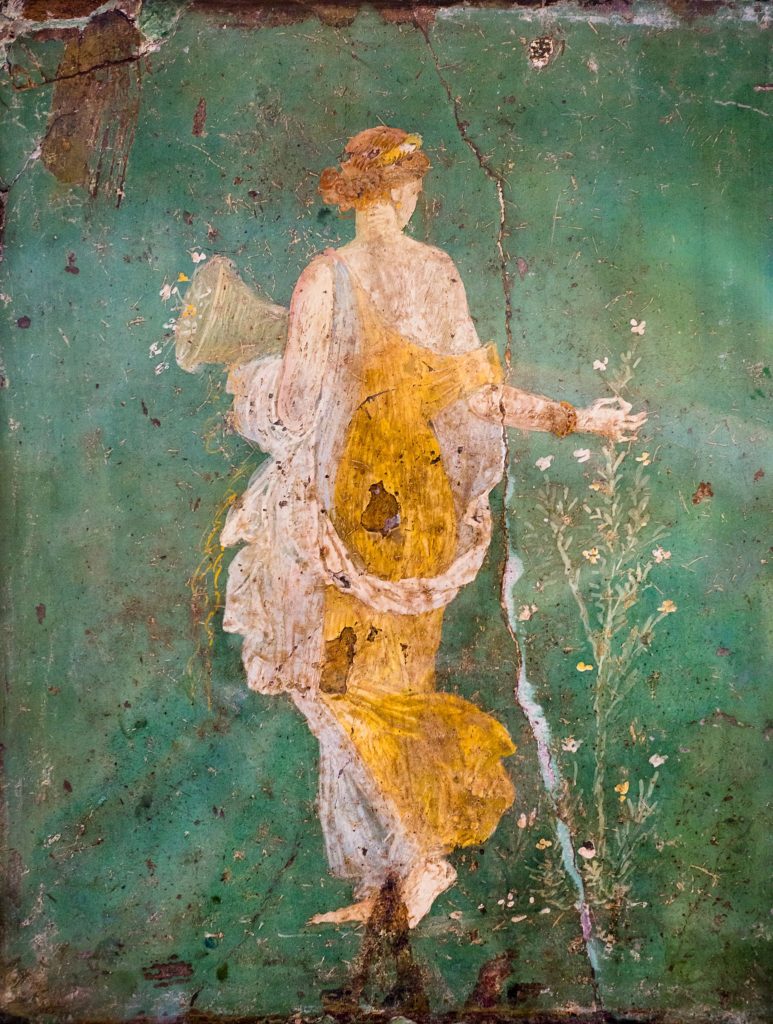
EN BREF. Les Floralia, fêtes romaines dédiées à la déesse Flora, mêlaient dévotion religieuse et divertissements populaires. Ces célébrations printanières se distinguaient par leur ambiance libre où prostituées dansaient nues, où l’on portait des vêtements multicolores et où l’on relâchait des animaux symbolisant la fertilité. L’anecdote de Caton quittant le théâtre face aux spectacles licencieux témoigne des tensions morales que suscitait cette fête plébéienne qui connut un immense succès dans tout l’Empire.
Floralia: fleurs, lièvres et… éléphants funambules
À la charnière d’avril et de mai, Rome célébrait pendant six jours une déesse qui n’occupe pas le premier rang du panthéon classique mais dont le nom est gravé dans le calendrier officiel: Flora. Les ludi Florales commençaient le 28 avril – le 4 des calendes de mai dans le décompte romain – et se sont prolongés jusqu’au 3 mai. Les sources antiques, des Fastes Prénestins à Ovide en passant par Pline l’Ancien, en font une fête liée à la floraison des cultures, mais aussi un spectacle public au ton libre, où courtisanes, vêtements colorés et jeux nocturnes tranchaient avec la sobriété d’autres célébrations romaines.
Ovide a fait parler la déesse elle-même au livre V des Fastes. Elle y revendique son rôle agraire avant tout autre:
«Si les blés ont bien fleuri, l’aire sera riche; si la vigne a bien fleuri, il y aura du vin; si les oliviers ont bien fleuri, l’année sera des plus brillantes, et les fruits suivront la saison»[1].
Sa puissance ne se limite pas aux fleurs ornementales: «Une fleur qui se gâte, et c’est la perte des vesces et des fèves, et la perte de tes lentilles, étranger Nil»[2].
Une déesse plus ancienne que ses jeux
Le culte de Flora est nettement plus ancien que la fête publique instituée au 3e siècle avant notre ère. Varron en fait une divinité d’origine sabine, comptée parmi celles à qui le roi Titus Tatius aurait voué des autels à Rome: «Et les autels sentent la langue sabine, qui ont été dédiés à Rome par le vœu du roi Tatius: car, comme le disent les annales, il a voué à Ops, à Flora, à Vediovis et à Saturne, au Soleil, à la Lune, à Vulcain et à Summanus»[3]. Ailleurs, le même Varron mentionne, parmi les flamines mineurs institués par Numa, le flamen Floralis[4], indice d’une intégration ancienne de Flora dans la structure sacerdotale romaine. Flora figure aussi parmi les divinités auxquelles les Frères Arvales – très ancienne confrérie sacerdotale – offraient des piacula (sacrifices expiatoires), dans une liste qui s’ouvre par Janus et se termine par Vesta[5]. Le sanctuaire le plus ancien de Flora à Rome se trouvait sur le Quirinal, colline tenue dans la tradition pour sabine[6]. Le culte rendu à la déesse débordait largement Rome: on en suit la trace chez les Sabins, où un cippe trouvé près d’Aquila atteste un mois consacré à Flora, et chez les Vestins, où la lex templi de Furfo donne la même indication[7].
Cicéron confirme le caractère officiel des jeux à la fin de la République. Édile désigné, il énumère parmi ses charges celle d’apaiser pour le peuple et la plèbe romaine, par la solennité des jeux, Flora, mère»[8]. La formule Flora mater souligne la dignité reconnue à la déesse, et le verbe placare – apaiser – rappelle que la fête répond d’abord à une logique de précaution rituelle.
Chloris devenue Flora, et la conception de Mars
Au-delà de l’ancrage italique du culte, Ovide a donné à Flora un récit d’origine grecque. Dans le dialogue qu’il prête à la déesse, celle-ci se présente d’abord sous un autre nom: «J’étais Chloris, qu’on appelle maintenant Flora: la lettre grecque de mon nom a été corrompue par le son latin»[9]. Nymphe des champs Élysées, Zéphyr l’aperçoit alors qu’elle erre au printemps; il la poursuit, la saisit et en fait son épouse. De cette union, dit-elle, lui est venu un jardin fertile dans les champs reçus en dot, et la maîtrise sur toutes les fleurs:
«Mon époux l’a rempli de fleurs nobles, et il a dit: « Aie, déesse, l’arbitrage de la fleur »»[10].
Le poète attribue ainsi à la déesse une étiologie florale au sens strict: c’est elle qui a, la première, semé les fleurs nouvelles parmi les peuples, alors que la terre était d’une seule couleur; c’est elle qui, du sang de l’enfant Hyacinthe, a tiré la première fleur portant inscrite, sur sa feuille, la plainte du dieu[11].
À cette généalogie florale, Ovide joint un épisode plus discret: la conception de Mars par Junon sans intervention de Jupiter. Junon, irritée que Jupiter ait engendré Minerve seul, sans elle, est venue demander conseil à Flora. La déesse, hésitante par crainte du roi des dieux, a fini par lui révéler le secret: une fleur née dans les champs d’Olénos, unique dans son jardin, dont le toucher rend mère même une vache stérile. Junon a été touchée à son tour, et Mars a été conçu. Reconnaissant à Flora ce service, le dieu lui a dit, selon Ovide: «Toi aussi, aie place dans la ville de Romulus»[12].
Ces récits relèvent de la mythographie ovidienne plus que du fond rituel romain. Ils proposent une généalogie hellénisante – Chloris, Zéphyr, le sang d’Hyacinthe – et une étiologie qui rattache Flora à la naissance de Mars, donc au mois qui ouvre l’année romaine archaïque.
Une fête née d’une crise agricole
Pline l’Ancien a relié explicitement les Floralia à l’angoisse paysanne du printemps. Il les place dans une triade festive avec les Robigalia et les Vinalia, instituées pour prévenir les trois moments redoutés des cultures: «Ils ont craint trois saisons pour les fruits, raison pour laquelle ils ont institué les fêtes et les jours fériés des Robigalia, des Floralia et des Vinalia»[13].
La date de fondation est précise. Pline indique que les Floralia ont été instituées en 516 de la fondation de Rome – soit 238 avant notre ère – sur l’avis des livres sibyllins, «afin que toutes les floraisons arrivent favorablement à leur terme»[14]. Une autre tradition antique, transmise par Velleius Paterculus, fixe l’événement à l’année du consulat de Torquatus et Sempronius, sans qu’il soit possible de concilier les deux datations[15]. Les Fastes Prénestins, calendrier épigraphique attribué à Verrius Flaccus, confirment la date du 28 avril: un temple a été dédié à Flora, qui veille à la floraison des plantes, «pour remédier à la stérilité des récoltes»[16]. Le temple s’élevait ad circum maximum, près de celui de Cérès, et avait été fondé par les édiles plébéiens Publicii[17]. Tacite, dans une mention rétrospective au livre II des Annales, signale ce sanctuaire parmi ceux qui ont été restaurés à l’époque augustéenne et dédiés à nouveau en 17 de notre ère sous Tibère[18]. Plusieurs convergences rapprochent la fondation des Floralia de celle des Cerealia: famine alléguée comme cause dans les deux cas, proximité topographique des deux temples, fondation par des magistrats plébéiens, caractère licencieux des jeux – autant de traits qui donnent au culte une coloration plébéienne marquée[19].
Ovide en a donné une version étiologique poétique. Sa Flora explique que Rome l’avait négligée et que la sanction n’avait pas tardé: les oliviers en fleurs frappés par les vents, les blés frappés par la grêle, les vignes ravagées par les pluies brusques. Les Pères auraient alors voué des jeux annuels «si l’année fleurit bien», et les consuls Postumius et Laenas se seraient acquittés de ce vœu[20]. La tradition antique offre ainsi deux récits étiologiques superposés – sibyllin chez Pline, votif chez Ovide – qui ne se recoupent pas exactement, sans que le texte d’Ovide contredise frontalement celui de Pline. Ovide a transmis aussi l’épisode républicain qui mêle morale agraire et histoire institutionnelle: le peuple ayant pris l’habitude de mettre paître son bétail sur les terres publiques puis sur des terres privées, l’affaire a été portée devant les édiles plébéiens Publicii, qui ont condamné les coupables et fait verser leurs amendes au peuple; d’une partie de cette somme a été financée la fondation des jeux, et d’une autre l’aménagement de la pente qui était jusque-là un rocher escarpé et qui «porte, encore maintenant, le nom de Publicius»[21]. Le récit lie ainsi la fête à un acte de justice publique sur l’ager publicus.
Selon les Fastes Prénestins et la mention d’Ovide, V, 329 et suivants, les jeux ont été rendus annuels en 173 avant notre ère, sous le consulat de Lucius Postumius Albinus et de Marcus Popilius Laenas. Cette transformation a coïncidé avec une période où la crise de la petite propriété italienne et la pression d’une plèbe urbaine grossie de ruraux déracinés rendaient les fêtes plébéiennes politiquement utiles aux groupes dirigeants; les Postumii, principaux promoteurs des innovations religieuses de ces années, en ont tiré un regain de popularité[22]. Une épidémie a frappé Rome dans les années précédentes: Tite-Live a décrit, pour l’année 174 avant notre ère, une pestilentia venue du bétail et passée aux hommes, telle que «ceux qui en avaient été atteints survivaient difficilement au septième jour; ceux qui survivaient étaient saisis d’une maladie longue, surtout de la fièvre quarte»[23]. Le Sénat avait voté un votum et une supplicatio pour la santé du peuple. L’historien antique n’établit pas de lien explicite entre cette épidémie et l’institution annuelle des Floralia l’année suivante, mais la coïncidence chronologique a été notée par la critique moderne.
Couronnes, vêtements bariolés, jeux nocturnes
L’ambiance des Floralia tranchait avec celle d’autres fêtes du calendrier. Ovide a énuméré les éléments qui faisaient leur singularité: couronnes tressées posées sur les têtes, roses jetées sur les tables, convives ivres dansant les cheveux ceints de tilleul, sérénades nocturnes devant la porte de l’aimée[24]. Ovide a opposé explicitement le vêtement des Floralia à celui des Cerealia: «Pourquoi, alors que pour les Cerealia on donne des robes blanches, celle-ci convient-elle dans une parure aux couleurs variées?»[25]. La déesse, dans le texte ovidien, propose deux explications possibles: la moisson blanchit dans ses épis mûrs, mais les fleurs présentent au contraire toutes les couleurs.
Les illuminations nocturnes faisaient également partie de la fête. Ovide a interrogé la déesse sur la raison de ces lumières et lui prête trois réponses possibles: les champs eux-mêmes brillent quand les fleurs pourpres y éclatent, la fleur et la flamme partagent un éclat qui attire le regard, et surtout «la licence nocturne convient à nos plaisirs: c’est la cause vraie qui vient en troisième»[26].
Le caractère licencieux de la fête est attesté par plusieurs auteurs. Ovide, dans le passage cité, fait répondre la déesse à la question de la «foule des courtisanes» présente aux jeux: Flora ne fait pas partie des divinités austères, ses rites doivent rester ouverts à un public plébéien, et elle invite à profiter de la beauté tant qu’elle fleurit:
«Profite de l’éclat de l’âge tant qu’il fleurit; on méprise l’épine, quand les roses sont tombées»[27].
Valère Maxime a transmis l’épisode le plus fameux dans cette veine. Aux jeux floraux donnés par l’édile Messius, le peuple n’osa pas, en présence de Caton, demander que les mimes se dénudent. Caton, averti par son voisin Favonius, quitta alors le théâtre «pour ne pas, par sa présence, empêcher la coutume du spectacle»[28]. L’anecdote, construite à des fins d’exemplarité morale, suppose comme implicite la pratique habituelle de la dénudation des mimes – sans que Valère Maxime ne la décrive lui-même.
Juvénal, dans la sixième Satire, n’a pas décrit les Floralia mais y a fait une allusion oblique. Pour fustiger les matrones romaines qui s’entraînent au combat de gladiatrice, il les juge dignes de paraître au signal d’ouverture des jeux floraux: «Qui ignore ces endromides tyriennes et la pommade féminine, ou qui n’a pas vu les coups assenés au pieu, qu’elle creuse à force de baguettes et qu’elle harcèle de son bouclier, et qui remplit toutes les figures, vraiment digne, cette matrone, de la trompette des Floralia?»[29]. La pointe satirique présuppose, sans la décrire, l’ambiance scénique débridée des Floralia comme arrière-plan moralement tolérable pour des excentricités féminines que le poète condamne.
Cassius Dion a transmis un épisode plus précis encore. Sous Tibère, en 33 de notre ère, le préteur Lucius Apronius Caesianus, lié à Séjan, avait fait donner aux Floralia un programme qui prolongeait les spectacles jusqu’à la tombée de la nuit, en mettant en scène des esclaves chauves – allusion narquoise à la calvitie de l’empereur – puis avait fait raccompagner le peuple à la sortie du théâtre par cinq mille esclaves au crâne rasé portant des torches[30]. Tibère, dit Cassius Dion, a fermé les yeux sur la manœuvre. L’épisode atteste à la fois la persistance du caractère nocturne des jeux à l’époque impériale et la marge laissée aux organisateurs pour y inscrire des allusions politiques.
Lièvres et éléphants dans le cirque
Au lieu des fauves d’Afrique habituels aux venationes, les Floralia voyaient lâcher dans l’enceinte des animaux pacifiques. Ovide a posé la question à la déesse: «Pourquoi, à la place des lionnes de Libye, fait-on prendre au filet pour toi des chevreuils paisibles et le lièvre craintif?»[31]. La réponse de la déesse a relié le choix à la nature de son domaine: non les forêts, mais les jardins et les champs cultivés, où les bêtes farouches n’ont pas leur place. Le rapprochement avec le lâcher de renards aux Cerealia a souvent été fait: ces animaux prolifiques et herbivores ont pu être lus comme une figure du principe de fécondité, cohérente avec une déesse qui présidait aux jardins et aux champs[32].
Le calendrier précise que les jeux comportaient un volet circassien et un volet scénique. Ovide annonce à la déesse: «Le Cirque sort en ton honneur, et la palme acclamée des théâtres; que ce chant aille avec le don du Cirque»[33]. Les Fastes Prénestins, à la suite de la mention du 28 avril, indiquent pour les jours suivants la simple notation Ludi – les jeux continuent –, ce qui confirme la durée pluriquotidienne de la fête.
Aux jeux du cirque s’ajoutaient les largesses traditionnelles distribuées au peuple par les magistrats. Perse, dans sa cinquième Satire, a moqué l’ambition politique qui se monnaye en distributions populaires:
«Veille, et jette à pleines mains du pois chiche au peuple qui se bouscule, pour que nos Floralia, les vieillards prenant le soleil puissent s’en souvenir»[34].
La pointe satirique atteste l’usage: le candidat aux honneurs faisait jeter des pois chiches dans la foule des Floralia, et cette largesse-là restait dans la mémoire des spectateurs comme un repère.
À côté de ces lâchers de gibier paisible et des distributions de pois chiches, le programme pouvait s’enrichir de spectacles plus ambitieux. Suétone rapporte que Galba, alors préteur, a donné «pour l’ouverture des jeux floraux un genre de spectacle nouveau, des éléphants funambules»[35]. La notice, glissée parmi les charges qu’il a exercées avant l’âge légal, témoigne de l’investissement édilitaire et prétorien dans ces jeux et de la marge laissée aux magistrats pour y introduire des nouveautés.
Un récit chrétien polémique
Au début du 4ᵉ siècle, Lactance a proposé une autre origine, polémique et hostile. Dans ses Institutions divines, il a fait de Flora une courtisane qui, ayant amassé une fortune par son métier, aurait institué le peuple romain comme héritier en imposant la célébration annuelle de jeux financés par les intérêts de son legs: «Flora, ayant acquis de grandes richesses par l’art des courtisanes, a fait du peuple son héritier, et a laissé une somme déterminée, dont le revenu annuel devait servir à célébrer son anniversaire par l’organisation de jeux qu’on appelle Floralia»[36]. Comme la chose paraissait honteuse au Sénat, écrit-il, on aurait tiré argument du nom même de Flora pour fabriquer une déesse qui présiderait aux fleurs. Lactance attaque ensuite la version d’Ovide – Chloris, Zéphyr, la dot florale – et termine en décrivant les jeux: «Outre la licence des paroles, par laquelle se déverse toute obscénité, les courtisanes, à la demande du peuple, sont également dépouillées de leurs vêtements, elles qui font alors office de mimes»[37].
Le récit de Lactance, tardif et apologétique, ne saurait passer pour une source historique sur les origines du culte. Il témoigne en revanche de la réception chrétienne hostile aux Floralia et donne accès, par sa polémique même, à quelques traits réels du spectacle.
[1] Ovide, Fastes, V, 263–266: si bene floruerint segetes, erit area dives; si bene floruerit vinea, Bacchus erit; si bene floruerint oleae, nitidissimus annus, pomaque proventum temporis huius habent.
[2] Ovide, Fastes, V, 267–268: flore semel laeso pereunt viciaeque fabaeque, et pereunt lentes, advena Nile, tuae.
[3] Varron, De lingua Latina, V, 74: Et arae Sabinum linguam olent, quae Tati regis voto sunt Romae dedicatae: nam, ut annales dicunt, vovit Opi, Florae, Vediovi Saturnoque, Soli, Lunae, Volcano et Summano.
[4] Varron, De lingua Latina, VII, 45: Volturnalem, Palatualem, Furinalem, Floralemque Falacrem et Pomonalem fecit / Hic idem.
[5] W. Warde Fowler, The Roman Festivals of the Period of the Republic, Londres, Macmillan, 1899, p. 92–93.
[6] J. Cels-Saint-Hilaire, «Le fonctionnement des Floralia sous la République», Dialogues d’histoire ancienne, 3, 1977, p. 254–255.
[7] Ibidem, p. 254 et n. 24, renvoyant à Vetter, Italische Dialekte, n° 227 (cippe d’Aquila) et à CIL I², 756 (lex templi de Furfo).
[8] Cicéron, In Verrem, II, 5, 36: mihi Floram matrem populo plebique Romanae ludorum celebritate placandam.
[9] Ovide, Fastes, V, 195–196: Chloris eram quae Flora vocor: corrupta Latino nominis est nostri littera Graeca sono.
[10] Ovide, Fastes, V, 211–212: hunc meus implevit generoso flore maritus, atque ait: «arbitrium tu, dea, floris habe».
[11] Ovide, Fastes, V, 221–224: prima per immensas sparsi nova semina gentes: unius tellus ante coloris erat; prima Therapnaeo feci de sanguine florem, et manet in folio scripta querella suo.
[12] Ovide, Fastes, V, 259–260: qui memor accepti per me natalis «habeto tu quoque Romulea» dixit «in urbe locum».
[13] Pline l’Ancien, Histoire naturelle, XVIII, 284: tria namque tempora fructibus metuebant, propter quod instituerunt ferias diesque festos, Robigalia, Floralia, Vinalia.
[14] Pline l’Ancien, Histoire naturelle, XVIII, 286: itaque iidem Floralia IIII kal. easdem instituerunt urbis anno DXVI ex oraculis Sibyllae, ut omnia bene deflorescerent.
[15] Velleius Paterculus, Histoire romaine, I, 14, 8: quo anno Floralium ludorum factum est initium, dans le contexte de l’année du consulat de Torquatus et Sempronius. Les deux datations antiques (Pline et Velleius) ne se laissent pas concilier; la critique moderne retient généralement la date de Pline.
[16] Fasti Praenestini, 28 avril: Ludi Florae; eodem die aedes [Florae] quae rebus florescendis praeest, dedicata est propter sterilitatem frugum (CIL I², 235).
[17] W. Warde Fowler, op. cit., p. 92; J. Cels-Saint-Hilaire, art. cit., p. 255 et n. 33.
[18] Tacite, Annales, II, 49; cf. J. Cels-Saint-Hilaire, art. cit., p. 272 et n. 178.
[19] W. Warde Fowler, op. cit., p. 92.
[20] Ovide, Fastes, V, 327–330: convenere patres, et, si bene floreat annus, numinibus nostris annua festa vovent. adnuimus voto: consul cum consule ludos Postumio Laenas persoluere mihi.
[21] Ovide, Fastes, V, 287–294, en particulier 293–294: parte locant clivum, qui tunc erat ardua rupes, utile nunc iter est, Publiciumque vocant.
[22] J. Cels-Saint-Hilaire, art. cit., p. 263–272.
[23] Tite-Live, Histoire romaine, XLI, 21: Pestilentia, quae priore anno in boves ingruerat, eo verteret in hominum morbos. Qui inciderant, haud facile septimum diem superabant : qui superaverant, longinquo, maxime quartanae, implicabantur morbo. Voir aussi XLII, 2, qui rappelle, pour l’année 173, la supplicatio votée l’année précédente pro valetudine populi.
[24] Ovide, Fastes, V, 335–340: tempora sutilibus cinguntur tota coronis, et latet iniecta splendida mensa rosa; ebrius incinctis philyra conviva capillis saltat, et imprudens utitur arte meri; ebrius ad durum formosae limen amicae cantat, habent unctae mollia serta comae.
[25] Ovide, Fastes, V, 355–356: Cur tamen, ut dantur vestes Cerialibus albae, sic haec est cultu versicolore decens?
[26] Ovide, Fastes, V, 363–368: vel quia purpureis conlucent floribus agri, lumina sunt nostros visa decere dies; vel quia nec flos est hebeti nec flamma colore, atque oculos in se splendor uterque trahit; vel quia deliciis nocturna licentia nostris convenit: a vero tertia causa venit.
[27] Ovide, Fastes, V, 353–354: et monet aetatis specie, dum floreat, uti; contemni spinam, cum cecidere rosae.
[28] Valère Maxime, Faits et dits mémorables, II, 10, 8: discessit e theatro, ne praesentia sua spectaculi consuetudinem impediret.
[29] Juvénal, Satires, VI, 246–250: endromidas Tyrias et femineum ceroma quis nescit, uel quis non uidit uulnera pali, quem cauat adsiduis rudibus scutoque lacessit atque omnis implet numeros dignissima prorsus Florali matrona tuba. Le passage ne décrit pas les jeux floraux eux-mêmes, mais raille des matrones qui s’exercent au pieu de gladiature; la Florali tuba désigne la trompette qui ouvrait les jeux.
[30] Cassius Dion, Histoire romaine, LVIII, 19, 2.
[31] Ovide, Fastes, V, 371–372: cur tibi pro Libycis clauduntur rete leaenis inbelles capreae sollicitusque lepus?
[32] W. Warde Fowler, op. cit., p. 93–94.
[33] Ovide, Fastes, V, 189–190: Circus in hunc exit clamataque palma theatris ; hoc quoque cum Circi munere carmen eat.
[34] Perse, Satires, V, 177–179: uigila et cicer ingere large rixanti populo, nostra ut Floralia possint aprici meminisse senes. Une scholie ancienne au passage glose: «sparge, inquit, populo cicer. hoc enim in ludi Floralibus inter cetera munera iactabatur, quoniam Terrae ludos colebant et omnia semina super populum spargebant, ut Tellus velut suis muneribus placaretur» — « »Répands au peuple le pois chiche », dit-il. Cela faisait partie, parmi d’autres largesses, des choses lancées aux Floralia, parce qu’on célébrait des jeux pour la Terre et qu’on répandait toutes les graines sur le peuple, afin que Tellus fût apaisée comme par ses propres dons.» Porphyrion, dans sa scholie à Horace, Satires, II, 3, 182, confirme l’usage et ajoute la fève au pois chiche: In cicere atque faba. Antiqui aediles huius modi res populo Floralibus spargebant.
[35] Suétone, Vie de Galba, VI: praetor commissione ludorum Floralium novum spectaculi genus elephantos funambulos edidit. La date précise n’est pas donnée par Suétone; le passage place l’épisode avant le gouvernement d’Aquitaine et le consulat de Galba.
[36] Lactance, Institutions divines, I, 20: Flora, cum magnas opes ex arte meretricia quaesivisset, populum scripsit haeredem, certamque pecuniam reliquit, cuius ex annuo foenore suus natalis dies celebraretur editione ludorum, quos appellant Floralia.
[37] Lactance, Institutions divines, I, 20: praeter verborum licentiam, quibus obscoenitas omnis effunditur, exuuntur etiam vestibus populo flagitante meretrices, quae tunc mimarum funguntur officio.
👉🗓️ Toutes les fêtes du calendrier romain
🇮🇹 Versione italiana
 IN BREVE. I Floralia, feste romane dedicate alla dea Flora, univano la devozione religiosa al divertimento popolare. Queste celebrazioni primaverili si distinguevano per la loro atmosfera libera, in cui le prostitute danzavano nude, si indossavano abiti dai mille colori e si liberavano animali simbolo di fertilità. L’aneddoto di Catone che lascia il teatro di fronte agli spettacoli licenziosi testimonia le tensioni morali suscitate da questa festa plebea, che ebbe enorme successo in tutto l’Impero.
Floralia: fiori, lepri e… elefanti funamboli
A cavallo tra aprile e maggio, Roma celebrava per sei giorni una dea che non occupa il primo rango del pantheon classico ma il cui nome è inciso nel calendario ufficiale: Flora. I ludi Florales cominciavano il 28 aprile – il quarto giorno prima delle calende di maggio nel computo romano – e si protraevano fino al 3 maggio. Le fonti antiche, dai Fasti Prenestini a Ovidio passando per Plinio il Vecchio, ne fanno una festa legata alla fioritura delle colture, ma anche uno spettacolo pubblico dal tono libero, in cui cortigiane, abiti colorati e giochi notturni contrastavano con la sobrietà di altre celebrazioni romane.
Ovidio fa parlare la dea stessa nel libro V dei Fasti. Ella vi rivendica il proprio ruolo agrario prima di ogni altro:
«Se i grani sono ben fioriti, l’aia sarà ricca; se la vigna è ben fiorita, ci sarà vino; se gli olivi sono ben fioriti, l’anno sarà splendidissimo, e i frutti seguiranno la stagione»[1].
La sua potenza non si limita ai fiori ornamentali: «Basta che un fiore si guasti, ed è la perdita delle vecce e delle fave, ed è la perdita delle tue lenticchie, straniero Nilo»[2].
Una dea più antica dei suoi giochi
Il culto di Flora è nettamente più antico della festa pubblica istituita nel III secolo a.C. Varrone ne fa una divinità di origine sabina, annoverata fra quelle alle quali il re Tito Tazio avrebbe votato altari a Roma: «E gli altari odorano di lingua sabina, quelli che furono dedicati a Roma per voto del re Tazio: poiché, come dicono gli annali, egli votò ad Ops, a Flora, a Vediove e a Saturno, al Sole, alla Luna, a Vulcano e a Summano»[3]. Altrove, lo stesso Varrone menziona, fra i flamini minori istituiti da Numa, il flamen Floralis[4], indizio di un’antica integrazione di Flora nella struttura sacerdotale romana. Flora figura inoltre fra le divinità alle quali i Fratelli Arvali – antichissima confraternita sacerdotale – offrivano piacula (sacrifici espiatori), in un elenco che si apre con Giano e si chiude con Vesta[5]. Il santuario più antico di Flora a Roma si trovava sul Quirinale, colle ritenuto dalla tradizione di origine sabina[6]. Il culto della dea andava ben oltre Roma: se ne segue la traccia presso i Sabini, dove un cippo rinvenuto nei pressi di Aquila attesta un mese consacrato a Flora, e presso i Vestini, dove la lex templi di Furfo dà la stessa indicazione[7].
Cicerone conferma il carattere ufficiale dei giochi alla fine della Repubblica. Edile designato, egli enumera fra i suoi compiti quello di placare per il popolo e per la plebe romana, con la solennità dei giochi, Flora madre»[8]. La formula Flora mater sottolinea la dignità riconosciuta alla dea, e il verbo placare – placare – ricorda che la festa risponde anzitutto a una logica di precauzione rituale.
Cloride divenuta Flora, e il concepimento di Marte
Oltre all’ancoraggio italico del culto, Ovidio ha attribuito a Flora un racconto d’origine greca. Nel dialogo che le presta, la dea si presenta dapprima sotto un altro nome: «Ero Cloride, e ora mi chiamo Flora: la lettera greca del mio nome è stata corrotta dal suono latino»[9]. Ninfa dei Campi Elisi, Zefiro la scorge mentre vaga in primavera; egli la insegue, la afferra e ne fa la sua sposa. Da questa unione, dice, le venne un giardino fertile nei campi ricevuti in dote, e il dominio su tutti i fiori:
«Mio sposo lo riempì di fiori nobili, e disse: “Tu, dea, abbi l’arbitrio del fiore”»[10].
Il poeta attribuisce così alla dea un’eziologia floreale in senso stretto: è lei che, per prima, sparse i nuovi fiori fra i popoli, mentre la terra era di un solo colore; è lei che, dal sangue del fanciullo Giacinto, trasse il primo fiore recante iscritto, sulla foglia, il lamento del dio[11].
A questa genealogia floreale, Ovidio unisce un episodio più discreto: il concepimento di Marte da parte di Giunone senza intervento di Giove. Giunone, irritata che Giove avesse generato Minerva da solo, senza di lei, era andata a chiedere consiglio a Flora. La dea, esitante per timore del re degli dèi, finì per rivelarle il segreto: un fiore nato nei campi di Oleno, unico nel suo giardino, il cui tocco rende madre persino una vacca sterile. Giunone fu toccata a sua volta, e Marte fu concepito. Riconoscente a Flora per questo servizio, il dio le disse, secondo Ovidio: «Anche tu, abbi posto nella città di Romolo»[12].
Questi racconti appartengono alla mitografia ovidiana più che al fondo rituale romano. Propongono una genealogia ellenizzante – Cloride, Zefiro, il sangue di Giacinto – e un’eziologia che lega Flora alla nascita di Marte, e dunque al mese che apre l’anno romano arcaico.
Una festa nata da una crisi agricola
Plinio il Vecchio ha legato esplicitamente i Floralia all’angoscia contadina della primavera. Li colloca in una triade festiva con i Robigalia e i Vinalia, istituite per prevenire i tre momenti temuti delle colture: «Temevano tre stagioni per i frutti, e per questa ragione istituirono le feste e i giorni festivi dei Robigalia, dei Floralia e dei Vinalia»[13].
La data di fondazione è precisa. Plinio indica che i Floralia furono istituiti nel 516 dalla fondazione di Roma – cioè nel 238 a.C. – su parere dei libri sibillini, «affinché tutte le fioriture giungessero felicemente al loro termine»[14]. Un’altra tradizione antica, trasmessa da Velleio Patercolo, fissa l’evento all’anno del consolato di Torquato e Sempronio, senza che sia possibile conciliare le due datazioni[15]. I Fasti Prenestini, calendario epigrafico attribuito a Verrio Flacco, confermano la data del 28 aprile: un tempio fu dedicato a Flora, che presiede alla fioritura delle piante, «per rimediare alla sterilità dei raccolti»[16]. Il tempio sorgeva ad circum maximum, presso quello di Cerere, ed era stato fondato dagli edili plebei Publicii[17]. Tacito, in una menzione retrospettiva nel libro II degli Annales, segnala questo santuario fra quelli che furono restaurati in età augustea e nuovamente dedicati nel 17 d.C. sotto Tiberio[18]. Diverse convergenze accostano la fondazione dei Floralia a quella dei Cerealia: carestia addotta come causa in entrambi i casi, prossimità topografica dei due templi, fondazione da parte di magistrati plebei, carattere licenzioso dei giochi – tutti tratti che conferiscono al culto una marcata coloritura plebea[19].
Ovidio ne ha dato una versione eziologica poetica. La sua Flora spiega che Roma l’aveva trascurata e che la sanzione non aveva tardato: gli olivi in fiore colpiti dai venti, i grani colpiti dalla grandine, le vigne devastate dalle piogge improvvise. I Padri avrebbero allora votato giochi annuali «se l’anno fioriva bene», e i consoli Postumio e Lenate avrebbero adempiuto a tale voto[20]. La tradizione antica offre così due racconti eziologici sovrapposti – sibillino in Plinio, votivo in Ovidio – che non coincidono esattamente, senza che il testo di Ovidio contraddica frontalmente quello di Plinio. Ovidio ha trasmesso anche l’episodio repubblicano che mescola morale agraria e storia istituzionale: poiché il popolo aveva preso l’abitudine di mettere a pascolare il proprio bestiame sulle terre pubbliche e poi su terre private, la questione fu portata davanti agli edili plebei Publicii, che condannarono i colpevoli e fecero versare le loro ammende al popolo; con una parte di tale somma fu finanziata la fondazione dei giochi, e con un’altra la sistemazione della china che fino allora era una rupe scoscesa e che «porta, tuttora, il nome di Publicio»[21]. Il racconto lega così la festa a un atto di giustizia pubblica sull’ager publicus.
Secondo i Fasti Prenestini e la menzione di Ovidio, V, 329 e seguenti, i giochi furono resi annuali nel 173 a.C., sotto il consolato di Lucio Postumio Albino e di Marco Popilio Lenate. Tale trasformazione coincise con un periodo in cui la crisi della piccola proprietà italica e la pressione di una plebe urbana ingrossata da rurali sradicati rendevano le feste plebee politicamente utili ai gruppi dirigenti; i Postumii, principali promotori delle innovazioni religiose di quegli anni, ne trassero un rinnovato consenso[22]. Un’epidemia colpì Roma negli anni precedenti: Tito Livio ha descritto, per l’anno 174 a.C., una pestilentia giunta dal bestiame e passata agli uomini, tale che «coloro che ne erano stati colpiti sopravvivevano a stento al settimo giorno; coloro che sopravvivevano erano presi da una malattia lunga, soprattutto dalla febbre quartana»[23]. Il Senato aveva votato un votum e una supplicatio per la salute del popolo. Lo storico antico non stabilisce alcun legame esplicito fra questa epidemia e l’istituzione annuale dei Floralia l’anno seguente, ma la coincidenza cronologica è stata rilevata dalla critica moderna.
Corone, abiti variopinti, giochi notturni
L’atmosfera dei Floralia contrastava con quella di altre feste del calendario. Ovidio ha enumerato gli elementi che ne facevano la singolarità: corone intrecciate poste sul capo, rose sparse sulle tavole, convitati ebbri che danzano con i capelli cinti di tiglio, serenate notturne davanti alla porta dell’amata[24]. Ovidio ha contrapposto esplicitamente l’abbigliamento dei Floralia a quello dei Cerealia: «Perché, mentre per i Cerealia si danno vesti bianche, qui invece si addice un ornamento dai colori variegati?»[25]. La dea, nel testo ovidiano, propone due spiegazioni possibili: la mietitura imbianca nelle sue spighe mature, mentre i fiori, al contrario, presentano tutti i colori.
Anche le illuminazioni notturne facevano parte della festa. Ovidio ha interrogato la dea sulla ragione di tali luci e le presta tre risposte possibili: i campi stessi brillano quando vi sbocciano i fiori porpora, il fiore e la fiamma condividono uno splendore che attira lo sguardo, e soprattutto «la licenza notturna si addice ai nostri piaceri: è la causa vera, e viene per terza»[26].
Il carattere licenzioso della festa è attestato da diversi autori. Ovidio, nel passo citato, fa rispondere la dea alla domanda sulla «folla delle cortigiane» presente ai giochi: Flora non rientra fra le divinità austere, i suoi riti devono restare aperti a un pubblico plebeo, ed ella invita a godere della bellezza finché fiorisce:
«Godi dello splendore dell’età finché fiorisce; si disprezza la spina, quando le rose sono cadute»[27].
Valerio Massimo ha trasmesso l’episodio più famoso in questa vena. Ai giochi floreali offerti dall’edile Messio, il popolo non osò, in presenza di Catone, chiedere che i mimi si denudassero. Catone, avvertito dal vicino Favonio, lasciò allora il teatro «per non impedire, con la propria presenza, la consuetudine dello spettacolo»[28]. L’aneddoto, costruito a fini di esemplarità morale, presuppone come implicita la pratica abituale del denudamento dei mimi – senza che Valerio Massimo la descriva direttamente.
Giovenale, nella sesta Satira, non ha descritto i Floralia ma vi ha fatto un’allusione obliqua. Per fustigare le matrone romane che si esercitano al combattimento da gladiatrice, le ritiene degne di apparire al segnale d’apertura dei giochi floreali: «Chi ignora queste endromides tirie e l’unguento femminile, o chi non ha visto i colpi vibrati al palo, che lei scava a forza di bacchette e che incalza con il suo scudo, e che riempie tutte le figure, davvero degna, questa matrona, della tromba dei Floralia?»[29]. La punta satirica presuppone, senza descriverla, l’atmosfera scenica sfrenata dei Floralia come sfondo moralmente tollerabile per le eccentricità femminili che il poeta condanna.
Cassio Dione ha trasmesso un episodio ancora più preciso. Sotto Tiberio, nel 33 d.C., il pretore Lucio Apronio Cesiano, legato a Seiano, aveva fatto allestire per i Floralia un programma che prolungava gli spettacoli fino al calar della notte, mettendo in scena schiavi calvi – allusione beffarda alla calvizie dell’imperatore – per poi far riaccompagnare il popolo all’uscita del teatro da cinquemila schiavi dal cranio rasato che reggevano torce[30]. Tiberio, dice Cassio Dione, chiuse un occhio sulla manovra. L’episodio attesta a un tempo la persistenza del carattere notturno dei giochi in età imperiale e il margine lasciato agli organizzatori per inscrivervi allusioni politiche.
Lepri ed elefanti nel circo
Al posto delle fiere d’Africa abituali nelle venationes, i Floralia vedevano liberare nel recinto animali pacifici. Ovidio ha posto la domanda alla dea: «Perché, al posto delle leonesse di Libia, vengono prese al laccio per te i caprioli pacifici e la lepre timorosa?»[31]. La risposta della dea ha legato la scelta alla natura del suo dominio: non le foreste, ma i giardini e i campi coltivati, dove le bestie selvagge non hanno posto. L’accostamento con il lascio delle volpi ai Cerealia è stato spesso compiuto: questi animali prolifici ed erbivori sono stati letti come una figura del principio di fecondità, coerente con una dea che presiedeva ai giardini e ai campi[32].
Il calendario precisa che i giochi comprendevano una parte circense e una parte scenica. Ovidio annuncia alla dea: «Il Circo esce in tuo onore, e la palma acclamata dei teatri; che questo canto vada con il dono del Circo»[33]. I Fasti Prenestini, dopo la menzione del 28 aprile, indicano per i giorni successivi la semplice annotazione Ludi – i giochi continuano –, il che conferma la durata pluriquotidiana della festa.
Ai giochi del circo si aggiungevano le tradizionali elargizioni distribuite al popolo dai magistrati. Persio, nella sua quinta Satira, ha schernito l’ambizione politica che si paga con distribuzioni popolari:
«Veglia, e getta a piene mani il cece al popolo che si accalca, perché i nostri Floralia, i vecchi che prendono il sole li possano ricordare»[34].
La punta satirica attesta l’usanza: il candidato agli onori faceva gettare ceci nella folla dei Floralia, e tale elargizione restava nella memoria degli spettatori come un punto di riferimento.
Accanto a questi lasci di selvaggina pacifica e alle distribuzioni di ceci, il programma poteva arricchirsi di spettacoli più ambiziosi. Svetonio riferisce che Galba, allora pretore, offrì «per l’apertura dei giochi floreali un nuovo genere di spettacolo, elefanti funamboli»[35]. La notizia, infilata fra le cariche da lui ricoperte prima dell’età legale, testimonia l’investimento edilizio e pretorio in questi giochi e il margine lasciato ai magistrati per introdurvi novità.
Un racconto cristiano polemico
All’inizio del IV secolo, Lattanzio ha proposto un’altra origine, polemica e ostile. Nelle sue Divinae institutiones, ha fatto di Flora una cortigiana che, accumulata una fortuna con il proprio mestiere, avrebbe istituito il popolo romano come erede imponendo la celebrazione annuale di giochi finanziati con gli interessi del suo lascito: «Flora, avendo acquistato grandi ricchezze con l’arte delle cortigiane, ha fatto del popolo il proprio erede, e ha lasciato una somma determinata, dalla cui rendita annua dovevano celebrarsi gli anniversari della sua nascita mediante l’allestimento di giochi che chiamano Floralia»[36]. Poiché la cosa appariva vergognosa al Senato, scrive, si sarebbe tratto argomento dal nome stesso di Flora per fabbricare una dea che presiedesse ai fiori. Lattanzio attacca poi la versione di Ovidio – Cloride, Zefiro, la dote floreale – e termina descrivendo i giochi: «Oltre alla licenza delle parole, attraverso cui si riversa ogni oscenità, anche le cortigiane, su richiesta del popolo, sono spogliate delle loro vesti, esse che allora svolgono l’ufficio di mime»[37].
Il racconto di Lattanzio, tardivo e apologetico, non può essere considerato una fonte storica sulle origini del culto. Esso testimonia invece la ricezione cristiana ostile ai Floralia e dà accesso, attraverso la sua stessa polemica, ad alcuni tratti reali dello spettacolo.
[1] Ovidio, Fasti, V, 263–266: si bene floruerint segetes, erit area dives; si bene floruerit vinea, Bacchus erit; si bene floruerint oleae, nitidissimus annus, pomaque proventum temporis huius habent.
[2] Ovidio, Fasti, V, 267–268: flore semel laeso pereunt viciaeque fabaeque, et pereunt lentes, advena Nile, tuae.
[3] Varrone, De lingua Latina, V, 74: Et arae Sabinum linguam olent, quae Tati regis voto sunt Romae dedicatae: nam, ut annales dicunt, vovit Opi, Florae, Vediovi Saturnoque, Soli, Lunae, Volcano et Summano.
[4] Varrone, De lingua Latina, VII, 45: Volturnalem, Palatualem, Furinalem, Floralemque Falacrem et Pomonalem fecit / Hic idem.
[5] W. Warde Fowler, The Roman Festivals of the Period of the Republic, Londra, Macmillan, 1899, p. 92–93.
[6] J. Cels-Saint-Hilaire, «Le fonctionnement des Floralia sous la République», su «Dialogues d’histoire ancienne», 3, 1977, p. 254–255.
[7] Ibidem, p. 254 e n. 24, che rinvia a Vetter, Italische Dialekte, n. 227 (cippo di Aquila) e a CIL I², 756 (lex templi di Furfo).
[8] Cicerone, In Verrem, II, 5, 36: mihi Floram matrem populo plebique Romanae ludorum celebritate placandam.
[9] Ovidio, Fasti, V, 195–196: Chloris eram quae Flora vocor: corrupta Latino nominis est nostri littera Graeca sono.
[10] Ovidio, Fasti, V, 211–212: hunc meus implevit generoso flore maritus, atque ait: «arbitrium tu, dea, floris habe».
[11] Ovidio, Fasti, V, 221–224: prima per immensas sparsi nova semina gentes: unius tellus ante coloris erat; prima Therapnaeo feci de sanguine florem, et manet in folio scripta querella suo.
[12] Ovidio, Fasti, V, 259–260: qui memor accepti per me natalis «habeto tu quoque Romulea» dixit «in urbe locum».
[13] Plinio il Vecchio, Naturalis historia, XVIII, 284: tria namque tempora fructibus metuebant, propter quod instituerunt ferias diesque festos, Robigalia, Floralia, Vinalia.
[14] Plinio il Vecchio, Naturalis historia, XVIII, 286: itaque iidem Floralia IIII kal. easdem instituerunt urbis anno DXVI ex oraculis Sibyllae, ut omnia bene deflorescerent.
[15] Velleio Patercolo, Historia romana, I, 14, 8: quo anno Floralium ludorum factum est initium, nel contesto dell’anno del consolato di Torquato e Sempronio. Le due datazioni antiche (Plinio e Velleio) non si lasciano conciliare; la critica moderna privilegia generalmente la data di Plinio.
[16] Fasti Praenestini, 28 aprile: Ludi Florae; eodem die aedes [Florae] quae rebus florescendis praeest, dedicata est propter sterilitatem frugum (CIL I², 235).
[17] W. Warde Fowler, op. cit., p. 92; J. Cels-Saint-Hilaire, art. cit., p. 255 e n. 33.
[18] Tacito, Annales, II, 49; cfr. J. Cels-Saint-Hilaire, art. cit., p. 272 e n. 178.
[19] W. Warde Fowler, op. cit., p. 92.
[20] Ovidio, Fasti, V, 327–330: convenere patres, et, si bene floreat annus, numinibus nostris annua festa vovent. adnuimus voto: consul cum consule ludos Postumio Laenas persoluere mihi.
[21] Ovidio, Fasti, V, 287–294, in particolare 293–294: parte locant clivum, qui tunc erat ardua rupes, utile nunc iter est, Publiciumque vocant.
[22] J. Cels-Saint-Hilaire, art. cit., p. 263–272.
[23] Tito Livio, Ab urbe condita, XLI, 21: Pestilentia, quae priore anno in boves ingruerat, eo verteret in hominum morbos. Qui inciderant, haud facile septimum diem superabant : qui superaverant, longinquo, maxime quartanae, implicabantur morbo. Si veda anche XLII, 2, che ricorda, per l’anno 173, la supplicatio votata l’anno precedente pro valetudine populi.
[24] Ovidio, Fasti, V, 335–340: tempora sutilibus cinguntur tota coronis, et latet iniecta splendida mensa rosa; ebrius incinctis philyra conviva capillis saltat, et imprudens utitur arte meri; ebrius ad durum formosae limen amicae cantat, habent unctae mollia serta comae.
[25] Ovidio, Fasti, V, 355–356: Cur tamen, ut dantur vestes Cerialibus albae, sic haec est cultu versicolore decens?
[26] Ovidio, Fasti, V, 363–368: vel quia purpureis conlucent floribus agri, lumina sunt nostros visa decere dies; vel quia nec flos est hebeti nec flamma colore, atque oculos in se splendor uterque trahit; vel quia deliciis nocturna licentia nostris convenit: a vero tertia causa venit.
[27] Ovidio, Fasti, V, 353–354: et monet aetatis specie, dum floreat, uti; contemni spinam, cum cecidere rosae.
[28] Valerio Massimo, Factorum et dictorum memorabilium libri, II, 10, 8: discessit e theatro, ne praesentia sua spectaculi consuetudinem impediret.
[29] Giovenale, Satire, VI, 246–250: endromidas Tyrias et femineum ceroma quis nescit, uel quis non uidit uulnera pali, quem cauat adsiduis rudibus scutoque lacessit atque omnis implet numeros dignissima prorsus Florali matrona tuba. Il passo non descrive i giochi floreali in sé, ma deride le matrone che si esercitano al palo da gladiatura; la Florali tuba designa la tromba che apriva i giochi.
[30] Cassio Dione, Historia romana, LVIII, 19, 2.
[31] Ovidio, Fasti, V, 371–372: cur tibi pro Libycis clauduntur rete leaenis inbelles capreae sollicitusque lepus?
[32] W. Warde Fowler, op. cit., p. 93–94.
[33] Ovidio, Fasti, V, 189–190: Circus in hunc exit clamataque palma theatris ; hoc quoque cum Circi munere carmen eat.
[34] Persio, Satire, V, 177–179: uigila et cicer ingere large rixanti populo, nostra ut Floralia possint aprici meminisse senes. Una scolia antica al passo glossa: «sparge, inquit, populo cicer. hoc enim in ludi Floralibus inter cetera munera iactabatur, quoniam Terrae ludos colebant et omnia semina super populum spargebant, ut Tellus velut suis muneribus placaretur» — “‘Spargi al popolo il cece’, dice. Questo, infatti, fra le altre elargizioni, veniva lanciato ai Floralia, perché si celebravano giochi per la Terra e si spargevano tutti i semi sul popolo, affinché Tellus fosse placata come dai propri doni.” Porfirione, nella sua scolia a Orazio, Satire, II, 3, 182, conferma l’usanza e aggiunge la fava al cece: In cicere atque faba. Antiqui aediles huius modi res populo Floralibus spargebant.
[35] Svetonio, Vita di Galba, VI: praetor commissione ludorum Floralium novum spectaculi genus elephantos funambulos edidit. La data precisa non è data da Svetonio; il passo colloca l’episodio prima del governo dell’Aquitania e del consolato di Galba.
[36] Lattanzio, Divinae institutiones, I, 20: Flora, cum magnas opes ex arte meretricia quaesivisset, populum scripsit haeredem, certamque pecuniam reliquit, cuius ex annuo foenore suus natalis dies celebraretur editione ludorum, quos appellant Floralia.
[37] Lattanzio, Divinae institutiones, I, 20: praeter verborum licentiam, quibus obscoenitas omnis effunditur, exuuntur etiam vestibus populo flagitante meretrices, quae tunc mimarum funguntur officio.
👉 Tutte le feste del calendario romano
🇬🇧 English version
IN BRIEF. The Floralia, Roman festivals dedicated to the goddess Flora, blended religious devotion with popular entertainment. These spring celebrations stood out for their freewheeling atmosphere, in which prostitutes danced naked, multicoloured garments were worn and animals symbolising fertility were released. The anecdote of Cato leaving the theatre in the face of the licentious shows bears witness to the moral tensions stirred up by this plebeian festival, which enjoyed enormous success throughout the Empire.
Floralia: flowers, hares and… tightrope-walking elephants
At the turn of April and May, Rome celebrated for six days a goddess who does not occupy the foremost rank of the classical pantheon but whose name is engraved in the official calendar: Flora. The ludi Florales began on 28 April – the fourth day before the Kalends of May in the Roman reckoning – and went on until 3 May. The ancient sources, from the Fasti Praenestini to Ovid by way of Pliny the Elder, present it as a festival linked to the flowering of crops, but also as a public spectacle of free tone, in which courtesans, colourful clothes and night-time games stood in contrast to the sobriety of other Roman celebrations.
Ovid had the goddess herself speak in Book V of the Fasti. There she claims her agrarian role above all others:
“If the corn has flowered well, the threshing-floor will be rich; if the vine has flowered well, there will be wine; if the olive trees have flowered well, the year will be most splendid, and the fruits will follow in season”[1].
Her power is not confined to ornamental flowers: “Let one flower spoil, and the vetches and beans are lost, and your lentils are lost, foreign Nile”[2].
A goddess older than her games
The cult of Flora is markedly older than the public festival instituted in the third century BC. Varro made her a deity of Sabine origin, counted among those to whom King Titus Tatius is said to have vowed altars in Rome: “And the altars smell of the Sabine tongue, those that were dedicated at Rome by the vow of King Tatius: for, as the annals say, he made vows to Ops, Flora, Vediovis and Saturn, to Sol, Luna, Vulcan and Summanus”[3]. Elsewhere, the same Varro mentions, among the lesser flamens instituted by Numa, the flamen Floralis[4], an indication of Flora’s early integration into the Roman priestly structure. Flora also figures among the deities to whom the Arval Brethren – a very ancient priestly brotherhood – offered piacula (expiatory sacrifices), in a list that opens with Janus and ends with Vesta[5]. The most ancient sanctuary of Flora at Rome stood on the Quirinal, a hill traditionally regarded as Sabine[6]. The cult of the goddess extended well beyond Rome: it can be traced among the Sabines, where a cippus found near Aquila attests a month consecrated to Flora, and among the Vestini, where the lex templi of Furfo gives the same indication[7].
Cicero confirms the official character of the games at the end of the Republic. As aedile-elect, he lists among his duties that of appeasing for the Roman people and plebs, by the solemnity of the games, Flora the mother”[8]. The phrase Flora mater stresses the dignity granted to the goddess, and the verb placare – to appease – recalls that the festival answers above all to a logic of ritual precaution.
Chloris turned Flora, and the conception of Mars
Beyond the Italic anchoring of the cult, Ovid gave Flora a Greek-origin narrative. In the dialogue he attributes to her, the goddess first introduces herself under another name: “I was Chloris, who am now called Flora: the Greek letter of my name was corrupted by the Latin sound”[9]. A nymph of the Elysian Fields, Zephyrus catches sight of her as she wanders in spring; he pursues her, seizes her and makes her his wife. From that union, she says, came a fertile garden in the fields received as dowry, and dominion over all flowers:
“My husband filled it with noble flowers, and said: ‘Goddess, hold the arbitership of the flower’”[10].
The poet thus assigns to the goddess a floral aetiology in the strict sense: it is she who first scattered the new flowers among the peoples, when the earth was of one colour only; it is she who, from the blood of the boy Hyacinthus, drew the first flower bearing inscribed, on its leaf, the lament of the god[11].
To this floral genealogy, Ovid adds a more discreet episode: the conception of Mars by Juno without Jupiter’s intervention. Juno, vexed that Jupiter had begotten Minerva alone, without her, had come to seek Flora’s counsel. The goddess, hesitant for fear of the king of the gods, finally revealed to her the secret: a flower born in the fields of Olenos, unique in her garden, whose touch makes a mother even of a barren cow. Juno was touched in turn, and Mars was conceived. Grateful to Flora for this service, the god, according to Ovid, said to her: “You too, hold a place in the city of Romulus”[12].
These tales belong to Ovidian mythography rather than to the Roman ritual stock. They propose a Hellenising genealogy – Chloris, Zephyrus, the blood of Hyacinthus – and an aetiology that ties Flora to the birth of Mars, and so to the month that opens the archaic Roman year.
A festival born of an agricultural crisis
Pliny the Elder explicitly linked the Floralia to the springtime anxieties of the farmer. He places them in a festive triad with the Robigalia and the Vinalia, instituted to ward off the three feared moments of the crops: “They feared three seasons for the fruits, and for that reason they instituted the festivals and holy days of the Robigalia, the Floralia and the Vinalia”[13].
The date of foundation is precise. Pliny states that the Floralia were instituted in the year 516 from the founding of the City – that is, 238 BC – on the advice of the Sibylline Books, “so that all flowerings might come safely to their term”[14]. Another ancient tradition, transmitted by Velleius Paterculus, sets the event in the year of the consulship of Torquatus and Sempronius, with no possibility of reconciling the two datings[15]. The Fasti Praenestini, an epigraphic calendar attributed to Verrius Flaccus, confirm the date of 28 April: a temple was dedicated to Flora, who watches over the flowering of plants, “to remedy the sterility of the harvests”[16]. The temple stood ad circum maximum, near that of Ceres, and had been founded by the plebeian aediles Publicii[17]. Tacitus, in a retrospective mention in Book II of the Annals, lists this sanctuary among those that were restored in the Augustan age and dedicated again in AD 17 under Tiberius[18]. Several convergences bring the foundation of the Floralia close to that of the Cerealia: famine alleged as the cause in both cases, topographical proximity of the two temples, foundation by plebeian magistrates, licentious character of the games – all features that lend the cult a markedly plebeian colouring[19].
Ovid gave a poetic aetiological version of the story. His Flora explains that Rome had neglected her and that the punishment had not been long in coming: olive trees in flower struck by winds, corn struck by hail, vines ravaged by sudden rains. The Fathers would then have vowed annual games “if the year flowered well”, and the consuls Postumius and Laenas are said to have discharged that vow[20]. The ancient tradition thus offers two superimposed aetiological accounts – Sibylline in Pliny, votive in Ovid – which do not exactly overlap, without Ovid’s text directly contradicting that of Pliny. Ovid also transmitted the republican episode that mingles agrarian morality with institutional history: the people having taken the habit of pasturing their cattle on public lands and then on private ones, the matter was brought before the plebeian aediles Publicii, who condemned the offenders and had their fines paid over to the people; one part of that sum financed the foundation of the games, and another the laying-out of the slope which until then was a steep crag and which “still bears, today, the name of Publicius”[21]. The narrative thus links the festival to an act of public justice over the ager publicus.
According to the Fasti Praenestini and Ovid’s mention at V, 329 ff., the games were made annual in 173 BC, under the consulship of Lucius Postumius Albinus and Marcus Popilius Laenas. This transformation coincided with a period in which the crisis of small Italian landholding and the pressure of an urban plebs swollen by uprooted countrymen made plebeian festivals politically useful to the ruling groups; the Postumii, chief promoters of the religious innovations of those years, drew renewed popularity from them[22]. An epidemic struck Rome in the preceding years: Livy described, for the year 174 BC, a pestilentia that came from cattle and passed to humans, such that “those who had been struck by it scarcely survived the seventh day; those who survived were seized by a long illness, especially the quartan fever”[23]. The Senate had voted a votum and a supplicatio for the people’s health. The ancient historian draws no explicit link between this epidemic and the annual institution of the Floralia the following year, but the chronological coincidence has been noted by modern scholarship.
Garlands, motley garments, night-time games
The atmosphere of the Floralia stood in contrast to that of other festivals on the calendar. Ovid listed the elements that gave them their singularity: woven garlands set on heads, roses strewn on the tables, drunken guests dancing with their hair bound with linden, nocturnal serenades before the door of the beloved[24]. Ovid explicitly contrasted the dress of the Floralia with that of the Cerealia: “Why, when at the Cerealia white robes are given, does this festival call instead for an array of variegated colours?”[25]. The goddess, in Ovid’s text, offers two possible explanations: the harvest whitens in its ripe ears, whereas flowers, on the contrary, display every colour.
The night-time illuminations were also part of the festival. Ovid questioned the goddess about the reason for these lights and lends her three possible answers: the fields themselves shine when purple flowers burst forth in them, the flower and the flame share a brightness that draws the eye, and above all “night-time licence suits our pleasures: that is the true cause, and it comes third”[26].
The licentious character of the festival is attested by several authors. Ovid, in the passage cited, has the goddess answer the question about the “crowd of courtesans” present at the games: Flora is not among the austere deities, her rites must remain open to a plebeian public, and she invites her listeners to enjoy beauty while it flowers:
“Enjoy the brightness of your years while it flowers; the thorn is despised once the roses have fallen”[27].
Valerius Maximus transmitted the most famous episode in this vein. At the floral games given by the aedile Messius, the people did not dare, in Cato’s presence, to demand that the mimes strip. Cato, alerted by his neighbour Favonius, then left the theatre “so as not, by his presence, to hinder the customary spectacle”[28]. The anecdote, framed for moral exemplarity, takes for granted as implicit the customary practice of the mimes’ undressing – without Valerius Maximus actually describing it.
Juvenal, in the sixth Satire, did not describe the Floralia but made an oblique allusion to them. To lash Roman matrons who train as gladiators, he judges them worthy of appearing at the opening signal of the floral games: “Who has not heard of these Tyrian endromides and the female ointment, or who has not seen the blows dealt at the post, which she hollows out with constant rods and which she harasses with her shield, and who fills out every figure, this matron, truly worthy of the trumpet of the Floralia?”[29]. The satirical thrust presupposes, without describing it, the unbridled stage atmosphere of the Floralia as a morally tolerable backdrop for the female eccentricities the poet condemns.
Cassius Dio transmitted a still more precise episode. Under Tiberius, in AD 33, the praetor Lucius Apronius Caesianus, an associate of Sejanus, had had a programme staged at the Floralia which prolonged the shows until nightfall, putting on stage bald slaves – a sneering allusion to the emperor’s baldness – and then had the people escorted out of the theatre by five thousand slaves with shaven heads bearing torches[30]. Tiberius, says Cassius Dio, turned a blind eye to the move. The episode attests both the persistence of the night-time character of the games in the imperial period and the latitude left to organisers to inscribe political allusions within them.
Hares and elephants in the circus
In place of the African beasts customary in the venationes, the Floralia saw peaceful animals released into the arena. Ovid put the question to the goddess: “Why, in place of Libyan lionesses, are gentle roe-deer and the timid hare caught in the net for you?”[31]. The goddess’s reply tied the choice to the nature of her domain: not forests, but gardens and cultivated fields, where wild beasts have no place. The comparison with the release of foxes at the Cerealia has often been drawn: these prolific, herbivorous animals may have been read as a figure of the principle of fecundity, consistent with a goddess presiding over gardens and fields[32].
The calendar specifies that the games included a circus component and a theatrical one. Ovid announces to the goddess: “The Circus comes forth in your honour, and the palm acclaimed in the theatres; let this song accompany the Circus’s gift”[33]. The Fasti Praenestini, after the entry for 28 April, give for the following days the simple notation Ludi – the games continue – which confirms the festival’s multi-day duration.
The circus games were complemented by the traditional largesses distributed to the people by the magistrates. Persius, in his fifth Satire, mocked the political ambition that pays itself out in popular distributions:
“Stay awake, and throw chickpeas in handfuls to the jostling crowd, so that, at our Floralia, the old men sunning themselves may remember”[34].
The satirical jab attests the practice: the candidate for office had chickpeas tossed into the Floralia crowd, and that particular largess remained in the spectators’ memory as a marker.
Alongside these releases of peaceful game and the distributions of chickpeas, the programme could be enriched with more ambitious spectacles. Suetonius reports that Galba, then praetor, gave “for the opening of the floral games a new kind of spectacle, tightrope-walking elephants”[35]. The notice, slipped in among the offices he held before the legal age, attests the aedilician and praetorian investment in these games and the latitude left to magistrates to introduce novelties into them.
A polemical Christian narrative
At the beginning of the fourth century, Lactantius proposed another origin, polemical and hostile. In his Divine Institutes, he made Flora a courtesan who, having amassed a fortune through her trade, is said to have made the Roman people her heir, imposing the annual celebration of games financed by the interest on her bequest: “Flora, having acquired great wealth by the art of courtesans, made the people her heir, and left a fixed sum, on the annual interest of which her birthday was to be celebrated by the staging of games called Floralia”[36]. Since the matter struck the Senate as shameful, he writes, an argument was drawn from the very name of Flora to fabricate a goddess who would preside over flowers. Lactantius then attacks Ovid’s version – Chloris, Zephyrus, the floral dowry – and ends by describing the games: “Besides the licence of the words, through which every obscenity pours forth, the courtesans, at the people’s demand, are also stripped of their clothes, those who then perform the office of mimes”[37].
Lactantius’s narrative, late and apologetic, cannot be regarded as a historical source on the origins of the cult. It does, however, bear witness to the Christian reception hostile to the Floralia and gives access, through its very polemic, to a few real features of the spectacle.
[1] Ovid, Fasti, V, 263–266: si bene floruerint segetes, erit area dives; si bene floruerit vinea, Bacchus erit; si bene floruerint oleae, nitidissimus annus, pomaque proventum temporis huius habent.
[2] Ovid, Fasti, V, 267–268: flore semel laeso pereunt viciaeque fabaeque, et pereunt lentes, advena Nile, tuae.
[3] Varro, De lingua Latina, V, 74: Et arae Sabinum linguam olent, quae Tati regis voto sunt Romae dedicatae: nam, ut annales dicunt, vovit Opi, Florae, Vediovi Saturnoque, Soli, Lunae, Volcano et Summano.
[4] Varro, De lingua Latina, VII, 45: Volturnalem, Palatualem, Furinalem, Floralemque Falacrem et Pomonalem fecit / Hic idem.
[5] W. Warde Fowler, The Roman Festivals of the Period of the Republic, London, Macmillan, 1899, pp. 92–93.
[6] J. Cels-Saint-Hilaire, ‘Le fonctionnement des Floralia sous la République’, Dialogues d’histoire ancienne, 3, 1977, pp. 254–255.
[7] Ibidem, p. 254 and n. 24, referring to Vetter, Italische Dialekte, no. 227 (cippus of Aquila), and to CIL I², 756 (lex templi of Furfo).
[8] Cicero, In Verrem, II, 5, 36: mihi Floram matrem populo plebique Romanae ludorum celebritate placandam.
[9] Ovid, Fasti, V, 195–196: Chloris eram quae Flora vocor: corrupta Latino nominis est nostri littera Graeca sono.
[10] Ovid, Fasti, V, 211–212: hunc meus implevit generoso flore maritus, atque ait: «arbitrium tu, dea, floris habe».
[11] Ovid, Fasti, V, 221–224: prima per immensas sparsi nova semina gentes: unius tellus ante coloris erat; prima Therapnaeo feci de sanguine florem, et manet in folio scripta querella suo.
[12] Ovid, Fasti, V, 259–260: qui memor accepti per me natalis «habeto tu quoque Romulea» dixit «in urbe locum».
[13] Pliny the Elder, Natural History, XVIII, 284: tria namque tempora fructibus metuebant, propter quod instituerunt ferias diesque festos, Robigalia, Floralia, Vinalia.
[14] Pliny the Elder, Natural History, XVIII, 286: itaque iidem Floralia IIII kal. easdem instituerunt urbis anno DXVI ex oraculis Sibyllae, ut omnia bene deflorescerent.
[15] Velleius Paterculus, Roman History, I, 14, 8: quo anno Floralium ludorum factum est initium, in the context of the year of the consulship of Torquatus and Sempronius. The two ancient datings (Pliny and Velleius) cannot be reconciled; modern scholarship generally retains Pliny’s date.
[16] Fasti Praenestini, 28 April: Ludi Florae; eodem die aedes [Florae] quae rebus florescendis praeest, dedicata est propter sterilitatem frugum (CIL I², 235).
[17] W. Warde Fowler, op. cit., p. 92; J. Cels-Saint-Hilaire, art. cit., p. 255 and n. 33.
[18] Tacitus, Annals, II, 49; cf. J. Cels-Saint-Hilaire, art. cit., p. 272 and n. 178.
[19] W. Warde Fowler, op. cit., p. 92.
[20] Ovid, Fasti, V, 327–330: convenere patres, et, si bene floreat annus, numinibus nostris annua festa vovent. adnuimus voto: consul cum consule ludos Postumio Laenas persoluere mihi.
[21] Ovid, Fasti, V, 287–294, especially 293–294: parte locant clivum, qui tunc erat ardua rupes, utile nunc iter est, Publiciumque vocant.
[22] J. Cels-Saint-Hilaire, art. cit., pp. 263–272.
[23] Livy, Ab urbe condita, XLI, 21: Pestilentia, quae priore anno in boves ingruerat, eo verteret in hominum morbos. Qui inciderant, haud facile septimum diem superabant : qui superaverant, longinquo, maxime quartanae, implicabantur morbo. See also XLII, 2, which recalls, for the year 173, the supplicatio voted the previous year pro valetudine populi.
[24] Ovid, Fasti, V, 335–340: tempora sutilibus cinguntur tota coronis, et latet iniecta splendida mensa rosa; ebrius incinctis philyra conviva capillis saltat, et imprudens utitur arte meri; ebrius ad durum formosae limen amicae cantat, habent unctae mollia serta comae.
[25] Ovid, Fasti, V, 355–356: Cur tamen, ut dantur vestes Cerialibus albae, sic haec est cultu versicolore decens?
[26] Ovid, Fasti, V, 363–368: vel quia purpureis conlucent floribus agri, lumina sunt nostros visa decere dies; vel quia nec flos est hebeti nec flamma colore, atque oculos in se splendor uterque trahit; vel quia deliciis nocturna licentia nostris convenit: a vero tertia causa venit.
[27] Ovid, Fasti, V, 353–354: et monet aetatis specie, dum floreat, uti; contemni spinam, cum cecidere rosae.
[28] Valerius Maximus, Memorable Deeds and Sayings, II, 10, 8: discessit e theatro, ne praesentia sua spectaculi consuetudinem impediret.
[29] Juvenal, Satires, VI, 246–250: endromidas Tyrias et femineum ceroma quis nescit, uel quis non uidit uulnera pali, quem cauat adsiduis rudibus scutoque lacessit atque omnis implet numeros dignissima prorsus Florali matrona tuba. The passage does not describe the floral games themselves, but mocks matrons who train at the gladiator’s post; the Florali tuba denotes the trumpet that opened the games.
[30] Cassius Dio, Roman History, LVIII, 19, 2.
[31] Ovid, Fasti, V, 371–372: cur tibi pro Libycis clauduntur rete leaenis inbelles capreae sollicitusque lepus?
[32] W. Warde Fowler, op. cit., pp. 93–94.
[33] Ovid, Fasti, V, 189–190: Circus in hunc exit clamataque palma theatris ; hoc quoque cum Circi munere carmen eat.
[34] Persius, Satires, V, 177–179: uigila et cicer ingere large rixanti populo, nostra ut Floralia possint aprici meminisse senes. An ancient scholion on the passage glosses: «sparge, inquit, populo cicer. hoc enim in ludi Floralibus inter cetera munera iactabatur, quoniam Terrae ludos colebant et omnia semina super populum spargebant, ut Tellus velut suis muneribus placaretur» — “‘Scatter chickpeas to the people’, he says. For this, among other largesses, was thrown at the Floralia, since they celebrated games for the Earth and scattered all kinds of seed over the people, so that Tellus might be appeased as if by her own gifts.” Porphyrion, in his scholion on Horace, Satires, II, 3, 182, confirms the practice and adds the bean to the chickpea: In cicere atque faba. Antiqui aediles huius modi res populo Floralibus spargebant.
[35] Suetonius, Life of Galba, VI: praetor commissione ludorum Floralium novum spectaculi genus elephantos funambulos edidit. Suetonius does not give the precise date; the passage places the episode before the governorship of Aquitania and Galba’s consulship.
[36] Lactantius, Divine Institutes, I, 20: Flora, cum magnas opes ex arte meretricia quaesivisset, populum scripsit haeredem, certamque pecuniam reliquit, cuius ex annuo foenore suus natalis dies celebraretur editione ludorum, quos appellant Floralia.
[37] Lactantius, Divine Institutes, I, 20: praeter verborum licentiam, quibus obscoenitas omnis effunditur, exuuntur etiam vestibus populo flagitante meretrices, quae tunc mimarum funguntur officio.