Translated from french (please notify us of errors)
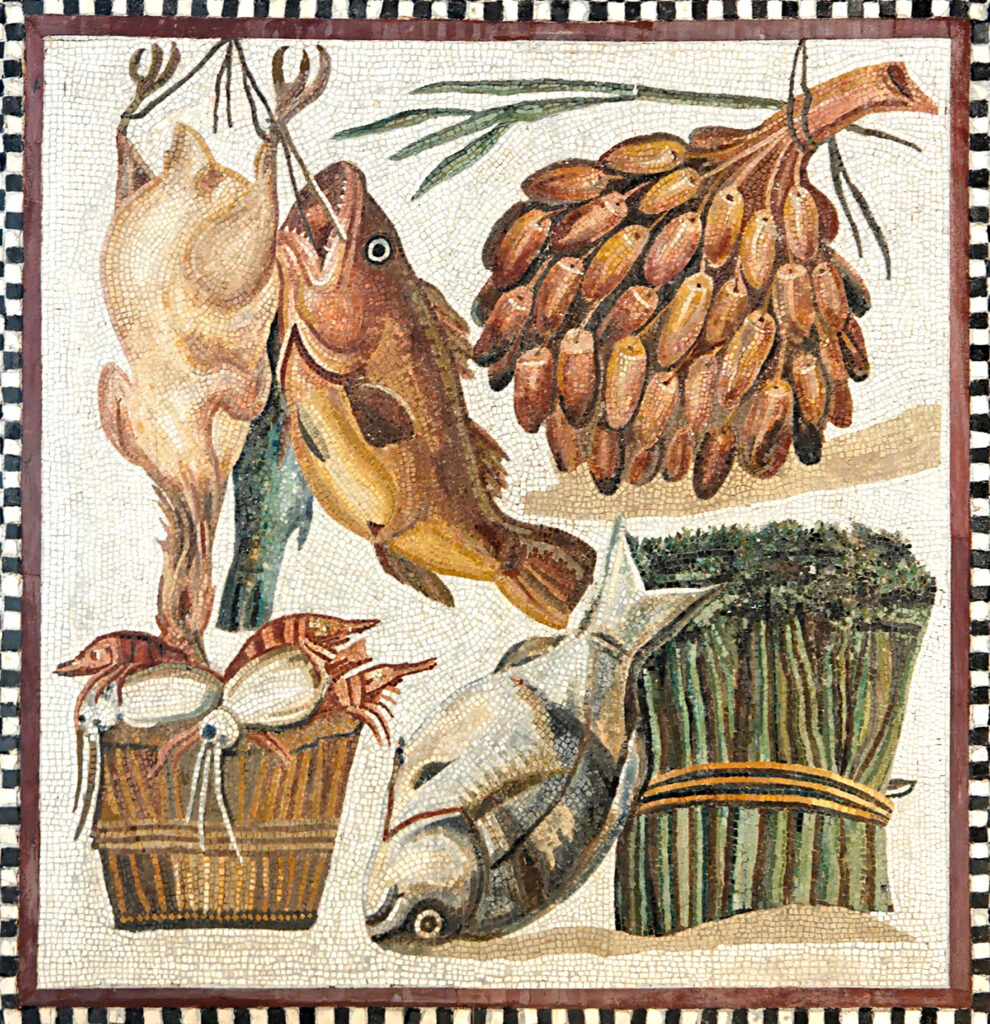
Nature had intended the corruda to be wild and free. Rome turned it into asparagus, sold at three times the price and reserved for wealthy tables.
Pliny the Elder, who never minced his words, had a problem with what the Romans had made of asparagus. He says so without beating about the bush:
“Nature had made wild corrudae so that anyone might gather them wherever they went; and now we behold fattened asparagus, with Ravenna supplying spears three of which weigh a pound. Ah, the monstrosities of the belly! One might be amazed that cattle are forbidden to eat thistles: the poor man is forbidden too!”[1]
That is the whole history of ancient asparagus in two sentences.
From shoot to spongiole
The word itself tells us something. The Greek asparagos (ἀσπάραγος) – from which the Latin asparagus derives directly – originally denoted any young shoot harvested before the appearance of leaves: that of the cabbage, of bryony, or of the plant we today call asparagus. Athenaeus, compiling his sources in the Deipnosophistae, notes that the Attic comic playwrights even disagreed on the spelling: Cratinus and Ameipsias write aspharagos with a phi, Antiphanes and Aristophon asparagos with a pi[2]. As for the Attic writers, they reserved the term ormenos (ὄρμενος) specifically for the cabbage shoot – a term Pliny transcribes as orminum and identifies with the corruda, the wild asparagus[3].
The Romans distinguished two plants: asparagus, the product of selective cultivation and sold commercially, and corruda, the wild variety growing throughout southern Europe. In the 2nd century BCE, Cato recommended sowing it along the edges of reed beds[4]. Between the two, a revealing price gap: according to the Edict of Diocletian, twenty-five cultivated asparagus spears were worth six denarii, while fifty wild ones were worth four. For a comparable quantity, the cultivated variety thus cost three times as much as the wild one[5].
Growing asparagus was serious business, and Cato devotes one of the most detailed passages of his treatise on agriculture to it. Pliny, who summarises and expands on it, gives the complete protocol: damp or heavy soil, sowing half a foot apart, two or three seeds per hole after the spring equinox, generous manuring, preferably with sheep dung – “sheep dung is expressly recommended, since others merely encourage weeds” –, winter protection with straw in the first year, burning off the stems in spring in the third[6]. Harvesting was done by pulling from the root – never by snapping, lest the stock be weakened. After nine years, the spongiae were replanted – those fleshy rhizomes Columella also calls spongiolae, a name that captures their texture: a sponge, soft and swollen with water[7]. The bed then remained fertile for ten years. The best soil? That of the gardens of Ravenna, by unanimous agreement.
Ravenna, Milan, and a few misunderstandings
Ravenna’s reputation is no accident. Pliny cites it, and Martial devotes an entire couplet to it in his collection of gastronomic gifts:
“The tender shoot that grew on Ravenna’s sea-washed shore will be no more pleasing to the palate than wild asparagus.”[8]
The praise is rhetorical – Martial is claiming that his modest gift of wild asparagus is the equal of Ravenna’s grand spears – but it implicitly confirms that cultivated asparagus from the Adriatic coast was the benchmark of its kind.
It is in Milan, however, that the most famous – and most frequently misreported – anecdote about ancient asparagus takes place. Plutarch recounts that Caesar, dining as the guest of a certain Valerius Leo, was served asparagus dressed with muron – a scented unguent – instead of olive oil. He ate it without fuss. His companions winced. Caesar rebuked them: “It would have sufficed simply not to eat what displeased you; but whoever finds fault with such coarseness is himself the coarse one”[9]. The anecdote illustrates Caesar’s frugality, not any fondness for asparagus on his part.
Augustus, for his part, had no particular taste for asparagus either – yet he mentioned it all the same. Suetonius reports that he liked to use, to describe an action carried out very swiftly, the phrase “quicker than asparagus cooks”[10]. The expression tells us that asparagus had a reputation for cooking quickly, something Apicius confirms in his own way by reducing his basic recipe to a single sentence:
“you will dry the asparagus, then plunge it into hot water: this will make it firmer”[11].
The instruction is too brief to be pressed much further. It probably means wiping or drying the asparagus before plunging it back into hot water, rather than cooking spears preserved by drying. One might see in it a very simple blanching. Nothing more.
What the cook does with the trimmings
Apicius is more forthcoming elsewhere. He gives the recipe for two asparagus patinae in Book IV – dishes cooked in a pan set upon hot ashes.
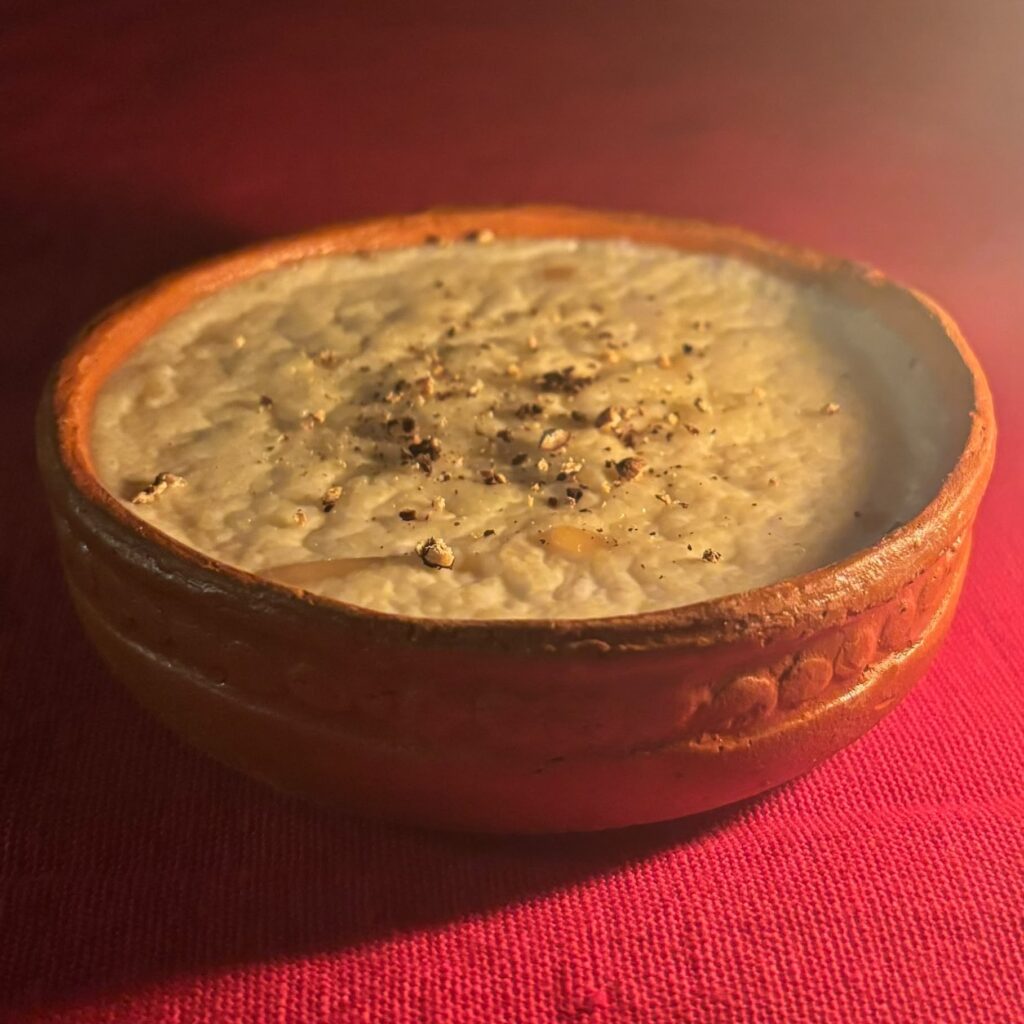
The first, served cold, combines asparagus pounded in a mortar and sieved with carefully prepared figpeckers (ficetulae), the whole bound with six eggs and oenogarum – a blend of garum and wine –, cooked beneath the ashes and dusted with pepper[12].
The second is more frugal, and it is this one that catches the eye: it begins with “the asparagus trimmings, the ones that get thrown away”[13]. What the Roman cook salvages here to make into a sauce bound with eggs, flavoured with pepper, lovage, fresh coriander, savory and onion. This does not prove that Apicius took an interest in the cooking of ordinary people, but the recipe does say something about a kitchen economy capable of making good use of scraps, even when working with a product associated with well-to-do tables.
For cultivated asparagus, let us recall, belonged to the world of the wealthy, while the common people had to make do with wild corrudae and other young shoots gathered for their own pleasure: hops, young shoots of black bryony or butcher’s broom. Pliny regarded the latter as “more a delicacy than a food”[14]. A city dweller’s point of view.
Ancient asparagus thus followed the opposite path to the one nature had intended for it. Having begun wild and free, it became cultivated and costly. Pliny was indignant about it. Augustus turned it into a proverb of speed. Caesar ate his dressed in perfume without complaint. As for Apicius, he gathered up the trimmings.
[1] Pliny, HN XIX, 54: etiamne in herbis discrimen inventum esse, opesque differentiam facere in cibo etiam uno asse venali? in his quoque aliqua sibi nasci tribus negant, caule in tantum saginato, ut pauperis mensa non capiat. silvestres fecerat natura corrudas, ut passim quisque demeteret. ecce altiles spectantur asparagi, et Ravenna ternos libris rependit. heu prodigia ventris! mirum esset non licere pecori carduis vesci: non licet plebei! — “Has it really come to this, that distinctions are found even among plants, and that wealth makes a difference even in a food sold for a single as? Some of these plants are even said to refuse to grow for certain classes, their stalk so fattened that the poor man’s table cannot hold it. Nature had made wild corrudae so that anyone might gather them wherever they went; and now we behold fattened asparagus, with Ravenna supplying spears three of which weigh a pound. Ah, the monstrosities of the belly! One might be amazed that cattle are forbidden to eat thistles: the poor man is forbidden too!”
[2] Athenaeus, Deipnosophistae II, 62e–f: Κρατῖνος δὲ διὰ τοῦ φ ἀσφάραγον ὀνομάζει. καὶ Θεόπομπος· κἄπειτʼ ἰδὼν ἀσφάραγον ἐν θάμνῳ τινί. Ἀμειψίας· οὐ σχῖνος οὐδʼ ἀσφάραγος, οὐ δάφνης κλάδοι. […] Ἀντιφάνης δὲ διὰ τοῦ π φησὶν ἀσπάραγον· ἀσπάραγος ἠγλάιζεν, ὦχρος ἐξήνθηκέ τις. Ἀριστοφῶν· κάππαριν, βληχώ, θύμον, ἀσπάραγον, πίτταν, ῥάμνον, σφακόν, πήγανον. — “Cratinus writes aspharagos with a phi. So too Theopompus: ‘and then, having seen an aspharagos in some bush.’ Ameipsias: ‘neither lentisk, nor aspharagos, nor laurel branches.’ […] Antiphanes writes asparagos with a pi: ‘asparagos shone bright, a yellowish hue had bloomed.’ Aristophon: ‘caper, pennyroyal, thyme, asparagos, pitch, buckthorn, sage, rue.’”
[3] Pliny, HN XIX, 151: corrudam — hunc enim intellego silvestrem asparagum, quem Graeci ορμινον aut μυακανθον vocant aliisque nominibus — invenio nasci et arietis cornibus tunsis atque defossis. — “Corruda — by which I mean wild asparagus, called by the Greeks orminum or myacanthos, among other names — is also said to grow if crushed ram’s horns are buried in the ground.” Cf. Pliny, HN XX, 110: silvestrem asparagum aliqui Libycum vocant, Attici orminum. — “Wild asparagus is called by some Libycus, by the Attic writers orminum.”
[4] Cato, Agr. 6, 3: ibi corrudam serito, unde asparagi fiant. nam convenit harundinetum cum corruda, eo quia foditur et incenditur et umbram per tempus habet. — “Sow corruda there, from which asparagus springs. For the reed bed suits corruda well, since it is dug over, the stems are burned, and it receives shade in due season.”
[5] Edict of Diocletian, 6, 34–35.
[6] Pliny, HN XIX, 147–150: locum subigi iubet umidum aut crassum […] ovillo fimo nominatim uti, quoniam aliud herbas creet […] velli asparagum ab radice, nam si defringatur, stirpescere et intermori. — “He [Cato] instructs that the ground be worked damp or heavy […] that sheep dung expressly be used, since others merely encourage weeds […] that asparagus be pulled from the root, for if it is snapped off, the stock weakens and dies.” Cf. Cato, Agr. 161.
[7] Columella, Rust. XI, 3, 43: spongia; XI, 3, 44: spongiola. — Columella refers to the rhizome of the asparagus plant now as spongia (“sponge”), now by its diminutive spongiola (“little sponge”).
[8] Martial, Ep. XIII, 21: Mollis in aequorea quae crevit spina Ravenna, / Non erit incultis gratior asparagis. — “The tender shoot that grew on Ravenna’s sea-washed shore will be no more pleasing to the palate than wild asparagus.”
[9] Plutarch, Life of Caesar 17, 9–10: τοῦ δειπνίζοντος αὐτὸν ἐν Μεδιολάνῳ ξένου Οὐαλερίου Λέοντος παραθέντος ἀσπάραγον καὶ μύρον ἀντ’ ἐλαίου καταχέαντος, αὐτὸς μὲν ἀφελῶς ἔφαγε, τοῖς δὲ φίλοις δυσχεραίνουσιν ἐπέπληξεν. «ἤρκει γὰρ» ἔφη «τὸ μὴ χρῆσθαι τοῖς ἀπαρέσκουσιν· ὁ δὲ τὴν τοιαύτην ἀγροικίαν ἐξελέγχων αὐτός ἐστιν ἄγροικος». — “His host at Milan, Valerius Leo, had served him asparagus drenched in a scented unguent instead of olive oil. Caesar ate it without fuss; and when his friends showed their displeasure, he rebuked them: ‘It would have sufficed simply not to eat what displeased you; but whoever finds fault with such coarseness is himself the coarse one.’”
[10] Suetonius, Divus Augustus 87, 1: et ad exprimendam festinatae rei velocitatem: «celerius quam asparagi cocuntur». — “And to express the speed of an action carried out very swiftly: ‘quicker than asparagus cooks.’”
[11] Apicius, III, 3, 1: asparagos siccabis, rursum in calidam summittas, callosiores reddes. — “You will dry the asparagus, then plunge it again into hot water: this will make it firmer.”
[12] Apicius, IV, 2, 5: accipies asparagos purgatos, in mortario fricabis, aqua suffundes, perfricabis, per colum colabis. et mittes ficetulas curatas. teres in mortario piperis scripulos sex, adicies liquamen, fricabis. vini cyathum I, passi cyathum I, mittes in caccabum olei uncias III, illic ferveant. perungues patinam, in ea ova VI cum oenogaro misces, cum suco asparagi impones cineri calido, mittes impensam supra scriptam. tunc ficetulas compones. coques, piper asparges et inferes. — “Take cleaned asparagus, pound it in a mortar, pour on water, rub it well, strain it through a sieve. Add prepared figpeckers. Pound six scruples of pepper in the mortar, add garum, rub together. Put one cyathus of wine, one cyathus of raisin wine, and three ounces of oil into a saucepan and bring to the boil. Grease the pan, mix in six eggs with oenogarum, set it over hot ashes with the asparagus juice, and add the mixture described above. Then arrange the figpeckers. Cook, sprinkle with pepper, and serve.”
[13] Apicius, IV, 2, 6: adicies in mortario asparagorum praecisuras, quae proiciuntur, teres, suffundes vinum, colas. teres piper, ligusticum, coriandrum viridem, satureiam, cepam, vinum, liquamen et oleum, sucum transferes in patellam perunctam, et, si volueris, ova dissolves ad ignem, ut obliget. piper minutum asparges. – “Put into the mortar the asparagus trimmings, the ones that get thrown away, pound them, pour on wine, strain. Pound pepper, lovage, fresh coriander, savory, onion, wine, garum and oil; transfer the juice into a greased dish and, if you wish, beat in eggs over the fire to bind it. Sprinkle with finely ground pepper.”
[14] Pliny, HN XXI, 86: in Italia paucissimas novimus, fraga, tamnum, ruscum, batim marinam, batim hortensiam, quas aliqui asparagum Gallicum vocant, praeter has pastinacam pratensem, lupum salictarium, eaque verius oblectamenta quam cibos. – “In Italy we know very few of these: the strawberry, black bryony, butcher’s broom, sea fennel, garden samphire – which some call Gallic asparagus – and, besides these, meadow parsnip and hops; and these are more delicacies than foods.”
Other articles in English from the Nunc est bibendum blog