Translated from french (please notify us of errors)
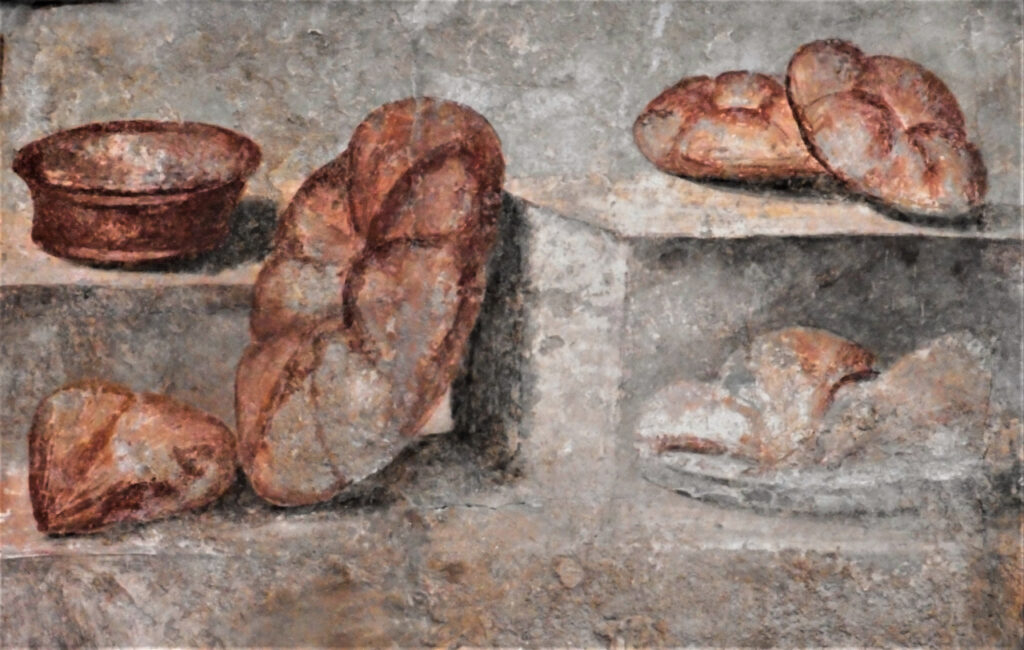
There was a time when the Romans made do with thick porridges of far, that rustic wheat wrapped in its husks, as Pliny the Elder attests:
“For a long time the Romans clearly lived on porridge, not bread.”[1]
But as early as the 5th century BCE, a change began to take hold in the Italian countryside: naked wheats, easier to thresh and grind, started to supplant the hulled varieties. Within a few centuries, an entire diet was overturned – literally as much as figuratively. For with siligo and triticum, Rome discovered a whiter, lighter, more refined bread. And behind this rising dough lay an Empire reorganising its agricultural model and its supply system.
A slow but decisive shift
Contrary to the notion of an abrupt break, archaeological evidence and ancient sources point to a gradual transition, spread over several centuries. Naked wheats first took hold in areas most open to trade, before gradually spreading into the interior countryside. Their success rested on one essential feature: they threshed easily and could be turned into flour quickly, without the need for heavy thermal or mechanical processing.
Three main varieties of naked wheat
Under the generic name triticum, the Romans grouped together several types of so-called naked wheat. The term did not denote a precise botanical species, but rather an agronomic category set against far (hulled emmer). The distinctions we draw today belong to a modern taxonomy, absent from the ancient texts.
Archaeobotany nonetheless allows us to propose likely correspondences.
Among the cereals grouped under the name triticum, durum wheat (Triticum durum) was no doubt one of the most widespread in the hot, dry provinces: Africa Proconsularis, Sicily, Sardinia, Calabria. It yielded a gluten-rich semolina (simila), ideal for pultes (porridges), certain dense breads and early forms of pasta. Its firm texture and good keeping qualities made it well suited to sea transport and storage, but poorly suited to leavened bread-making.
Rivet wheat (Triticum turgidum) is a large-grained variety that appears to have been used in mixed farming contexts. Versatile, this cereal was used to make flatbreads, coarse porridges and more rustic breads. It was grown in regions with temperate climates and on less demanding soils.
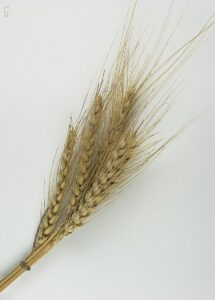
Known by the specific name siligo, this soft wheat or common wheat (Triticum aestivum) was particularly prized in fertile, well-irrigated regions such as Campania, Etruria and parts of Gaul. It yielded a fine, light flour, ideal for producing a white, soft bread sought after by the urban elites. Its high content of extensible gluten made it the only cereal truly suited to leavened bread-making. This is the bread Pliny the Elder singles out as most highly regarded:
“From siligo comes the finest bread and the most celebrated products of the bakery”[2]
An imperial cereal
The rise of naked wheat cannot be separated from the dynamics of empire. Its spread was driven by military conquest, the opening of trade routes and, above all, the organisation of urban food supply. Egypt, annexed in 30 BCE, became a mainstay of the durum wheat supply. Under Augustus, the establishment of the cura annonae – a kind of food-supply planning system for the capital[3] – called for cereals that were stable, easy to store, quick to process and transportable over long distances: naked wheats fulfilled this role perfectly.
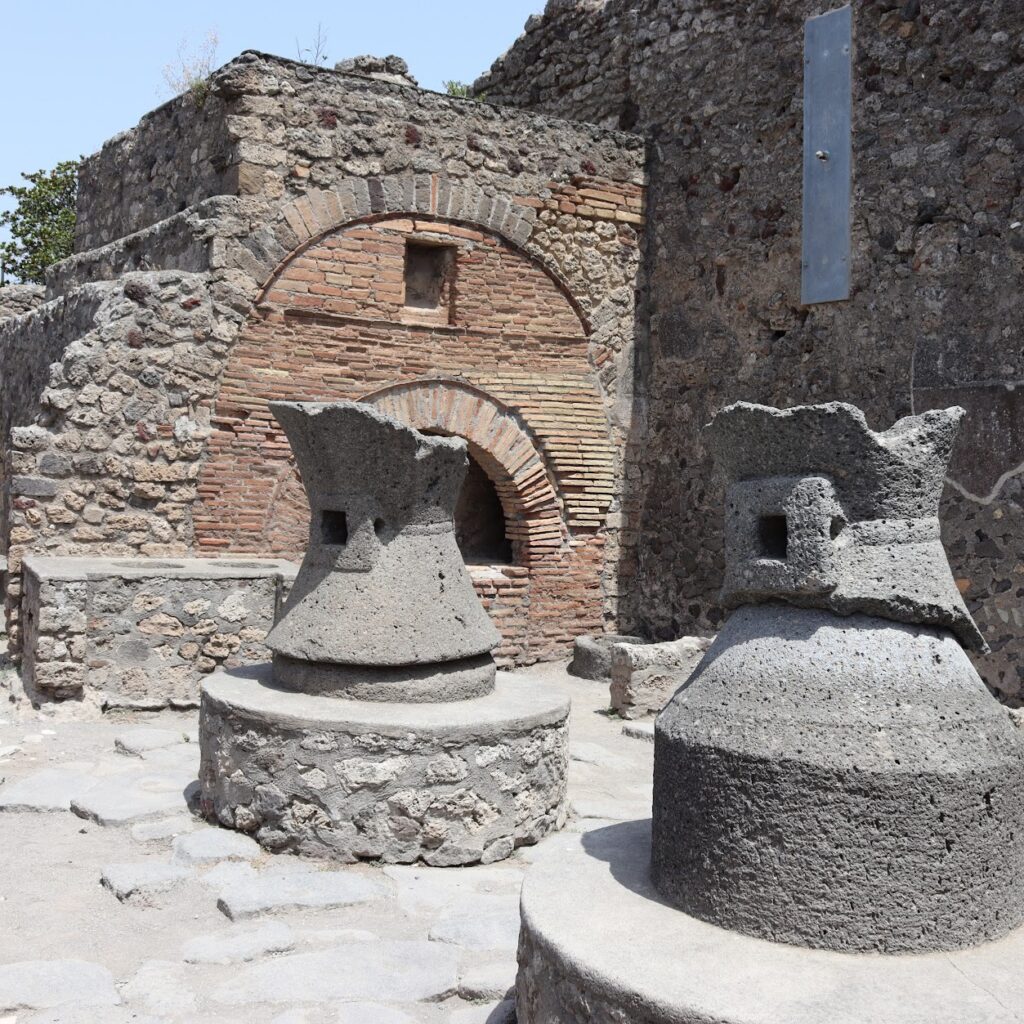
Large-capacity mills, urban bakeries, and free distributions of grain or bread to the plebs (frumentatio) all called for standardised varieties, compatible with an emerging agro-industrial system. Flour circulated, bread became widespread, and urban diet was transformed.
Faced with the rise of naked wheat, far – hulled emmer – did not disappear entirely. It continued to be grown in mountainous or marginal regions, where its hardiness was an asset. It also retained a strong symbolic charge: it was the wheat of origins, of Latin frugality, of ancestral farming.
A rising of dough… and of civilisation
With naked wheat, Rome changed its food… and its society. Easier to process and better integrated into the market economy, these new grains went hand in hand with urban growth and imperial centralisation. They made it possible to establish large-scale food logistics, built on the exploitation of the conquered world. White bread became a marker of power, and naked wheat the backbone of an empire.
Series — Cereals of Antiquity
-
- I.Grain and humans in pre-Roman Italy
- II.The hulled wheats, rustic ancestors of the Roman cereal system
- III.When wheat sheds its hull, Roman dough rises
- IV.Barley, millet, rye and oats: the cereals of the margin
[1] Pliny, Historia Naturalis, 18, 83: pulte autem, non pane, vixisse longo tempore Romanos manifestum.
[2] Pliny, Historia Naturalis, 18, 86: e siligine lautissimus panis pistrinarumque opera laudatissima.
[3] See the article Prends le blé et tais toi!
Other articles in English from the Nunc est bibendum blog