Translated from French (please notify us of errors)

Mixing your wine with water was the civilised thing to do. But when the innkeeper did it for you, it was often a swindle. Angry graffiti, mocking epigrams and a confession from beyond the grave: an investigation into a two-thousand-year-old fraud.
In the Greco-Roman world, wine is not drunk neat: it is mixed with water, cold or hot, according to taste and occasion. Failing to do so meant risking a swift slide into uncontrolled drunkenness and, above all, being taken for a barbarian ignorant of all the refinements of Greco-Roman civilisation – a Gaul, for example. The Gauls, according to the Greek historian Diodorus Siculus, drank their wine neat and without measure, until they sank into torpor or madness[1]. It was also a mark of impiety, since neat wine or merum was offered to the gods as a libation.
Mixing wine with water was therefore in the natural order of things… provided that the drinker controlled the proportion. There was no single rule, but among the Greeks water usually prevailed: two or three parts water to one of wine. “Half and half” was already considered a heavy drinker’s wine[2].
What is less well known is that over-watering wine was also strongly frowned upon when a merchant or an innkeeper was responsible. The principle is simple: it is fraud. By diluting too much, the dishonest trader sold his customers water at the price of wine. Good for profits, but not for reputation.
A well-established reputation
A widespread dishonest practice, it had even become a common subject of jokes and mockery in the Roman world, and even of anger. The cliché is an old one: as early as the fourth century BCE, a character of the comic poet Alexis pretends to admire the Athenian merchants who sell their wine “already mixed”… out of pure concern for their customers[3].
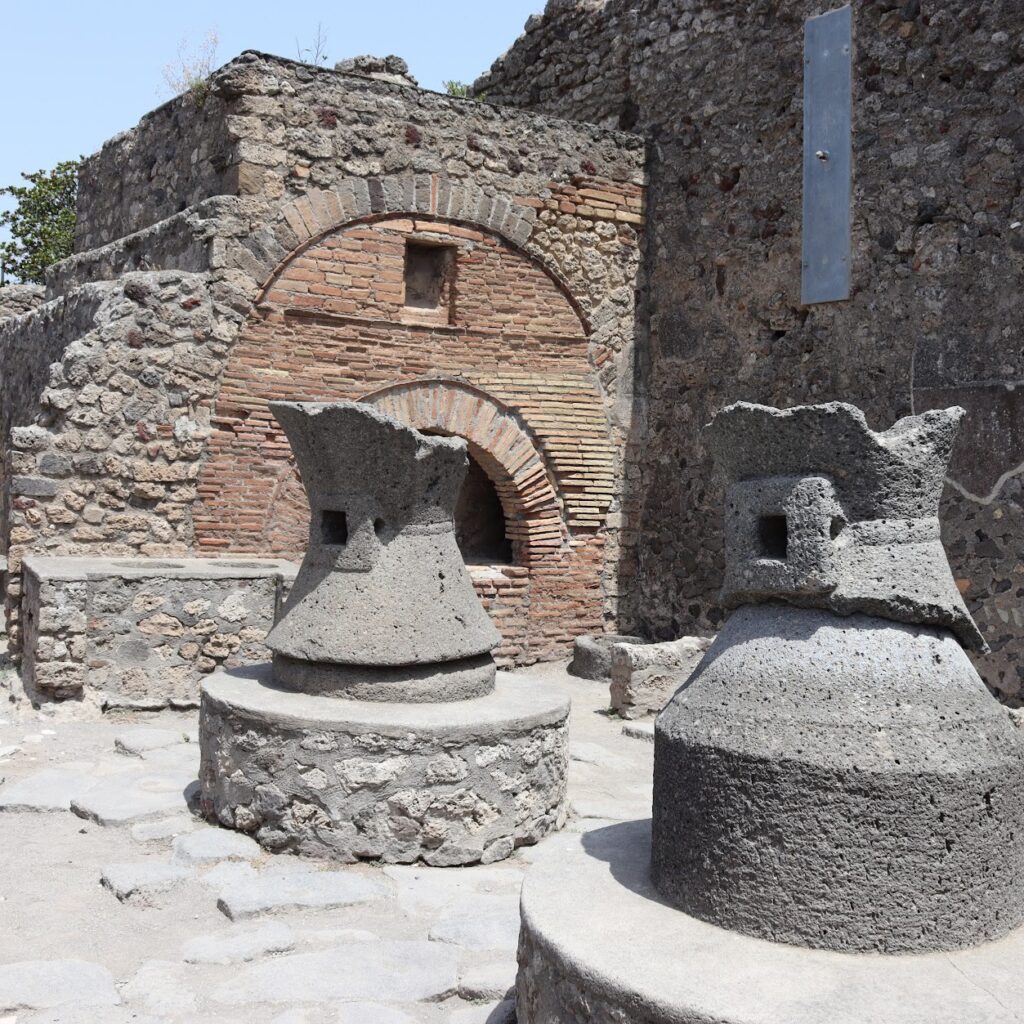
So it was that one particularly incensed customer left a record of his rage in the garden of a Pompeian inn where people dined in summer. And in verse, no less:
“Innkeeper, may you in turn fall victim to such lies: you sell water, and drink the neat wine yourself!”[4]
Less than ten years after Pompeii and its graffiti were buried under the ashes of Vesuvius, the innkeepers’ reputation had not improved. The poet Martial mocks them with his trademark corrosive humour:
“Battered by incessant rain, the vintage is sodden… You could not, innkeeper, even if you wished, sell neat wine!”[5]
In another epigram, he turns the argument on its head, alluding to a severe shortage of drinking water that had struck the city of Ravenna:
“In Ravenna, I would rather have a cistern than a vineyard. I could sell water at a far higher price [than wine];
A crafty innkeeper in Ravenna cheated me the other day: I asked him for wine mixed with water, and he sold me neat wine!”[6]
For Martial, the innkeeper is an inveterate cheat, and when watering the wine is no longer to his advantage, he stops doing it, whatever the customer asks.
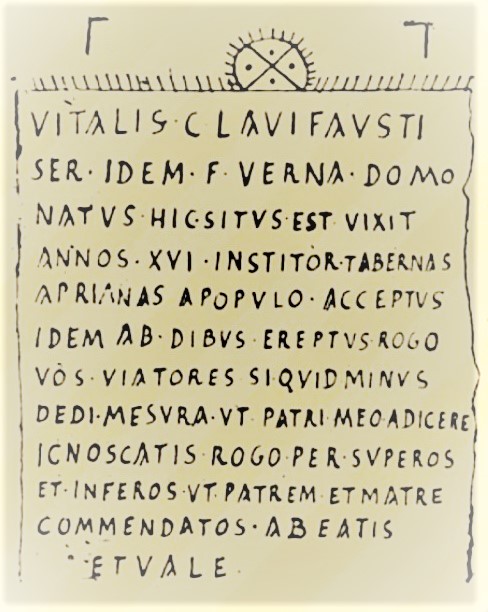
A funerary stele discovered near Philippi, in Macedonia, and since lost, tells the singular story of Vitalis. A slave of Gaius Lavius Faustus, he was also his son, born in his house to a slave mother. Neither he nor his mother was ever freed. He ran an inn for his father on the Via Egnatia, the great road linking the Adriatic to Byzantium. He died at sixteen, “loved by the people, snatched away by the gods”. His epitaph, written in the first person, addresses a strange plea for forgiveness to passers-by:
“I beg you, travellers, if I have sometimes served you less than the full measure in order to increase my father’s profit, forgive me.”[7]
He then implores them, by the gods above and below, to hold his father and mother in esteem.
Here the cheating concerns not water but quantity. Scholars have been debating it for more than a century. The confession of a little rogue? The scruple of an honest boy, worried about his mistakes? Or a wink from the father, who had the stone engraved and presents the fraud as proof of filial devotion? The joke only works if everyone knows the innkeepers’ reputation.
In any case, fraud was apparently widespread and suspicion always in order.
A tip for the wary customer
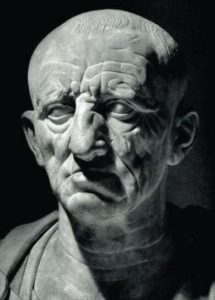
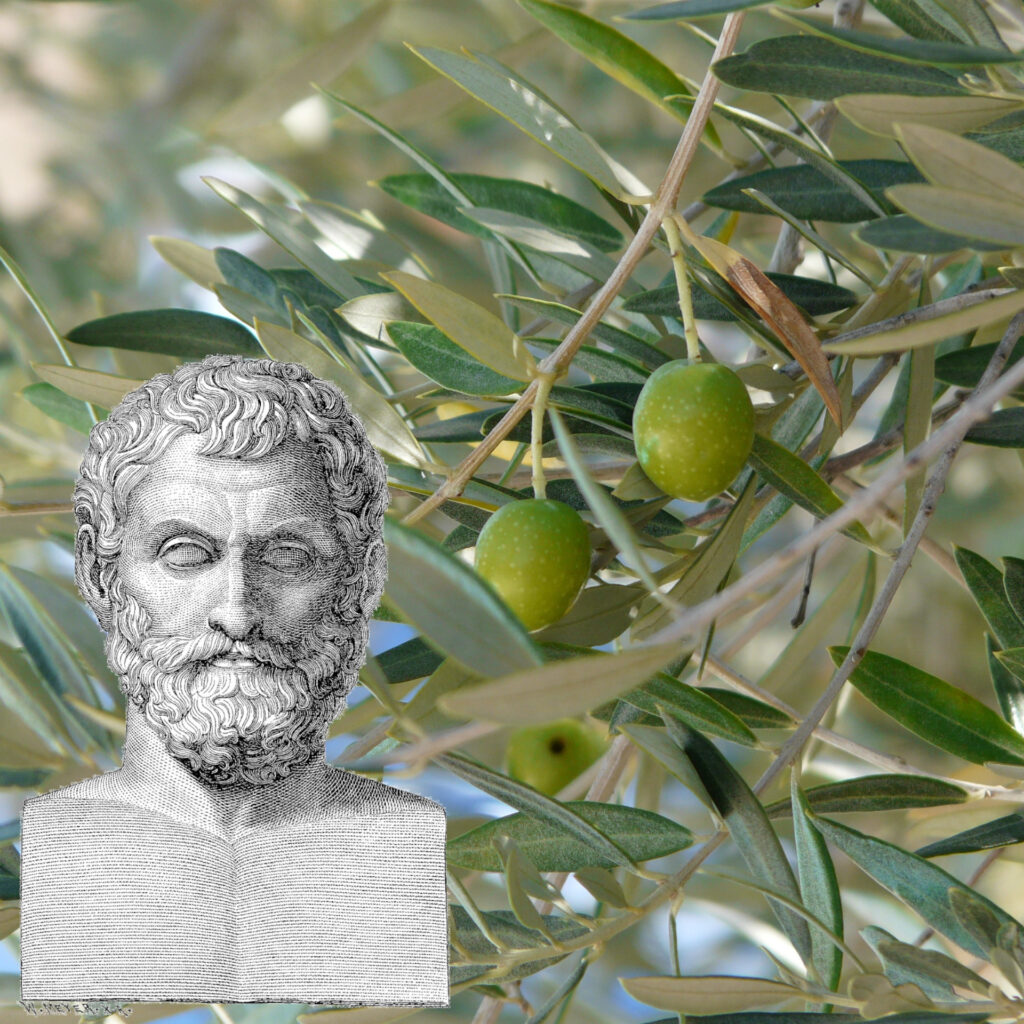
The suspicious customer could turn to Cato the Elder for a method of exposing the dishonest merchant:
“Do you want to know whether water has been added to your wine or not? Make a vessel of ivy wood and fill it with the wine you suspect has been tampered with. If it contains water, the wine seeps through the walls of the vessel and the water remains, for ivy wood lets wine through.”[8]
Admittedly, because of the ethyl alcohol it contains, a dry wine is generally slightly less dense than water. But this in no way allows the two liquids to be separated: alcohol and water are perfectly miscible, and wine itself is about 85% water. It is hard to see how this could work. Yet Cato believed it, and Pliny the Elder repeats the recipe more than two centuries later, albeit cautiously: he introduces it with an “it is said”[9]. Here is a new field of investigation for experimental archaeology!
[1] Diodorus Siculus, Library of History, V, 26, 3 (first century BCE): κάτοινοι δ᾽ ὄντες καθ᾽ ὑπερβολὴν τὸν εἰσαγόμενον ὑπὸ τῶν ἐμπόρων οἶνον ἄκρατον ἐμφοροῦνται, καὶ διὰ τὴν ἐπιθυμίαν λάβρῳ χρώμενοι τῷ ποτῷ καὶ μεθυσθέντες εἰς ὕπνον ἢ μανιώδεις διαθέσεις τρέπονται. “Being exceedingly fond of wine, they gulp down unmixed the wine brought in by merchants; in their greed they drink to excess and, once drunk, fall into sleep or into states close to madness.”
[2] Hesiod, Works and Days, 596: τρὶς δ᾽ ὕδατος προχέειν, τὸ δὲ τέτρατον ἱέμεν οἴνου (three parts water to one of wine). Alcaeus, quoted by Athenaeus, Deipnosophists, X, 430a: ἔγχεε κέρναις ἕνα καὶ δύο (one part wine to two of water). Anacreon, fr. 356 Page, quoted by Athenaeus, X, 427a–b: τὰ μὲν δέκ᾽ ἐγχέας / ὕδατος, τὰ πέντε δ᾽ οἴνου / κυάθους (ten measures of water to five of wine). See also Athenaeus, X, 426e–427a for the “five and two” mixture (πέντε καὶ δύο, five parts water to two of wine), and X, 430f–431a for the equal-parts mixture (ἴσον ἴσῳ).
[3] Alexis, Aesop, fr. 299 Kock, quoted by Athenaeus, Deipnosophists, X, 431e: πωλοῦσι γὰρ / ἐν ταῖς ἁμάξαις εὐθέως κεκραμένον. “For they sell the wine already mixed with water, straight from the wagons”. The passage is ironic: the merchant claims to be sparing his customers the discomforts of drunkenness, not increasing his profits.
[4] CIL IV, 3948 = CLE 930 (Pompeii, I, 2, 24, peristyle of the caupona): Talia te fallant / utinam medacia (:mendacia) copo / tu vedes (:vendes) acuam (:aquam) et / bibes ipse merum. Elegiac couplet. Copo is the popular form of caupo; vendes and bibes are future-tense forms.
[5] Martial, Epigrams, I, 56 (c. 85–86 CE): Continuis vexata madet vindemia nimbis / non potes, ut cupias, vendere, copo, merum.
[6] Martial, Epigrams, III, 56 and 57 (c. 87–88 CE): Sit cisterna mihi quam vinea malo Ravennae / cum possim multo vendere pluris aquam // Callidus imposuit nuper mihi copo Ravennae / cum peterem mixtum, vendidit ille merum.
[7] Epitaph of Vitalis, CIL III, 14206, 21 = ILS 7479 = Philippi II, 416/L166 (probably third century CE): Rogo vos, viatores, si quid minus dedi me<n>sura ut patri meo adicere<m>, ignoscatis. Rogo per superos et inferos ut patrem et matre<m> commendatos habeatis. The stone, discovered at Karakavak (today Mavrolefki), near Drama, was no longer in the village in 1992; its whereabouts are now unknown.
[8] Cato the Elder, De agri cultura, CXI (c. 160 BCE): Si voles scire in vinum aqua addita sit necne, vasculum facito de materia hederacia. Vinum id, quod putabis aquam habere, eodem mittito. Si habebit aquam, vinum effluet, aqua manebit. Nam non continet vinum vas ederaceum.
[9] Pliny the Elder, Natural History, XVI, 63, 155 (c. 77 CE): Hederae mira proditur natura ad experienda vina, si vas fiat e ligno eius, vina transfluere ac remanere aquam, si qua fuerit mixta.
Further reading
- Marie-Adeline Le Guennec, Aubergistes et clients, L’accueil mercantile dans l’Occident romain (IIIe s. av. J.-C.–IVe s. apr. J.-C.), Publications de l’École française de Rome, 2019, Chapitre II. Pratiques économiques et commerciales des professionnels de l’accueil dans l’Occident romain.
- Paul Perdrizet, Trois inscriptions latines de Roumélie, Bulletin de Correspondance Hellénique Year 1900 24 pp. 542–552
May 2024, revised October 2026
Other articles in English from the Nunc est bibendum blog