Translated from french (please notify us of errors)

Ancient job advert: “prestigious city in the Peloponnese seeks young unmarried men to organise, over four years, a festival in the course of which they will be required to hunt down one of their own, girded with woollen fillets – all under the name of ‘grape runners’.”
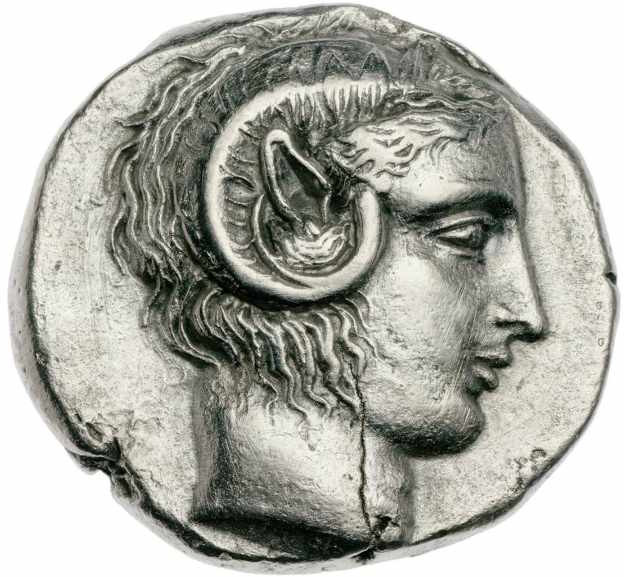
At Sparta, this curious custom of the staphylodromoi (σταφυλοδρόμοι, literally “grape runners”) formed part of the Karneia (Κάρνεια), a mid-year festival in honour of Apollo Karneios, protector of flocks. Depicted with ram’s horns, this figure of the god was honoured in numerous Dorian cities: Sparta, but also Argos, Cos, Thera (in the Aegean Sea) and Cyrene (in present-day Libya). According to Pausanias[1], the epithet Karneios is said to derive from a certain Carnus, a seer of Apollo whom the Dorians had the poor taste to kill, thereby condemning themselves to honour the god in order to appease him. Be that as it may, the Karneia were, already in the fifth century BCE, a very ancient festival.
Sorry, I’ve got Karneia!
As with the other Hellenic festivals, notably the Olympic games, the Spartan Karneia marked a pause in the incessant wars waged between cities. It was because of this festival that the Spartans sent, ten years after Marathon, only a limited contingent to Thermopylae: “the Karneia”, says Herodotus, “stood in the way of their departure”[2]. The missed rendezvous at Marathon, more famous but less clear-cut, is thought to stem from the same impediment – waiting for the full moon – except that Herodotus, this time, does not name the festival in question: it is scholarly tradition that has drawn the connection.
Beyond this notable fact, however, little is known of these Spartan festivities. A handful of archaeological inscriptions and a few authors attest to their existence.
Xenophon and Plutarch, for their part, describe other typically Spartan festivals involving ephebes: in the former, the ritual theft of cheeses from the altar of Artemis Orthia, where young men defy the lashes dealt out by adults[3]; in the latter, the Hyacinthia (Ὑακίνθια / Hyakínthia)[4]. Neither one, however, mentions the Karneia on this occasion.
In late antiquity, an anonymous Greek lexicon, preserved by the German philologist Bekker (1785-1871) in his Anecdota Graeca, gives the detail of the famous race: a man, girded with wreaths, runs while uttering a favourable wish for the city; young men, the staphylodromoi, give chase. If they catch him, it is a good omen; if not, a bad one[5]. The grammarian Hesychius of Alexandria, for his part, says little more: his two entries on the Karneatai and the staphylodromoi each run to a single line and do not describe the race itself. The staphylodromoi, he writes only, “spur on those who are at the grape harvest”[6]. As for the grape bunches promised by their name, they remain, in the texts, a mystery: nothing indicates that the runners were adorned with them. “Grape runners” is an etymological translation of staphylodromoi, not an attested description.
As for Demetrius of Scepsis, quoted by Athenaeus of Naucratis[7], he provides a few elements of military context: nine “tents” (skiades), each accommodating nine men and three phratries, everything being carried out on the proclamation of a herald, the whole lasting nine days.
Passing the baton
So much for the meagre facts; it remains to interpret them.
For Demetrius, quoted above, the meaning of the festivities was essentially military and constituted a re-enactment of the military training of young Spartans, the agôgè. Aside from the fact that, at Sparta, everything is bound up, directly or indirectly, with the art of war, it is not entirely clear what the grape bunches would be doing here.
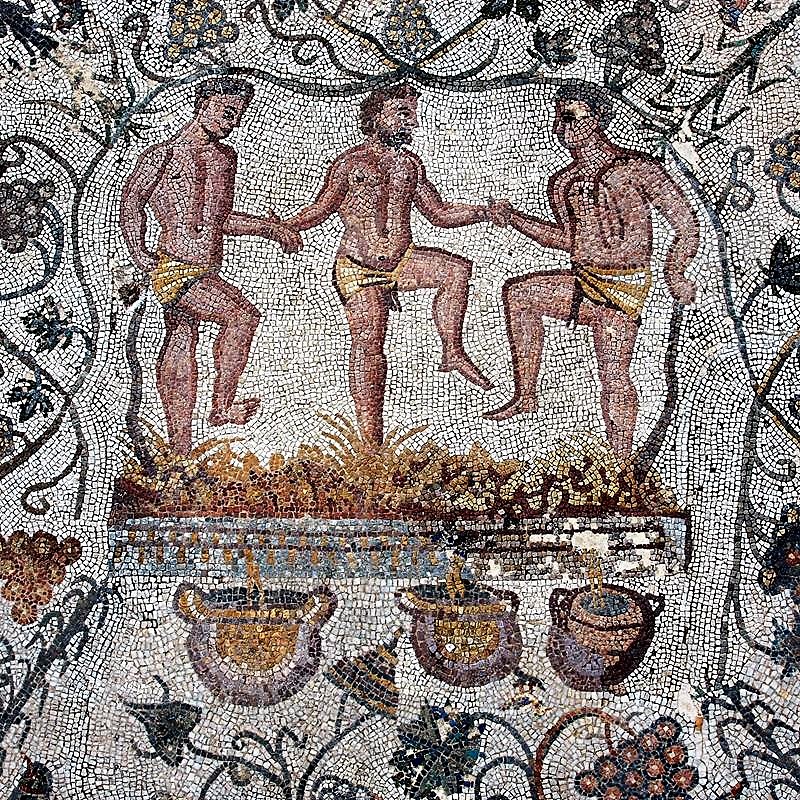
And so, as early as the late nineteenth century, historians put forward another hypothesis. The Karneia would above all be an agricultural festival, expressing the end of a cycle, the passage from harvest to grape-gathering, from summer to autumn, from one divinity to another. Apollo Karneios would thus symbolically pass the baton to Dionysus during the race of the staphylodromoi.
Studies consulted
- Nicolas Richer, La religion des Spartiates. Croyances et cultes dans l’Antiquité, Paris, Les Belles Lettres, 2012, chapter X: “Les Karneia de Sparte”.
- Michael Pettersson, Cults of Apollo at Sparta: The Hyakinthia, the Gymnopaidiai and the Karneia, Skrifter utgivna av Svenska institutet i Athen, 8°, 12, Stockholm, 1992, chapter 3: “The Karneia”, pp. 57-71.
[1] Pausanias, Description of Greece, III, 13, 4:
Κάρνειον δὲ Ἀπόλλωνα Δωριεῦσι μὲν τοῖς πᾶσι σέβεσθαι καθέστηκεν ἀπὸ Κάρνου γένος ἐξ Ἀκαρνανίας, μαντευομένου δὲ ἐξ Ἀπόλλωνος· τοῦτον γὰρ τὸν Κάρνον ἀποκτείναντος Ἱππότου τοῦ Φύλαντος ἐνέπεσεν ἐς τὸ στρατόπεδον τοῖς Δωριεῦσι μήνιμα Ἀπόλλωνος, καὶ Ἱππότης τε ἔφυγεν ἐπὶ τῷ φόνῳ καὶ Δωριεῦσιν ἀπὸ τούτου τὸν Ἀκαρνᾶνα μάντιν καθέστηκεν ἱλάσκεσθαι.
“All the Dorians came to honour Apollo Karneios on account of Carnus, of Acarnanian stock, a seer of Apollo; for when Hippotes, son of Phylas, killed this Carnus, the wrath of Apollo fell upon the camp of the Dorians, and Hippotes went into exile for the murder, and from that time the Dorians have made it their custom to appease the Acarnanian seer.”[2] Herodotus, Histories, VII, 206: Κάρνεια γάρ σφι ἦν ἐμποδών — “for the Karneia stood in the way of their departure”.
[3] Xenophon, Constitution of the Lacedaemonians, II, 9:
καὶ ὡς πλείστους δὴ ἁρπάσαι τυροὺς παρ’ Ὀρθίας καλὸν θείς, μαστιγοῦν τούτους ἄλλοις ἐπέταξε, τοῦτο δηλῶσαι καὶ ἐν τούτῳ βουλόμενος ὅτι ἔστιν ὀλίγον χρόνον ἀλγήσαντα πολὺν χρόνον εὐδοκιμοῦντα εὐφραίνεσθαι.
“Having established that stealing as many cheeses as possible from the altar of Orthia was a fine deed, he ordered others to whip the thieves, wishing to show by this that one may, after suffering for a short time, enjoy a good reputation for a long time.”[4] Plutarch, Life of Aristides, X, 7:
ταῦτα ἀκούσαντες οἱ Ἔφοροι μεθ’ ἡμέραν μὲν ἐδόκουν παίζειν καὶ ῥᾳθυμεῖν ἑορτάζοντες· ἦν γὰρ αὐτοῖς Ὑακίνθια· νυκτὸς δὲ πεντακισχιλίους Σπαρτιατῶν ἐπιλέξαντες, ὧν ἕκαστος ἑπτὰ περὶ αὑτὸν εἵλωτας εἶχεν, ἐξέπεμψαν οὐκ εἰδότων τῶν Ἀθηναίων.
“Hearing this, the Ephors, by day, seemed to be making merry and taking their ease in celebrating the festival – for it was, for them, the Hyacinthia; but by night, having selected five thousand Spartans, each of whom had seven helots about him, they sent them out without the Athenians’ knowledge.”[5] Lexica Segueriana (Anecdota Graeca, ed. Bekker, I, p. 305, ll. 24-30), s.v. Σταφυλοδρόμοι:
Σταφυλοδρόμοι· κατὰ τὴν τῶν Καρνείων ἑορτὴν στέμματά τις περιθέμενος τρέχει, ἐπευχόμενός τι τῇ πόλει χρηστόν. ἐπιδιώκουσι δὲ αὐτὸν νέοι, σταφυλοδρόμοι καλούμενοι. καὶ ἐὰν μὲν καταλάβωσιν αὐτόν, ἀγαθόν τι προσδοκῶσι κατὰ τὰ ἐπιχώρια τῇ πόλει· εἰ δὲ μή, τοὐναντίον.
“During the festival of the Karneia, a man, having girded himself with wreaths, runs while uttering a favourable wish for the city. Young men called staphylodromoi pursue him. If they catch him, they expect, according to local custom, a happy event for the city; if not, the opposite.”[6] Hesychius, s.v. Σταφυλοδρόμοι: σταφυλοδρόμοι· τινὲς τῶν Καρνεατῶν, παρορμῶντες τοὺς ἐπὶ τρύγῃ — “staphylodromoi: certain of the Karneatai, who spur on those who are at the grape harvest.”
[7] Demetrius of Scepsis, Greek geographer of the second century BCE, quoted by Athenaeus of Naucratis, Deipnosophistae, IV, 141E-F, Greek grammarian of the second/third century CE:
Δημήτριος δ’ ὁ Σκήψιος ἐν τῷ αʹ τοῦ Τρωικοῦ διακόσμου τὴν τῶν Καρνείων φησὶν ἑορτὴν παρὰ Λακεδαιμονίοις μίμημα εἶναι στρατιωτικῆς ἀγωγῆς. τόπους μὲν γὰρ εἶναι θʹ τῷ ἀριθμῷ, σκιάδες δὲ οὗτοι καλοῦνται, σκηναῖς ἔχοντες παραπλήσιόν τι· καὶ ἐννέα καθ’ ἕκαστον ἄνδρες δειπνοῦσι, πάντα τε ἀπὸ κηρύγματος πράσσεται, ἔχει τε ἑκάστη σκιὰς φρατρίας τρεῖς καὶ γίνεται ἡ τῶν Καρνείων ἑορτὴ ἐπὶ ἡμέρας θʹ.
“Demetrius of Scepsis states, in the first book of the Trojan Catalogue, that the festival of the Karneia is, among the Lacedaemonians, an imitation of military manoeuvre. For there are sites, nine in number – these resemble tents and are called shelters – and in each nine men take their meal. Everything is done on the proclamation of a herald. Each shelter receives three phratries, and the festival of the Karneia lasts nine days.”
July 2026, first version June 2024, reproduction prohibited
Other articles in English from the Nunc est bibendum blog