Translated from French (please notify us of errors)
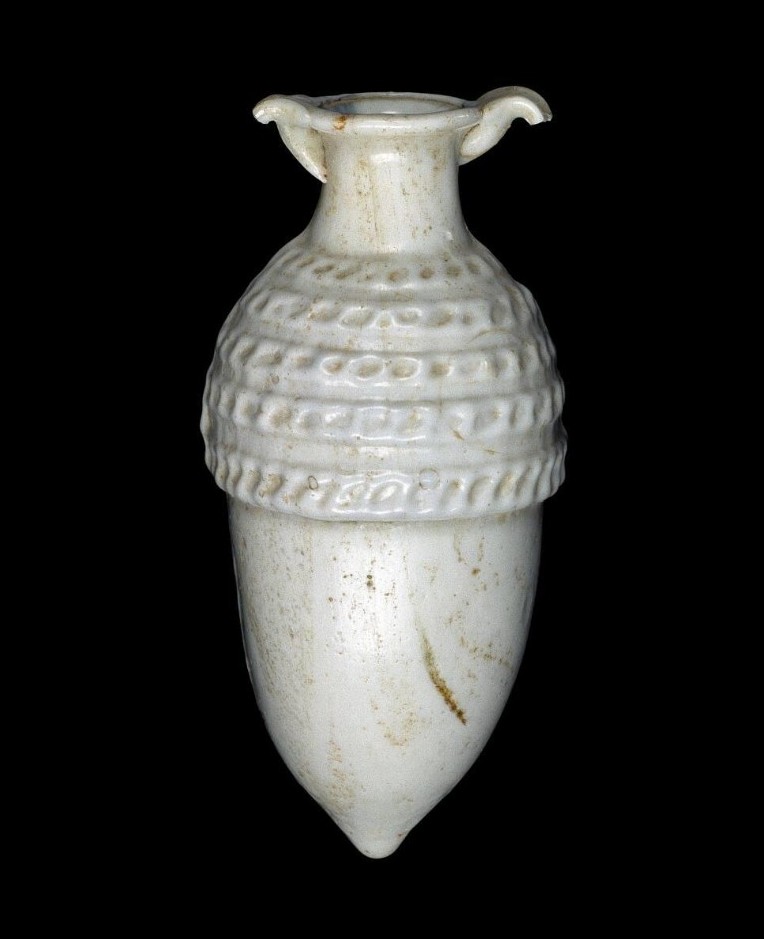
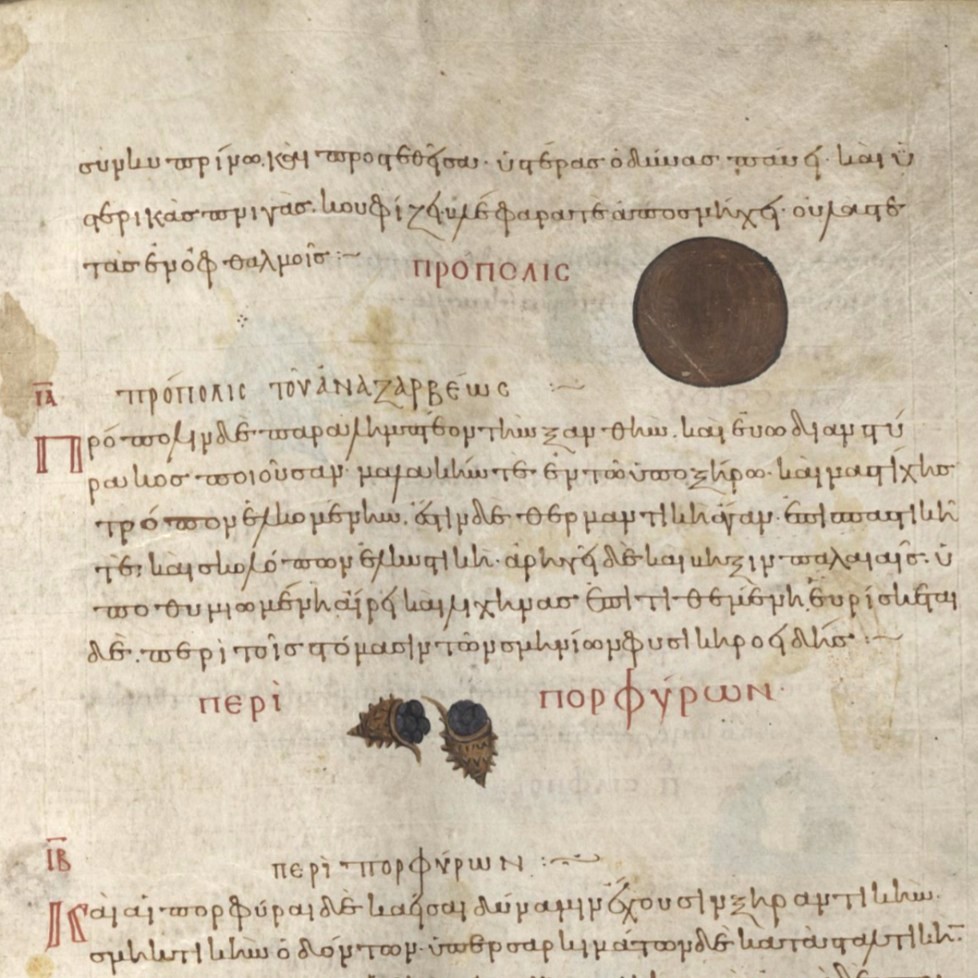
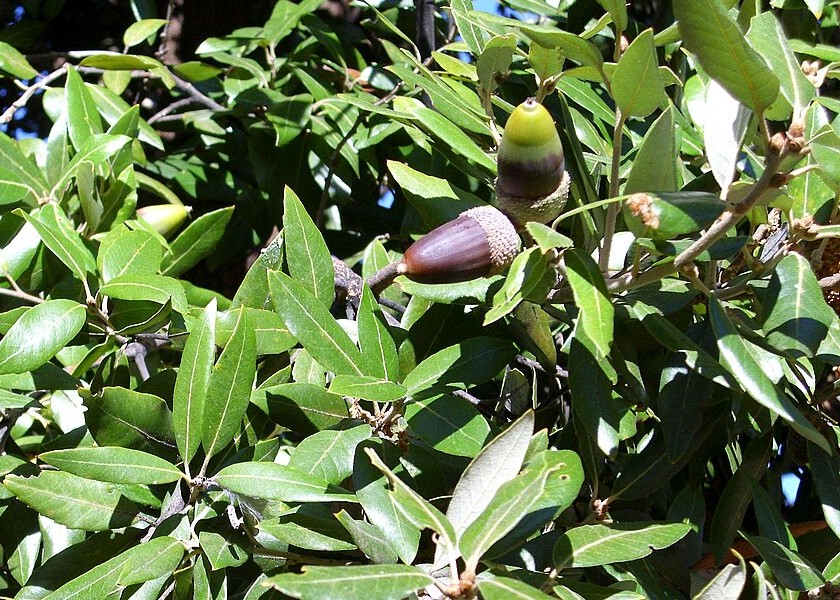
For a long time, the fruit of the oak, a tree associated with Zeus (Jupiter), served as food for humans. But for the Roman poets, the matter was settled: Ceres had given wheat to mankind and the acorn had been relegated to the pigs. Yet it did not vanish entirely from human bowls…
Ovid could be terse. In a single couplet, the fate of the acorn is sealed. In the Fasti, a work written at the very beginning of the first century CE, he invoked Earth and Ceres, “through whom the ancient condition was improved and the acorn of the oak defeated by a more useful food”[1]. Lucretius had described this break a few decades earlier with a touch more melancholy: as soon as a more pleasant food became known, “thus began the loathing of the acorn”[2]. In Latin poetry, the fruit of the oak played a thankless role, that of the food whose memory was bound up with the relief of no longer having to eat it.
Before Ceres, the reign of the oak
The most detailed account is found, once again, in Ovid’s Fasti. There the first mortals graze on the grass of the turf and the young leaves of trees. Then comes the acorn, whose discovery already represented progress; Ceres steps in only third, when she “replaced acorns with a more useful food”[3], in other words cereals. But in the Metamorphoses, Ovid even gives the acorn the status of Golden Age food:
“The earth itself, free from all tribute, untouched by the rake and unwounded by any ploughshare, gave everything of its own accord. Content with foods produced without any compulsion, men gathered the fruit of the strawberry tree, mountain strawberries, cornels, blackberries clinging to the thorny brambles, and the acorns fallen from the broad-spreading tree of Jupiter”[4].
Virgil, for his part, gave this change a very concrete cause: scarcity. In the Georgics, he explains that Ceres taught men to plough when the forest could no longer feed them, “when the acorns and the fruit of the strawberry tree were already running short in the sacred woods and Dodona refused them sustenance”. The Roman reader caught the allusion: at Dodona, in Epirus, in what is now north-western Greece, Zeus delivered his oracles through the voice of an oak. The name of the sanctuary alone was enough to call to mind the tree and its fruit. Yet the poet adds a warning to the careless farmer: if he lets weeds overrun his field, “in the woods you will soothe your hunger by shaking an oak”[5]. So the acorn never entirely left the stage. It waits, at the edge of the ill-kept field, for those whom the harvest has betrayed.
Other people’s acorns
This tradition of the acorn as the food of the earliest times was, of course, borrowed by the Romans from the Greeks. For the Greeks, certain peoples had never moved beyond the fruit of the oak, and it was no compliment. When the Spartans sought to seize Arcadia, that mountainous heart of the Peloponnese whose inhabitants claimed to be older than the Moon, the Pythia discouraged them with a single verse, as Herodotus relates in the fifth century BCE:
“There are in Arcadia many acorn-eating men, who will stop you”[6].
These rugged mountain folk were feared, even as they were dismissed as primitive. The label stuck to them for centuries, and in the second century CE Pausanias still credited Pelasgus, the first mythical king of Arcadia, with discovering that certain acorns could feed humans[7].
Strabo, a contemporary of the emperor Augustus, describes other acorn-eaters. The mountain dwellers of northern Iberia, the geographer writes, “for two-thirds of the year live on acorns: they dry them, crush them, then grind them and make bread from them, so that it can be stored for some time”[8]. These peoples drink beer and cook with butter rather than oil, enough to place them, for a Greek reader, at the far edge of the civilised world.
Archaeology partly bears the geographer out. At Numantia, the Celtiberian city on the upper Douro destroyed by Scipio in 133 BCE, researchers have looked for the starch grains trapped in pots and on grinding stones. Those from oak appear on every object analysed that predates its destruction. On two grinding stones from the Roman period, they show that acorns were still being ground. Wheat remained the staple of the diet, and the acorn a supplement; but the conquest did not drive it out of the kitchens.
Acorns closer to home
Greeks and Romans might mock the Arcadians and the Celtiberians, but in times of famine they did the same. Galen, a Greek physician in the Roman world of the second century, described what happens when grain runs short.
When famine had struck his region, the peasants had luckily gathered a great many acorns and medlars, which they had stored in pits to fatten the pigs over the winter. So they began by eating the pigs, then opened the pits.
“They ate the acorns, preparing them now one way, now another, to make them fit for eating. Sometimes they boiled them in water; sometimes, burying them in hot ashes, they roasted them just enough”[9].
Crushed, the acorns also made a porridge, flavoured with a seasoning, with honey or with milk. The physician does not complain about the menu: the acorn, in his view, is as nourishing as many cereals, at the cost of laborious digestion. He notes in passing that country people eat it as a matter of course, famine or no famine.
Near Verona, a granary has preserved proof of this habit. A building at Gargagnago, burnt down in the second century BCE, has yielded hundreds of charred acorns. They had been carefully shelled, a task no one bothers with for pigs turned out to forage for acorns, and stored alongside lentils, broad beans and wheat. In this village, which lacked neither cereals nor pulses, the acorn was part of the ordinary provisions.
Pliny the Elder, for that matter, was less scathing than the poets. “Even today, the wealth of many peoples, even when they enjoy peace, rests on the acorn”, he explains; in times of shortage it is made into bread, and in Hispania it is served as dessert. It is “sweeter when roasted in the ashes”[10]. Pliny also recalls that the Law of the Twelve Tables allowed acorns fallen into a neighbour’s field to be gathered: Rome’s oldest law was already concerned with the fruit its poets would later scorn.
Did the acorn even win over the cuisine of the elite? A recipe for stuffed hare attributed to Apicius mentions chopped acorns[11], unless one should read walnuts instead, as some editors have suggested.
In any case, the eating of acorns held out in Spain. In November 1812, a French officer, d’Espinchal, noted in his Souvenirs militaires that “for three days the army had lived on nothing but holm-oak acorns, which were found in abundance in the inhabitants’ homes; the officers and generals were reduced to the same diet, which, moreover, is not bad, the acorns of this country being far superior to those of France and containing a flour similar to that of the chestnut, with a very pleasant taste when cooked in the ashes”. Exactly as Pliny had indicated seventeen centuries earlier.
Modern studies consulted
- Aceituno Bocanegra F. J., Liceras-Garrido R., Lalinde Aguilar V., Quintero Cabello S. A., Jimeno A., “El uso de plantas en Numancia durante la II Edad del Hierro y época romana imperial (siglos III a.C.-II d.C.) a través del análisis de almidones”, SPAL. Revista de Prehistoria y Arqueología, 32/1, 2023, pp. 165-188.
- André J., L’Alimentation et la cuisine à Rome, Paris, Les Belles Lettres (Études anciennes), 1981 (1st ed. Paris, Klincksieck, 1961).
- Levine D. B., “Acorns and Primitive Life in Greek and Latin Literature”, Classical and Modern Literature, 9/2, 1989, pp. 87-95.
- Liceras-Garrido R., García Gómez E., Pereira Sieso J., Moneo Rodríguez M. T., “El papel de las bellotas en la cotidianeidad y en el imaginario de los pueblos prerromanos de la Meseta: el caso de Numancia (s. IV-II a. C.)”, Complutum, 37/1, 2026, pp. 75-94.
- Nisbet R., “Late Iron Age balanophagy and leaf-fodder in the lower Valpolicella (Verona, Italy)”, Preistoria Alpina, 51, 2021, pp. 107-120.
[1] Ovid, Fasti, I, 675-676: consortes operis, per quas correcta vetustas / quernaque glans victa est utiliore cibo. “Companions in this work, you through whom the ancient condition was improved and the acorn of the oak defeated by a more useful food.”
[2] Lucretius, De rerum natura, V, 1416-1417: sic odium coepit glandis, sic illa relicta / strata cubilia sunt herbis et frondibus aucta. “Thus began the loathing of the acorn, thus were abandoned those beds strewn with grass and heaped with leaves.”
[3] Ovid, Fasti, IV, 399-402: postmodo glans nata est: bene erat iam glande reperta, / duraque magnificas quercus habebat opes. / prima Ceres homine ad meliora alimenta vocato / mutavit glandes utiliore cibo. “Next came the acorn: the discovery of the acorn was already progress, and the sturdy oak held abundant riches. Ceres was the first to call man to better nourishment and replaced acorns with a more useful food.”
[4] Ovid, Metamorphoses, I, 101-106: Ipsa quoque inmunis rastroque intacta nec ullis / saucia vomeribus per se dabat omnia tellus; / contentique cibis nullo cogente creatis / arbuteos fetus montanaque fraga legebant / cornaque et in duris haerentia mora rubetis / et quae deciderant patula Iovis arbore glandes. “The earth itself, free from all tribute, untouched by the rake and unwounded by any ploughshare, gave everything of its own accord. Content with foods produced without any compulsion, men gathered the fruit of the strawberry tree, mountain strawberries, cornels, blackberries clinging to the thorny brambles, and the acorns fallen from the broad-spreading tree of Jupiter.”
[5] Virgil, Georgics, I, 147-149 and 159: Prima Ceres ferro mortalis vertere terram / instituit, cum iam glandes atque arbuta sacrae / deficerent silvae et victum Dodona negaret. […] concussaque famem in silvis solabere quercu. “Ceres was the first to teach mortals to turn the earth with iron, when the acorns and the fruit of the strawberry tree were already running short in the sacred woods and Dodona refused them sustenance. […] In the woods you will soothe your hunger by shaking an oak.”
[6] Herodotus, Histories, I, 66: πολλοὶ ἐν Ἀρκαδίῃ βαλανηφάγοι ἄνδρες ἔασιν, / οἵ σ’ ἀποκωλύσουσιν. “There are in Arcadia many acorn-eating men, who will stop you.”
[7] Pausanias, Description of Greece, VIII, 1, 5: καὶ δὴ καὶ τῶν φύλλων τὰ ἔτι χλωρὰ καὶ πόας τε καὶ ῥίζας οὐδὲ ἐδωδίμους, ἀλλὰ καὶ ὀλεθρίους ἐνίας σιτουμένους τοὺς ἀνθρώπους τούτων μὲν ἔπαυσεν ὁ Πελασγός· ὁ δὲ τὸν καρπὸν τῶν δρυῶν οὔτι που πασῶν, ἀλλὰ τὰς βαλάνους τῆς φηγοῦ τροφὴν ἐξεῦρεν εἶναι. “Pelasgus put an end to the practices of men who still ate green leaves, grasses and roots, some of which were not even edible but sometimes deadly. He discovered, on the other hand, that the fruit of oaks – not of all of them, but the acorns of the phêgos – could serve as food.”
[8] Strabo, Geography, III, 3, 7: οἱ δ’ ὄρειοι τὰ δύο μέρη τοῦ ἔτους δρυοβαλάνῳ χρῶνται ξηράναντες καὶ κόψαντες, εἶτα ἀλέσαντες καὶ ἀρτοποιησάμενοι ὥστ’ ἀποτίθεσθαι εἰς χρόνον. “The mountain dwellers, for two-thirds of the year, live on acorns: they dry them, crush them, then grind them and make bread from them, so that it can be stored for some time.”
[9] Galen, On the Properties of Foodstuffs, II, 38: […] ἤσθιον τὰς βαλάνους, παρασκευάζοντες ἐπιτηδείους εἰς βρῶσιν ἄλλοτε ἄλλως. ἐν ὕδατι γὰρ ἧψον ἐνίοτε, καὶ κατὰ τὴν θερμὴν σποδιὰν ἐγκρύβοντες ὤπτουν συμμέτρως. “They ate the acorns, preparing them now one way, now another, to make them fit for eating. Sometimes they boiled them in water; sometimes, burying them in hot ashes, they roasted them just enough.”
[10] Pliny the Elder, Natural History, XVI, 15: Glande opes nunc quoque multarum gentium etiam pace gaudentium constant. nec non et inopia frugum arefactis emolitur farina spissaturque in panis usum; quin et hodieque per Hispanias secundis mensis glans inseritur. dulcior eadem in cinere tosta. cautum est praeterea lege XII tabularum, ut glandem in alienum fundum procidentem liceret colligere. “Even today, the wealth of many peoples, even when they enjoy peace, rests on the acorn. When crops fail, it is dried, ground into flour and kneaded into bread. What is more, even today, in the Hispaniae, the acorn is served at the second course. It is sweeter when roasted in the ashes. The Law of the Twelve Tables also provided that acorns falling onto another’s land might be gathered.”
[11] Apicius, De re coquinaria, VIII, 8, 3: Leporem farsum: nucleos integros, amygdala, nuces sive glandes concisas, piperis grana solida, pulpam de ipso lepore. “Stuffed hare: [take] whole pine kernels, almonds, chopped walnuts or acorns, whole peppercorns and meat from the hare itself.”
Other articles in English from the Nunc est bibendum blog