Translated from french (please notify us of errors)
The vast majority of aromatic plants used in ancient cooking had already been known for millennia and remain indispensable to Mediterranean cuisine today. With a few exceptions, of course!
The Romans used many herbs and spices to flavour their dishes. Many of these plants are familiar to us and can still be found in our kitchens today. Others, however, have disappeared or are used differently. This aromatic richness demonstrates the sophistication of Roman gastronomy, which placed great importance on flavours and the medicinal properties of plants.
Bay laurel – laurus
Laurus nobilis (family Lauraceae, order Laurales)
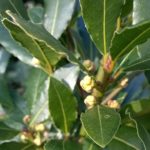
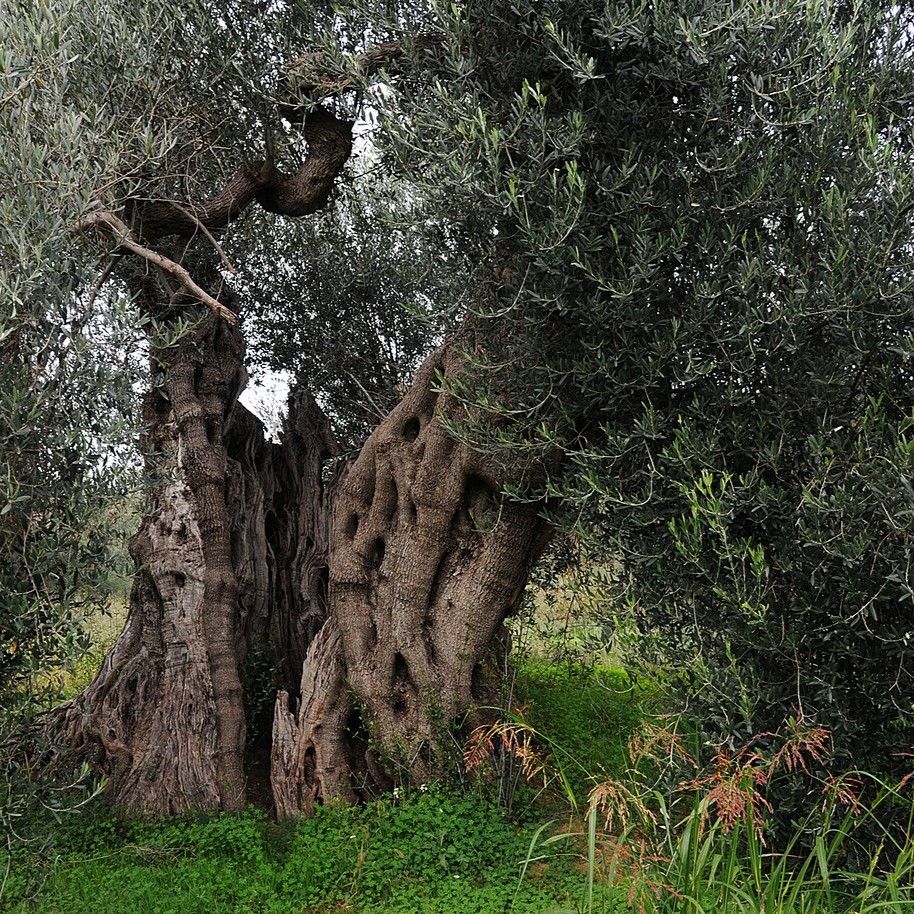
🌿 A slow-growing evergreen shrub or small tree, the bay laurel develops leathery, elongated and glossy leaves of a deep green. Its small yellowish flowers appear in spring and give rise to dark berries. It thrives in mild climates and well-drained soils.
🏛️ The leaves of Laurus nobilis were used in cooking two thousand years ago just as they are today, prized for their spicy, bitter and balsamic flavour.
But in Antiquity, a true cult was devoted to this evergreen tree, to which a divine origin was attributed. In his Metamorphoses, the poet Ovid recounts that the nymph Daphne was transformed into a laurel tree by her father to escape Apollo’s advances. The god therefore made it his tree and associated it with triumphs, songs and poems. From then on, poets and victors were crowned with laurel.
Caraway – careum
Carum carvi (family Apiaceae, order Apiales)

🌿 Perennial or biennial, caraway develops an upright stem bearing finely divided leaves. The white umbels produce curved and striated fruits.
🏛️ Caraway is often confused with cumin. But unlike cumin, it is native to Europe and is one of the oldest spices used: specimens have been found at Neolithic sites. Here too, it is the seeds that are used in cooking, and their flavour — at once anise-like, sweet and pungent — is more subtle than that of cumin.
The plant was mentioned by Caesar in his commentaries on the Civil War (De bello civili). He states that its root, mixed with milk, was of great help to the soldiers of his lieutenant Valerius.
Celery – apium
Apium graveolens (family Apiaceae, order Apiales)
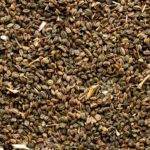
🌿 An upright biennial plant, celery has thick, striated stems and compound, glossy leaves. In its second year, it flowers in whitish umbels. Native to the Mediterranean basin, celery is the modern variety of wild celery that grew in the wetlands of Europe.
🏛️ The Latin name for wild celery, apium, means “that which grows in water”. Wild celery has been known since ancient times in Europe and Asia. This wild plant with its very strong flavour was used as an aromatic and medicinal herb. It was also credited with aphrodisiac properties, though this remains to be demonstrated…
Apicius used only the seeds (with one exception). Its use as a vegetable is recent, first in Germany and then in France from the 19th century onwards.
Coriander – coriandrum
Coriandrum sativum (family Apiaceae, order Apiales)
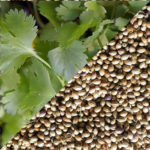
🌿 A slender annual plant, coriander has broad, deeply cut leaves at the base, becoming finer towards the top. Its small white or pinkish flowers form light umbels. The spherical, highly aromatic fruits are harvested at maturity.
🏛️ The cultivation and use of coriander as a culinary, medicinal and ritual plant have been attested for millennia in the Near East, Egypt and Greece. Seeds have even been found in the tomb of Pharaoh Tutankhamun!
Among the Romans, coriander features in the agricultural treatise of Cato the Elder (2nd century BCE) and is cited by most later authors. Apicius used the leaves or seeds in nearly a hundred recipes.
Cumin – cuminum
Cuminum cyminum (family Apiaceae, order Apiales)
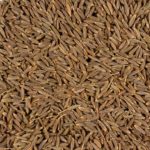
🌿 A small annual plant with highly divided leaves in narrow segments. The flowers, white or pinkish, are grouped in umbels; the elongated fruits constitute the aromatic part.
🏛️ Cumin comes from the Levant and it has long been accepted that the word is of Semitic origin. As is still the case today, only the seeds were used in cooking. The fruit of cumin has the peculiarity of being composed of two small seeds joined together that separate when drying.
Since it was a precious spice reserved for the wealthy, the ancient Greeks made it a symbol of miserliness. The Gospel of Matthew alludes to its value in reporting this rebuke from Jesus: «Woe to you, scribes and Pharisees, hypocrites! For you tithe mint, dill, and cumin, and have neglected the weightier matters of the law: justice, mercy and faithfulness».
Dill – anethum
Anethum graveolens (family Apiaceae, order Apiales)

🌿 A graceful annual herb, dill is recognisable by its very fine, almost feathery foliage. Its large umbels of yellow flowers appear in summer.
🏛️ Native to southern Europe or Asia Minor, dill is already mentioned in an Egyptian medical treatise nearly 4,000 years old. This umbellifer, a relative of fennel, was a symbol of vitality among the Romans. For this reason it featured prominently in the meals of gladiators, to whom it was supposed to provide strength and stamina for combat.
But it also featured in the meals of ordinary people, particularly for seasoning poultry. Long confined to the Mediterranean basin, dill belatedly conquered the Nordic and Anglo-Saxon world. It is now used in abundance in Russia and Scandinavia.
Fennel – foeniculum
Foeniculum vulgare (family Apiaceae, order Apiales)
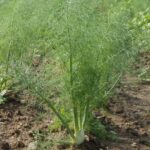
🌿 A tall perennial with an upright, ribbed stem, fennel develops finely divided foliage in thread-like segments of a luminous green. Its large umbels of yellow flowers appear in summer. All parts of the plant — leaves, seeds, stem and root — emit a characteristic anise-like fragrance.
🏛️ Fennel is one of the most prevalent plants in Roman cooking: Apicius uses it in dozens of recipes to season fish, poultry and sauces. The Romans also attributed to it virtues for eyesight and chewed its seeds as a digestive.
But fennel holds a prominent place in mythology well before it landed in kitchens. According to Greek legend, it was in the hollow of a fennel stalk that Prometheus concealed the ember stolen from the gods to offer to mankind. The thyrsus of Dionysus himself was traditionally carved from a stalk of giant fennel.
Fenugreek – foenum graecum
Trigonella foenum-graecum (family Fabaceae, order Fabales)
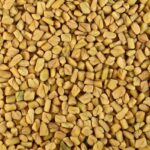
🌿 An upright annual plant with trifoliate leaves resembling clover, fenugreek produces small whitish-yellow flowers and slender pods containing beige-ochre seeds. When toasted, these emit a characteristic odour often compared to caramel.
🏛️ Its Latin name, foenum graecum, means “Greek hay”, which indicates both its eastern origin and the use made of it as a fodder plant. But Columella mentions it as a condiment, Pliny the Elder devotes numerous paragraphs to it, and it appears in Apicius in various preparations.
Having started from the modest status of a Mediterranean fodder plant, fenugreek found its true consecration in Indian cuisine, where it is today omnipresent under the name of methi.
Hyssop – hyssopus
Hyssopus officinalis (family Lamiaceae, order Lamiales)
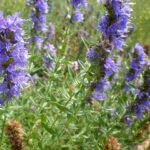
🌿 A perennial subshrub with woody stems at the base, hyssop bears small, narrow and very aromatic leaves. Its blue-violet flowers, grouped in spikes, appear in summer and strongly attract bees.
🏛️ Hyssop is an ancient plant whose medicinal reputation greatly precedes its culinary use. Cited in the Bible for its purifying virtues, it was recommended by Greek physicians against pulmonary complaints. Among the Romans, it went into the preparation of hysopites, a flavoured wine mentioned by Pliny the Elder, and Apicius uses it to accompany legume-based preparations.
Its bitter and camphorated flavour, which is very persistent, requires it to be used sparingly — like sage, it easily overpowers other flavours if one is not careful.
Lovage – ligusticum
Levisticum officinale (family Apiaceae, order Apiales)
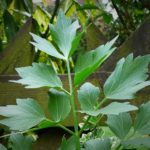
🌿 A tall perennial with a hollow, ribbed stem, lovage develops broad, deeply divided leaves reminiscent of celery. In summer it produces umbels of small yellowish flowers.
🏛️ Apicius made very frequent use in his recipes of the leaves of ligusticum, a large umbellifer also known as lovage or mountain celery. It is also nicknamed the “Maggi herb” because the flavour of its roots resembles that of stock cubes.
The plant, native to Persia, is the ancestor of today’s celeries and turnips. It is its leaves, very finely divided like those of celery but larger, that are mainly used in cooking. It is still used intensively in Bulgaria and Romania.
Marjoram & oregano – origanum
Origanum vulgare and Origanum majorana (family Lamiaceae, order Lamiales)
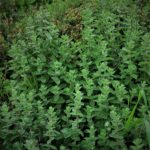
🌿 Oregano (Origanum vulgare) and marjoram (Origanum majorana) are two closely related plants that are often confused. The former is native to Europe and the latter to the eastern Mediterranean (Cyprus, Turkey). Marjoram is said to be more aromatic and more subtle than oregano. A perennial aromatic with a bushy habit, oregano bears small, opposite and oval leaves. The pink to purple flowers are grouped in compact inflorescences.
🏛️ Both have been known and cultivated since Antiquity for their pronounced flavour and antiseptic properties. In Greek mythology, Aphrodite tends the wounds of her son Aeneas with dittany, a Cretan variety of the Origanum genus.
Mint – menta
Mentha (family Lamiaceae, order Lamiales)

🌿 A perennial plant with square stems and opposite, oval, toothed leaves. The flowers, grouped in spikes or whorls, range from white to pale violet.
🏛️ Here is another plant whose origin lies in the escapades of the ancient gods! According to Greek mythology, the nymph Minthe, beloved of Hades, god of the Underworld, was transformed into a plant by Persephone, his jealous wife. Unable to bring her back to life, Hades gave her his fragrance.
Mint has been cultivated for millennia around the Mediterranean for its medicinal and aromatic properties. The ancient Greeks forbade their soldiers from consuming it, so strongly did the scent of mint incite love and diminish courage. Roman women made a chewing paste of mint and honey to keep their breath fresh. As for Apicius, he used mint in all manner of sauces!
Myrtle – myrtus
Myrtus communis (family Myrtaceae, order Myrtales)
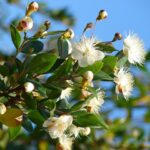
🌿 A dense, evergreen Mediterranean shrub, myrtle bears small, oval, leathery and glossy leaves that release a peppery, balsamic fragrance when rubbed. Its highly fragrant white flowers appear in summer, followed by blue-black berries at maturity.
🏛️ The tree of Aphrodite for the Greeks, of Venus for the Romans, myrtle was above all a sacred plant. Crowns of it were worn at wedding ceremonies and it adorned the gardens of temples dedicated to her.
This sacred dimension did not prevent the Romans from making very concrete culinary use of it: the berries served as a condiment for meats, particularly game, and a flavoured wine was made from it, the myrtidanum. Myrtle illustrates well that permeability, characteristic of Antiquity, between the sacred and the culinary: one and the same plant could crown a bride and perfume a roast.
Parsley – petroselinum
Petroselinum (family Apiaceae, order Apiales)
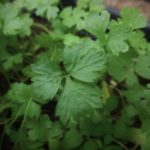
🌿 A biennial plant forming a rosette of finely divided leaves, flat or curly depending on the variety. In the second year, a flowering stem bears umbels of small yellowish flowers.
🏛️ Petroselinum, or “rock celery”, was considered in Antiquity a plant with medicinal and even magical virtues before being a condiment. It was a symbol of strength for the ancient Greeks, who crowned the victors of the Isthmian and Nemean games with it, in the image of Hercules who, according to legend, had made himself a crown of parsley after defeating the Nemean lion.
The Romans, more prosaic, made necklaces from it to mask the smell of alcohol after orgies. The Roman agronomist Columella (first half of the 1st century) already described the flat-leaved and curly-leaved varieties of parsley that we still know today.
Pennyroyal – puleium
Mentha pulegium (family Lamiaceae, order Lamiales)

🌿 A small perennial mint with a low and sometimes creeping habit, pennyroyal has oval leaves smaller than those of common mints. The pinkish or lilac flowers are grouped in tight whorls. Pennyroyal was clearly distinguished from mints in Antiquity. It was only classified within the same genus in modern times. The plant is native to Europe, North Africa and temperate Asia.
🏛️ For the ancients, this was a true panacea, cited by Greek physicians for its many virtues. Pennyroyal was recommended against snake bites, scorpion stings, coughs, colic, headaches… and “all internal pains”, as the Roman naturalist Pliny summarises in the first century. Using it in cooking could therefore do no harm!
Rosemary – rosmarinus
Salvia rosmarinus (family Lamiaceae, order Lamiales)
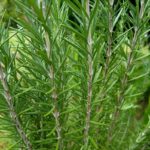
🌿 An evergreen shrub with woody stems, rosemary develops narrow, leathery leaves that are slightly rolled at the edges. Its pale blue flowers appear as early as late winter.
🏛️ The name rosemary comes from the Latin ros marinus, “sea dew”. It shared with thyme and sage the privilege of being burned on the altars of the gods. It was a sacred plant, associated with the rites surrounding birth, marriage and death.
This ritual use may have discouraged its use in everyday cooking: rosemary is entirely absent from Apicius!
Rue – ruta
Ruta graveolens (family Rutaceae, order Sapindales)

🌿 A perennial plant with glaucous green foliage, deeply divided into rounded segments. Its small yellow flowers appear in summer.
🏛️ Here is a plant used frequently and in all its forms by Apicius — fresh, dried, seeds and berries — yet one with a bad reputation. Beyond its bitter taste and strong, penetrating odour with an undertone reminiscent of coconut, which earned it the nickname “fetid”, rue can cause severe contact allergies and, if ingested, extremely violent abdominal contractions.
This last property made it in the past an abortifacient plant, but it most often caused the death of the mother. For this reason, the cultivation of rue was even banned in several European countries at the beginning of the 20th century. An ancient rumour reports that the daughter of Emperor Titus, Julia Titi, may have died from a forced abortion using rue. Despite its chequered history, Ruta graveolens can now frequently be found in the “aromatic plants” section of garden centres. In short, no reason to avoid it, but use with moderation!
- Read our article: An uninviting but much loved ruta
Sage – salvia
Salvia (family Lamiaceae, order Lamiales)

🌿 An aromatic subshrub with oval, grey-green, slightly velvety leaves. The blue-violet flowers rise on upright stems.
🏛️ Sage was known in Antiquity for its medicinal qualities. The Greeks appreciated its digestive and antiseptic properties. The Romans used it as a tonic and in poultices against snake bites.
Its culinary use certainly existed, but it requires observing a few precautions: since sage does not tolerate frying or boiling, it must be added at the last moment to preparations. It must be used alone and does not combine well with other herbs. Apicius, who favoured complex combinations, therefore mentions it only once.
Savory – satureia
Satureja hortensis (family Lamiaceae, order Lamiales)
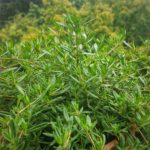
🌿 An annual plant with thin, branching stems, savory develops small, narrow, opposite leaves. The white or pinkish flowers appear in summer.
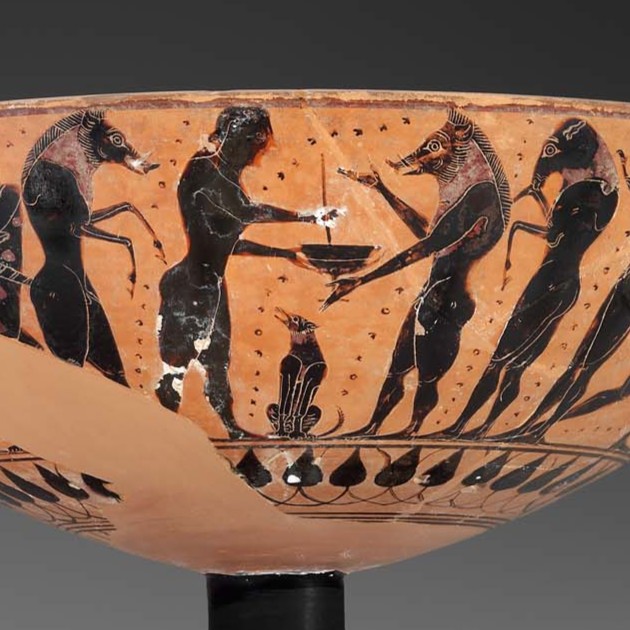
🏛️ Savory is a Mediterranean plant used as a condiment since time immemorial. Its Latin name means “herb of the satyrs”. These licentious creatures of Greco-Roman mythology, half men and half goats, were imagined to graze on this herb to reinforce their ardour. As with other plants already mentioned, this was enough to give it an aphrodisiac reputation.
The poet Martial, in the first century, alludes to this property in his epigrams: «For a long time, Lupercus, your member has been without strength; and yet, madman, you do everything to restore its vigour; but the arugula, the aphrodisiac bulbs, the stimulating savory are of no use to you.» The effect seems moreover confirmed by modern medicine, which has identified in the plant an active compound, eriodictyol, with relaxing and vasodilatory effects.
Silphium or Laserwort
Extinct plant
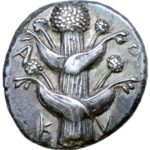
🌿 A plant now extinct, known through ancient texts and representations. It is thought to have been a large umbellifer with a robust stem and divided leaves, producing a highly sought-after aromatic resin.
🏛️ The Romans, following the Greeks, attributed to silphium (or laserpitium) extraordinary properties — not only in cooking but also in medicine. The strongly scented resin extracted from its sap sold for the price of silver and generated the wealth of the only region where the plant — which could not be cultivated — grew naturally: Cyrenaica, in present-day Libya.
But silphium fell victim to its own success: overexploited, the plant went extinct. A substitute was found in a closely related variety (asa foetida from Media or Parthia), but seemingly one of far inferior quality. Its use subsequently disappeared in the West, but was maintained in Indian cuisine, which uses the plant’s resin under the name “hing”. As for the seeds of silphium or laser, they can be replaced by cumin.
- Read our article: Silphium, the first victim of overexploitation
Sweet basil – ocimum
Ocimum basilicum (family Lamiaceae, order Lamiales)
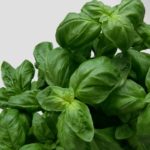
🌿 An upright annual plant, basil bears broad, smooth and highly fragrant leaves. The small white or pinkish flowers are arranged in terminal spikes.
🏛️ Basil is native to India, where it has been known for thousands of years. Many peoples of Antiquity made it a sacred plant, including the Romans and the Gauls, who said it was capable of healing wounds. They harvested basil in summer, in full bloom, during ceremonies.
Basil also served in funerary rites and was considered a royal plant (basileús means “king” in ancient Greek). Naturally, the Christian tradition took up the plant’s symbolism, recounting that it had grown around the tomb of Christ, the “king of kings”. On the culinary side, basil was also very common — perhaps too common for Apicius, who mentions it only once.
Thyme – thymum
Thymus (family Lamiaceae, order Lamiales)
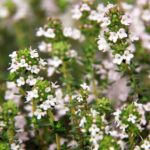
🌿 A small subshrub forming low, woody clumps, thyme has very small, thick and aromatic leaves. Its pinkish to violet flowers appear in spring.
🏛️ Like its cousin savory, thyme has been used since very ancient times. In Greek mythology, it is told that the gods, moved by the grief of the beautiful Helen, queen of Sparta and the cause of the Trojan War, used her tears to create thyme.
The plant was recognised as stimulating and antiseptic. It was also used in domestic worship, burned as an offering to the gods. Hence its name: thymos meaning “smoke” in ancient Greek. In Roman gardens, thyme was very common as a means of keeping bees close to their hive.
Further reading
Games
- Quiz: test your knowledge of aromatic plants in ancient cooking
- Memory: can you name the aromatic plants of ancient cooking?
See also
Other articles in English from the Nunc est bibendum blog