Translated from french (please notify us of errors)
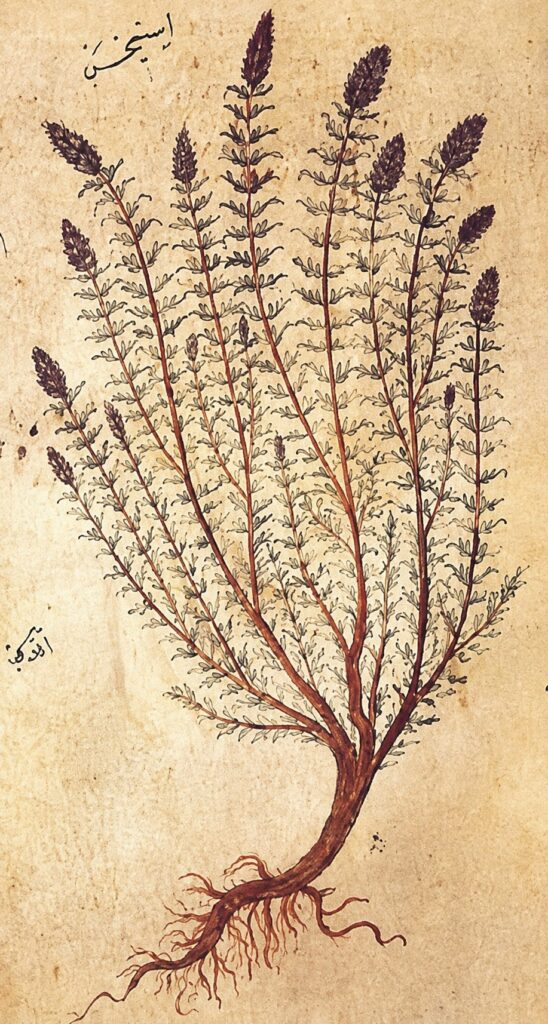
The etymology of the word ‘lavender’, from the Latin lavare, does not go back to antiquity, contrary to popular belief. There were no Roman baths scented with this fragrant plant: lavender was used exclusively in pharmacy. Nor did it feature in dishes. When the ancients flavoured wine and vinegar with lavender, it was always for medicinal purposes.
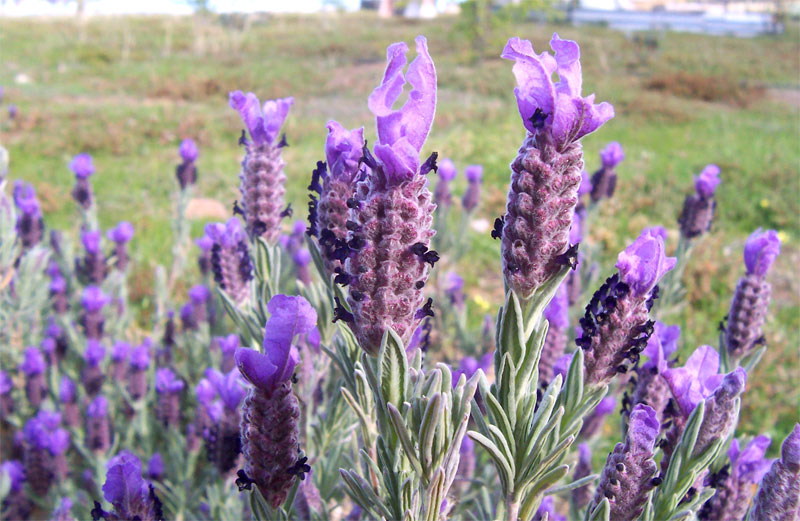
This is no small matter: stoechas lavender (Lavandula stoechas) featured in the composition of an antidote made for the emperor Augustus. Admittedly, it shared this honour with forty‑one other ingredients: oriental spices, resins, seeds, mineral substances, animal blood and various plants. The recipe has come down to us via Scribonius Largus, physician to the emperor Claudius, who left behind a collection of medical recipes, the Compositiones. He attributes it to a certain physician Marcianus, who must have practised a generation earlier: since the antidote dates from the time of Augustus, who died well before Scribonius wrote under Claudius, Marcianus was necessarily his predecessor. The antidote, ‘from which nothing is lacking’, is for this reason called in Greek teleia (τελεία), ‘perfect’, Scribonius explains[1]. With such a rich composition, the preparation was effective against everything. History does not record whether Augustus ever made use of it.
Islands that give a name
If our word ‘lavender’ does indeed derive from the Latin lavare (to wash), the association would be explained by the medieval use of the plant to scent water or washed linen[2]. In antiquity, the plant was known as stoichas (στοιχάς), a Greek word related to the verb steichō (στείχω), meaning ‘to advance in a line, in file’, like a troop drawn up in marching order.
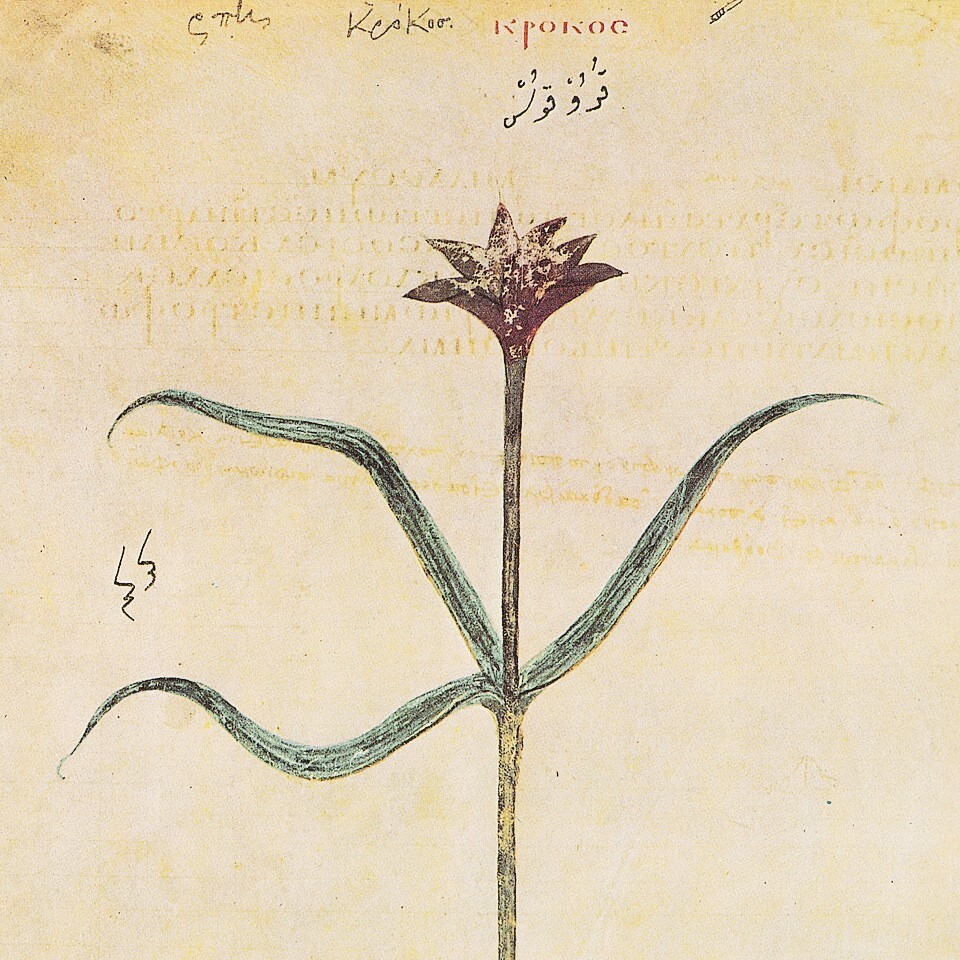
The Greek naturalist Dioscorides, a contemporary of the early Empire, explains that the plant’s name comes from that of the Stoechades islands, which he places opposite Massalia, present‑day Marseille. He notes that ‘it is a herb with small fruits, whose crown resembles that of thyme, but with longer leaves, pungent to the taste and somewhat bitter. As a decoction, it soothes the chest, like hyssop; it is usefully mixed into antidotes’[3].
Pliny the Elder repeats this botanical description almost word for word: the plant grows only on these islands of the same name, it is fragrant, and its foliage resembles that of hyssop. Taken as a drink, it brings on menstruation and eases pains in the chest; as in Dioscorides, it also appears in antidotes[4].
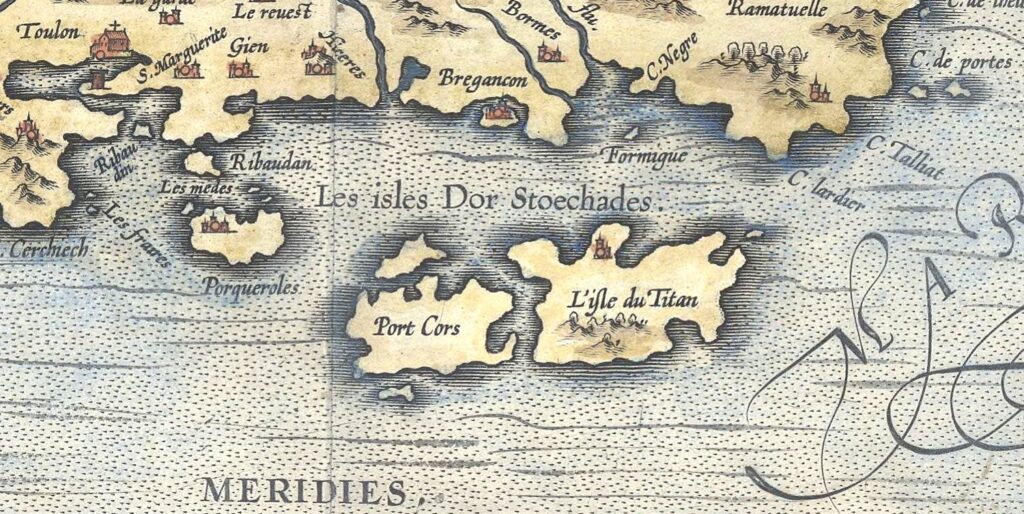
Elsewhere, in his geographical description of the coasts of Gaul, he specifies the origin of the name with more rigour than Dioscorides: three islands, he writes, ‘so named by their neighbours from Marseille on account of the order in which they are situated’[5]. It was not, then, the islands lying off Marseille itself that gave rise to the name, but rather the Greeks of Massalia, neighbours and sailors familiar with this whole stretch of coast, who named them thus. Pliny calls them Prote, Mese – also called Pomponiana – and Hypaea. They are generally identified with the three main islands of Hyères, some distance to the east of Marseille: Porquerolles, Port‑Cros and the Île du Levant.
Several centuries later, Isidore of Seville has nothing new to add on the origin of the name: stoechas grows on the Stoechades islands and owes its name to them [6]. The encyclopaedist merely passed on an etymology that was already several centuries old.
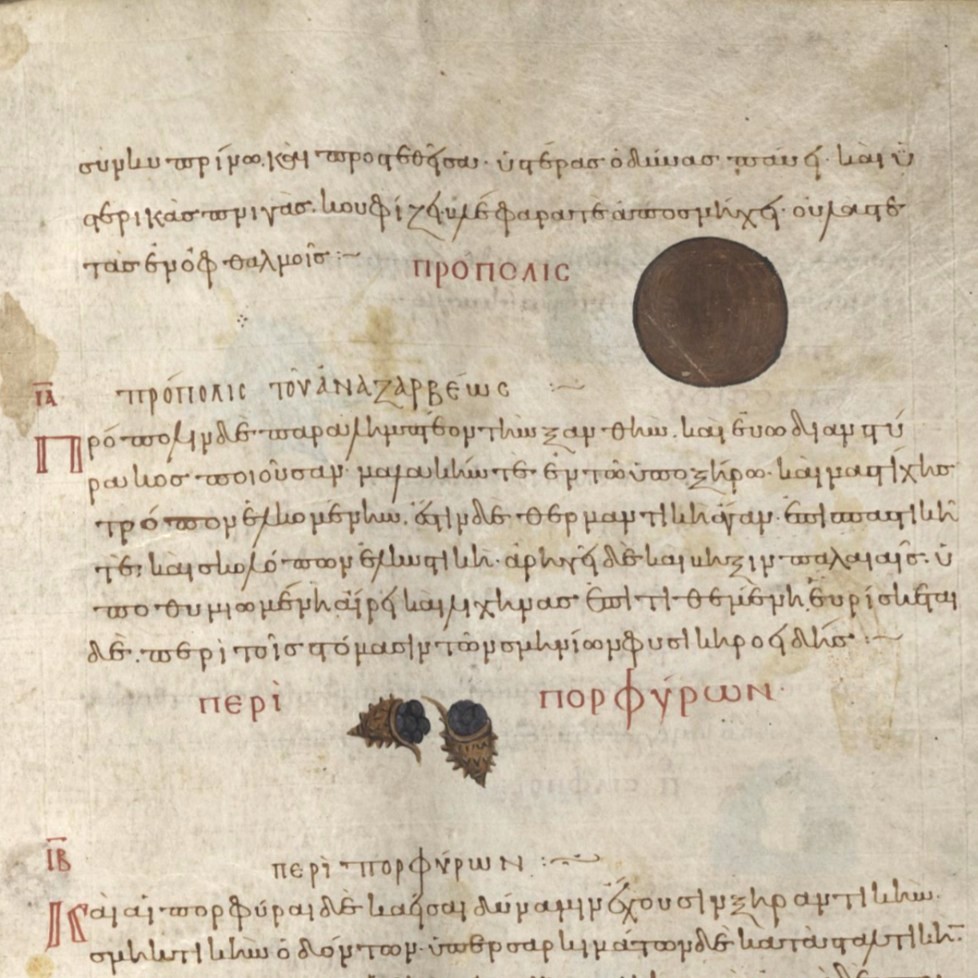
It is worth noting that a late manuscript tradition still attributes an entire collection of names to lavender, among them ‘eye of Python’, said to have been used by prophets and seers … The origin of this strange name eludes us[7].
The bitter all‑rounder
More concretely, one trait recurs under every pen: the pungent, slightly bitter taste of stoechas. Galen attempted to explain this dual quality through his theory of substances. The plant, he held, contained a small proportion of cold, earthy matter, responsible for its astringent effect, and a larger proportion of refined matter, which made it bitter. From this combination came its powers to clear obstructions, thin, cleanse and strengthen the internal organs as well as the body as a whole [8].
This versatility proved highly successful. Celsus recommended a drink made from trixago, rue, stoechas, or cumin and pepper, when a cough complicated a rib fracture[9].
In Scribonius Largus, already cited, lavender also found a place in two broad‑spectrum preparations. The first, attributed to Bassus Tullius, was intended for colic and swelling of the colon. The second was the antidote of Paccius Antiochus, called hiera (ἱερά), ‘sacred’, and recommended against almost everything that could go wrong with the body: headaches, stomach complaints, pain in the side or joints, gout and even epilepsy – a veritable pharmaceutical Swiss army knife of antiquity[10].
Marcellus, writing later, placed it at the head of another hiera, a lengthy recipe intended to relieve headaches, disorders of the spleen and liver, daily bouts of fever, melancholy, dizziness and visual disturbances[11].
Wine, but not perfume
Dioscorides also knew of a wine flavoured with the plant, stoichaditēs, which dispelled congestion, flatulence, pain in the side and kidneys, and chills, and was usefully given to epileptics[12]. The following entry describes a vinegar prepared on the same principle. Pliny in turn confirms the existence of this wine, in a list of similar preparations made with gentian, dittany or mandrake[13]. These drinks always belonged to the medical sphere: they were not items for the table.
Eye of Python in a list of synonyms, an ingredient in a hiera, a component of a ‘perfect’ antidote: stoechas enjoyed a distinguished medical career. The name lavender, and the clean scent it evokes today, would come to it only much later.
Modern study consulted
Hassan Farsam, Sadegh Ahmadian Attari, Amir Khalaj, Mohammad Kamalinejad, Rafat Shahrokh, Mohammad Mahdi Ahmadian‑Attari, ‘The Story of Stoechas: from Antiquity to the Present Day’, Journal of Research on History of Medicine, 5/2, 2016, pp. 70–86.
[1] Scribonius Largus, Compositiones, 177.1:
Antidotus Marciani medici, cui quia nihil deest, telea dicitur Graece, id est perfecta. Facit ad omnia haec una, ad quae superiores antidoti omnes. Haec Augusto Caesari componebatur […] stycados ℥ VI […];
‘The antidote of the physician Marcianus, from which nothing is lacking, is called in Greek teleia, that is, “perfect”. On its own, it acts in all the cases in which all the preceding antidotes act. This one was prepared for Augustus Caesar’ […] ‘stoechas, six denarii’ […].
The full recipe includes forty‑one further ingredients, among them several kinds of animal blood (duck, drake, kid, sea turtle, goose) and Attic honey.[2] The French lavende is attested at the end of the thirteenth or beginning of the fourteenth century, and lavande in 1383; Anglo‑Norman lavendre and medieval Latin lavendula are likewise attested in the thirteenth century. The link to the Latin lavare, ‘to wash’, is generally accepted, though its precise stages remain debated; a rival hypothesis, deriving the word from Latin livere, ‘to be bluish’ (a reference to the colour of the flowers), is considered less likely.
[3] Dioscorides, De materia medica, III, 26:
στοιχάς· γεννᾶται μὲν ἐν ταῖς κατὰ Γαλατίαν νήσοις κατ’ ἀντικρὺς Μασσαλίας, καλουμέναις Στοιχάσιν, ὅθεν καὶ τὴν ὀνομασίαν ἔσχεν· πόα δέ ἐστι λεπτόκαρπος, ὁμοίαν ἔχουσα θύμῳ κόμην, μακροφυλλοτέρα μέντοι καὶ δριμεῖα τῇ γεύσει, ὑπόπικρος ποσῶς. ποιεῖ δὲ τὸ ἀφέψημα αὐτῆς πρὸς τὰ ἐν θώρακι καθὼς ὁ ὕσσωπος· μείγνυται δὲ καὶ ἀντιδότοις χρησίμως.
‘Stoechas grows on the islands lying off Gaul, opposite Massalia, called the Stoechades, from which it took its name. It is a small‑fruited herb, whose crown resembles that of thyme, but with longer leaves; it is pungent to the taste and somewhat bitter. Its decoction is effective against complaints of the chest, as is that of hyssop; it is also usefully mixed into antidotes.’
[4] Pliny the Elder, Natural History, XXVII, 131:
Stoechas in insulis tantum eiusdem nominis gignitur, odorata herba, coma hysopi, amara gustu. Menses ciet potu, pectoris dolores levat. Antidotis quoque miscetur.
‘Stoechas grows only on the islands of the same name. It is a fragrant herb, with foliage like hyssop, bitter to the taste. Taken as a drink, it brings on menstruation and eases pains of the chest. It is also mixed into antidotes.’
[5] Pliny the Elder, Natural History, III, 79:
(…) et tres Stoechades a vicinis Massiliensibus dictae propter ordinem quo sitae sunt. Nomina singulis Prote, Mese, quae et Pomponiana vocatur, tertia Hypaea.
‘(…) And three Stoechades, so named by the neighbouring inhabitants of Marseille on account of the order in which they are situated. Each has its own name: Prote, Mese, also called Pomponiana, and the third Hypaea.’
[6] Isidore of Seville, Etymologiae, XVII, 9, 88:
Stoechas in insulis Stoechadibus nascitur; unde et nuncupatur.
‘Stoechas grows on the Stoechades islands; whence it also takes its name.’
[7] Synonyms preserved in the recensio varia of Dioscorides, III, 26:
στοιχάς· οἱ δὲ συγκλίνωπα, Ἀλκιβιάδειον, παγκράτιον, Τυφωνία, Αἰγύπτιοι σουφλώ, προφῆται ὀφθαλμὸς Πύθωνος, Ῥωμαῖοι σκίλλα ῥούβιδα;
‘Stoechas; some call it synklinōpa, others alkibiadeion, others pankration, others Typhonia; the Egyptians call it souphlō; prophets or seers, “eye of Python”; the Romans, scilla rubida.’[8] Galen, De simplicium medicamentorum temperamentis ac facultatibus, VIII, 39:
Στοιχάδος ἡ μὲν πρὸς τὴν γεῦσιν ποιότης πικρά τ’ ἐστὶ καὶ ὑποστύφουσα μετρίως. ἡ δὲ κρᾶσις σύνθετος ἔκ τε ψυχρᾶς γεώδους οὐσίας ὀλίγης, ἀφ’ ἧς στύφει, καὶ λελεπτυσμένης ἑτέρας γεώδους πλείονος, ἀφ’ ἧς πικράζει. διὰ δὲ τὴν ἀμφοτέρων σύνοδον ἐκφράττειν καὶ λεπτύνειν καὶ ἀποῤῥύπτειν καὶ ῥωννύναι πέφυκε τά τε σπλάγχνα πάντα καὶ ὅλου τοῦ ζώου τὴν ἕξιν.
‘The quality of stoechas perceptible to taste is bitter and moderately astringent. Its composition combines, on the one hand, a small amount of cold, earthy substance, from which it derives its astringency, and, on the other, a greater amount of another, more refined earthy substance, from which it derives its bitterness. From the union of these two substances, it naturally has the power to clear obstructions, thin, cleanse and strengthen all the viscera, as well as the general constitution of the body.’
[9] Celsus, De medicina, VIII, 9, 1e:
Quod si tussis infestabit, potio sumenda erit vel ex trixsagine vel ex ruta vel ex herba stoechade vel ex cumino et pipere.
‘If a cough becomes troublesome, a drink should be taken made either with trixago, or with rue, or with stoechas, or with cumin and pepper.’
Trixago is generally identified with wall germander (Teucrium chamaedrys).[10] Scribonius Largus, Compositiones, 121:
Colice mirifica Bassi Tullii cito levat […] recipit autem haec: […] stoechadis, dauci, ami, singulorum ℥ p. XVIII;
‘Bassus Tullius’s marvellous remedy for colic gives swift relief […] It contains, among other things, eighteen drachms each of stoechas, daucus and ammi.’
On the hiera of Paccius Antiochus, see Compositiones, 97–107, in particular 97.1 (Antidotos hiera Paccii Antiochi ad universa corporis vitia, maxime ad lateris et podagram) and 106 (recipit autem haec: stycadis […] singulorum ℥ p. X);
‘The sacred antidote of Paccius Antiochus, for all disorders of the body, especially pain in the side and gout […] contains, among other things, ten drachms of stoechas.’ Stoechadis and stycadis are two spelling variants of the plant’s name.[11] Marcellus, De medicamentis, 1, 106:
Hiera maior faciens ad capitis nimium et veterem dolorem et ad phlegmata spissa et constricta laxanda et provocanda […] maxime prodest etiam melancholicis et scotomaticis […] quae constat ex speciebus his: Stoechados, agarici, colocynthidos…
‘The greater hiera, effective against severe and long‑standing headache and for loosening and expelling thick, congested phlegm […] It is also especially beneficial to the melancholic and to those suffering from disorders that dim the sight […] It is made up of the following ingredients: stoechas, agaric, colocynth…’
Marcellus Empiricus was a Latin medical author of late antiquity, born in Gaul, at Bordeaux, around the middle of the fourth century.[12] Dioscorides, De materia medica, V, 42:
σκευάζεται καὶ ὁ στοιχαδίτης ὁμοίως. δεῖ δὲ τοῖς Ϛ΄ χοεῦσι μνᾶν μίαν στοιχάδος προσδιδόναι. διαλύει δὲ πάχη καὶ πνευματώσεις καὶ πόνους πλευρᾶς καὶ νεφρῶν καὶ καταψύξεις· δίδοται καὶ ἐπιλημπτικοῖς ὠφελίμως μετὰ πυρέθρου καὶ σαγαπηνοῦ.
‘Stoechas wine is prepared in the same way. For six choes, one mina of stoechas should be added. It dissolves congestion, flatulence, pain in the side and kidneys, and chills. It is also usefully given to epileptics, together with pellitory and sagapenum.’
The following entry (V, 43) describes a vinegar made with stoechas, prepared on the same principle.[13] Pliny the Elder, Natural History, XIV, 111:
Fit et ex herbis quarum naturae suo loco dicentur: e stoechade et radice Gentianae et tragorigano et dictamno, asaro, dauco, elelisphaco, panace, acoro, thymo, mandragora, iunco.
‘Wine is also made from herbs whose properties will be described in their proper place: from stoechas, gentian root, tragoriganum, dittany, asarum, wild carrot, sage, panax, sweet flag, thyme, mandrake and sweet rush.’
Other articles in English from the Nunc est bibendum blog