Translated from French (please notify us of errors)
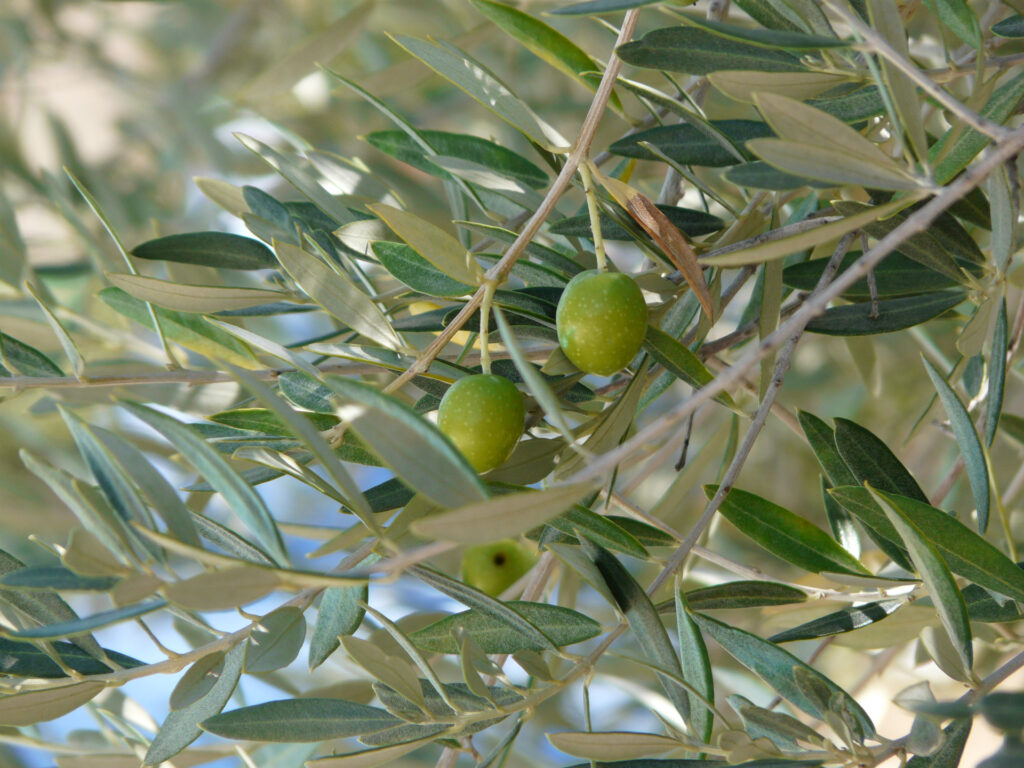
For everyone, Thales is the author of a theorem still taught 2600 years after him. Yet the Greek sage was regarded as a universal mind. According to ancient authors, he was nonetheless mocked for his poverty: what use was so much learning if it could not even make him rich? Until the day Thales decided to answer his detractors by speculating on olives – and so entered history as one of its first speculators.
Thales wrote nothing, or at least nothing that has come down to us. Everything we know of him therefore comes to us through other pens, often writing much later and not always in agreement with one another. The olive episode is no exception: four ancient authors recount it, centuries apart from one another, and no two tell it in quite the same way.
A philosopher who could read the stars and the harvests
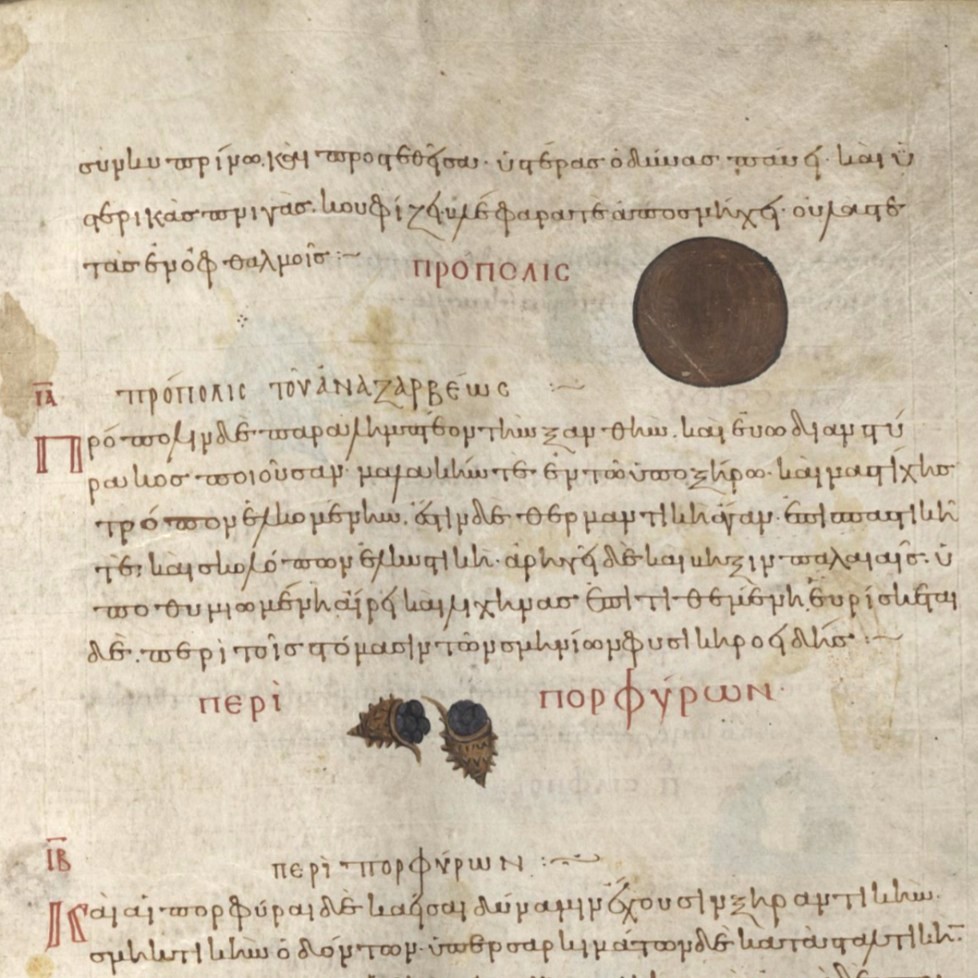
The earliest testimony comes from Aristotle, in the Politics, written in the 4th century BCE – some 200 years after Thales’s presumed lifetime. Aristotle discusses profit there, and those who use it as an argument against philosophy: Thales was reproached for his poverty, supposedly proof that his knowledge was useless. It was to answer these mockers, Aristotle explains, that the philosopher set up his scheme.
“It is said that, through his knowledge of astronomy, he had foreseen that there would be a good olive harvest”[1]. It was still winter, and Thales had only a little money: he put down deposits – arrabônas (ἀρραβῶνας) in Aristotle’s text – on all the olive presses in Miletus and Chios. Since no one else had bid the price up, he rented them cheaply. Then the season came, demand for the presses suddenly soared, and Thales sublet them on whatever terms he chose. He made, says Aristotle, a great deal of money.
Nor does the philosopher stop at the anecdote: he immediately draws a general rule from it. This method of making money is, he explains, “applicable generally, whenever one is able to secure a monopoly for oneself”[2] – a monopôlia (μονοπωλία). He goes straight on to a second example: in Sicily, someone “bought up all the iron available in the mines” before reselling it alone to the merchants who came to buy, without pushing the price up too much – and still doubled his outlay. In Aristotle, then, Thales illustrates a principle more than he invents a technique.
In Hieronymus of Rhodes, a Peripatetic philosopher of the 3rd century BCE whose lost work survives only in a fragment preserved by Diogenes Laertius, we find the same version, the leased presses: “Having foreseen that there would be an olive harvest, he leased the olive presses”. Thales is said to have made from it, the text specifies, “a very great sum of money”[3].
Cicero and Philostratus tell a different story
Two other versions circulate in antiquity, and they do not quite describe the same operation.
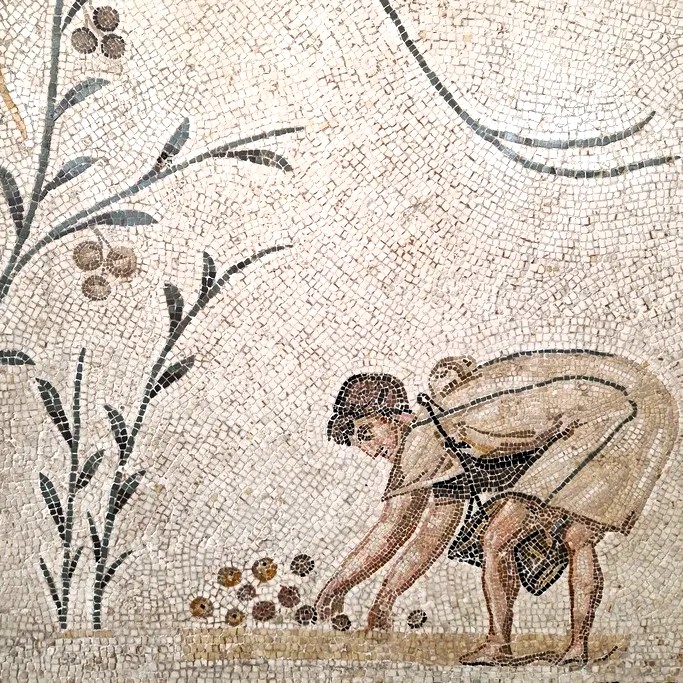
Cicero, in the 1st century BCE, offers a markedly different version in the De divinatione. Thales reserves no presses here: “He is said to have bought up the whole olive crop of the territory of Miletus, even before it had begun to flower”; “he had perhaps noticed, through some particular knowledge, that the olive harvest would be abundant”[4]. In Cicero, unlike in Aristotle’s text, the abundance of the harvest is beyond doubt: the Latin word ubertas, fertility, is unambiguous.
Philostratus, finally, writing in the early 3rd century CE, keeps only the motif of the prediction, with no commercial operation at all. In the Life of Apollonius of Tyana, the episode serves as a line of defence: brought before the emperor on a charge of sorcery, the sage Apollonius invokes Thales and Anaxagoras, “the one having foretold the abundance of the olive crop, the other a good many celestial phenomena” – asking whether they had foretold this “as sorcerers”, when neither of them was ever prosecuted on that count[5].
Ancient tradition therefore split into two branches: on one side the leasing of the presses, in Aristotle and Hieronymus, taken up by Diogenes Laertius; on the other the direct purchase of the harvest, in Cicero. Philostratus, for his part, keeps only the image of the sage who correctly foretells the future.
A well‑crafted fiction, or a genuine coup?
The historicity of the episode divides modern specialists deeply.
Some commentators judge the story “substantially authentic”, pointing in particular to attested links between Miletus and Chios to defend the geographical plausibility of the account.
But others find Aristotle’s account implausible. How could Thales have raised the capital needed, when his poverty is precisely the story’s starting point? How could he alone have controlled presses in both Miletus and Chios, two places more than 200 kilometres apart, without local agents on the ground? This, it is argued, would be a didactic fiction, no doubt devised at a time when Thales was already being classed among the “philosophers”, built around the theme of the poor philosopher who could grow rich but chooses not to.
Archaeology, for its part, is not much help. Excavations at Miletus have turned up olive remains, Olea pollen and a few pressing installations, in surroundings well suited to olive‑growing. But they have yielded no evidence of a large commercial network of presses in the archaic period, which rules out using the anecdote as proof of an already industrial olive‑oil production at Miletus in the 6th century BCE. What it more plausibly reflects is a very concrete agricultural reality: olive yields vary enormously from one year to the next, which now and again produces genuine bumper years.
Thales, inventor of speculation?
That leaves the question posed by the legend itself: did Thales invent economic speculation?
Aristotle, the first to tell the story, does not present it that way. After the anecdote of the presses, he specifies that the method holds generally and analyses it above all as a means of securing a monopoly.
And Thales was not the first to take options on the future value of goods. Contracts for the future delivery of goods are attested in Mesopotamia as early as the 2nd millennium BCE, long before Thales. These contracts do not exactly resemble the operation Aristotle describes, but they are enough to rule out Thales as the absolute pioneer of speculation.
Prior to any debate over who first devised the method, a more basic problem remains: nothing guarantees that the affair ever took place. Aristotle opens his account with a cautious “it is said” (φασίν), the formula of a historian relaying a rumour. The presses of Miletus and Chios may above all have served to demonstrate, two centuries after Thales’s death, that a philosopher could, if he wished, be as skilled in business as in geometry.
Modern studies consulted
- Livio Rossetti, Thales the Measurer, 2022. – Dmitri Panchenko, “Thalès de Milet”, in Richard Goulet (ed.), Dictionnaire des philosophes antiques, VI, 2016.
- Alan M. Greaves, Miletos: A History, Routledge, 2002. – Stephen A. White, “Thales and the Stars”, in Victor Caston and Daniel W. Graham (eds), Presocratic Philosophy: Essays in Honour of Alexander Mourelatos, 2002.
- Pierre Vesperini, “De Thalès à Anaxagore: les Ioniens à l’école des dieux”, Kernos, 30, 2017.
- Vasiliki Makropoulou and Raphael N. Markellos, “What is the Fair Rent Thales Should Have Paid?”, HERCMA Proceedings, 2005.
- Ernst Weber, A Short History of Derivative Security Markets.
[1] Aristotle, Politics, I, 11, 1259a5–19:
οἷον καὶ τὸ Θάλεω τοῦ Μιλησίου: τοῦτο γάρ ἐστι κατανόημά τι χρηματιστικόν, ἀλλ᾽ ἐκείνῳ μὲν διὰ τὴν σοφίαν προσάπτουσι, τυγχάνει δὲ καθόλου τι ὄν. ὀνειδιζόντων γὰρ αὐτῷ διὰ τὴν πενίαν ὡς ἀνωφελοῦς τῆς φιλοσοφίας οὔσης, κατανοήσαντά φασιν αὐτὸν ἐλαιῶν φορὰν ἐσομένην ἐκ τῆς ἀστρολογίας, ἔτι χειμῶνος ὄντος εὐπορήσαντα χρημάτων ὀλίγων ἀρραβῶνας διαδοῦναι τῶν ἐλαιουργίων τῶν τ᾽ ἐν Μιλήτῳ καὶ Χίῳ πάντων, ὀλίγου μισθωσάμενον ἅτ᾽ οὐθενὸς ἐπιβάλλοντος: ἐπειδὴ δ᾽ ὁ καιρὸς ἧκε, πολλῶν ζητουμένων ἅμα καὶ ἐξαίφνης, ἐκμισθοῦντα ὃν τρόπον ἠβούλετο, πολλὰ χρήματα συλλέξαντα ἐπιδεῖξαι ὅτι ῥᾴδιόν ἐστι πλουτεῖν τοῖς φιλοσόφοις, ἂν βούλωνται, ἀλλ᾽ οὐ τοῦτ᾽ ἐστὶ περὶ ὃ σπουδάζουσιν.
“Thus with Thales of Miletus: this is a money‑making device attributed to him because of his wisdom, but it is in fact of general application. When he was reproached for his poverty, philosophy being thus judged useless, it is said that, having inferred from his study of the heavens that there would be a good olive crop, while it was still winter and he had but little money, he paid deposits on all the olive presses in Miletus and Chios, hiring them cheaply since no one bid against him; then, when the season came and many people all at once and suddenly sought them, he sublet them on whatever terms he wished and collected a great deal of money, thus showing that it is easy for philosophers to grow rich if they wish, but that this is not what they are concerned with.”[2] Aristotle, Politics, I, 11, 1259a19–28:
Θαλῆς μὲν οὖν λέγεται τοῦτον τὸν τρόπον ἐπίδειξιν ποιήσασθαι τῆς σοφίας: ἔστι δ᾽, ὥσπερ εἴπομεν, καθόλου τὸ τοιοῦτον χρηματιστικόν, ἐάν τις δύνηται μονοπωλίαν αὑτῷ κατασκευάζειν. διὸ καὶ τῶν πόλεων ἔνιαι τοῦτον ποιοῦνται τὸν πόρον, ὅταν ἀπορῶσι χρημάτων: μονοπωλίαν γὰρ τῶν ὠνίων ποιοῦσιν. ἐν Σικελίᾳ δέ τις τεθέντος παρ᾽ αὐτῷ νομίσματος συνεπρίατο πάντα τὸν σίδηρον ἐκ τῶν σιδηρείων, μετὰ δὲ ταῦτα ὡς ἀφίκοντο ἐκ τῶν ἐμπορίων οἱ ἔμποροι, ἐπώλει μόνος, οὐ πολλὴν ποιήσας ὑπερβολὴν τῆς τιμῆς: ἀλλ᾽ ὅμως ἐπὶ τοῖς πεντήκοντα ταλάντοις ἐπέλαβεν ἑκατόν.
“Thales, then, is said to have given in this way a demonstration of his wisdom; but this money‑making device is, as we have said, of general application, provided one is able to secure a monopoly for oneself. This is why some cities, too, make this a source of revenue when they are short of money: they set up a monopoly on goods for sale. In Sicily, someone, having received a sum of money on deposit, bought up all the iron available from the mines; then, when the merchants arrived from the trading posts, he alone sold it, without raising the price excessively – and yet, on the fifty talents he had laid out, he made a further hundred.”[3] Hieronymus of Rhodes, Scattered Notes (Σποράδην ὑπομνήματα), II, fr. 39 Wehrli² = Diogenes Laertius, Lives and Opinions of Eminent Philosophers, I, 26:
φησὶ δὲ καὶ Ἱερώνυμος ὁ Ῥόδιος ἐν τῷ δευτέρῳ τῶν Σποράδην ὑπομνημάτων ὅτι βουλόμενος δεῖξαι ῥᾷον εἶναι πλουτεῖν, φορᾶς μελλούσης ἐλαιῶν ἔσεσθαι, προνοήσας ἐμισθώσατο τὰ ἐλαιουργεῖα καὶ πάμπλειστα συνεῖλε χρήματα.
“Hieronymus of Rhodes likewise says, in the second book of his Scattered Notes, that, wishing to show that it is easy to grow rich, having foreseen that there would be an olive harvest, he leased the olive presses and amassed a very great sum of money.”[4] Cicero, De divinatione, I, 111–112:
omnem oleam, ante quam florere coepisset, in agro Milesio coemisse dicitur.
“he is said to have bought up the whole olive crop of the territory of Miletus, even before it had begun to flower”;
animadverterat fortasse quadam scientia olearum ubertatem fore.
“he had perhaps noticed, through some particular knowledge, that the olive harvest would be abundant.”[5] Philostratus, Life of Apollonius of Tyana, VIII, 7, 158:
τί δὲ Θαλῆς τε καὶ Ἀναξαγόρας, τὼ Ἴωνε, ὁ μὲν τὴν εὐφορίαν τὴν τῶν ἐλαιῶν, ὁ δὲ πολλὰ τῶν οὐρανίων παθῶν προειπόντε; ἦ γοητεύοντε προειπεῖν ταῦτα; καὶ μὴν καὶ ὑπήχθησαν οὗτοι δικαστηρίοις ἐφ᾽ ἑτέραις αἰτίαις, καὶ οὐδαμοῦ τῶν αἰτιῶν εἴρηται γόητας εἶναι σφᾶς, ἐπειδὴ προγιγνώσκουσι.
“And what of Thales and Anaxagoras, the two Ionians, one of whom foretold the abundance of the olive crop, the other a good many celestial phenomena? Was it, then, as sorcerers that they foretold these things? And yet these men were indeed brought before the courts, but on other charges, and nowhere among the charges was it said that they were sorcerers because they foreknew the future.”
Other articles in English from the Nunc est bibendum blog