Translated from French (please notify us of errors)
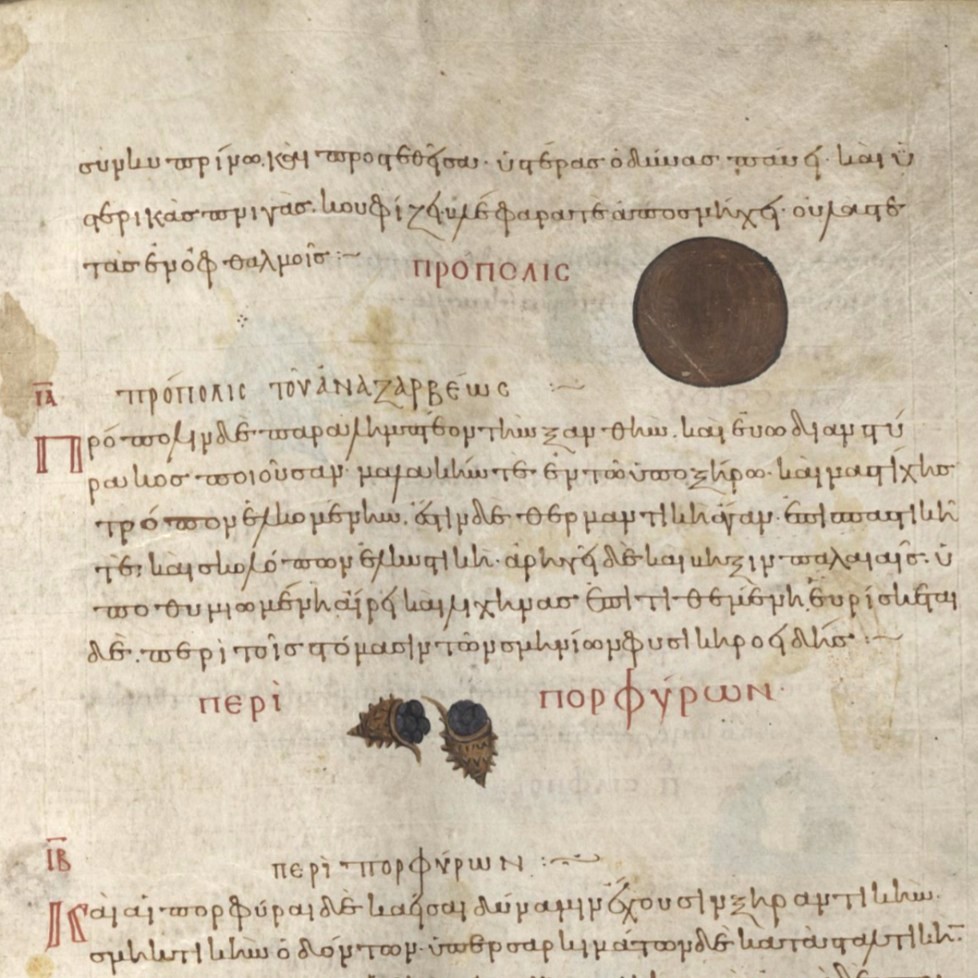
Celebrated on 11 October in the Roman world, the Meditrinalia are often regarded as a kind of grape harvest festival. In reality, the occasion celebrated not so much the harvest and the making of new wine as the healing virtues attributed to a certain drink. The Romans would indeed drink a blend of “new wine” and “old wine”, a mixture reputed to ensure good health.

Since the new wine in question was generally not tasted until the Vinalia priora on 23 April, the Meditrinalia celebrated the year’s production of must[1], the unfermented liquid obtained by pressing the grapes after the harvest. As for the old wine, it was simply that of the previous year.
In the end, very little is known about the Meditrinalia: a very important ritual in archaic Rome, where agriculture accounted for most economic activity, it was long observed by the Romans, even though over the centuries they had forgotten its meaning. We are therefore reduced to speculation and extrapolation, based on the few elements available.
Even the origin of the word Meditrinalia is a matter of debate. Varro links it to the verb “to heal” (medeor), thus echoing the idea of the healing properties of the mixture drunk on that day.
“The day of the Meditrinalia in the month of October takes its name from medeor, because, as Flaccus, the flamen of Mars, used to say, it was customary on that day to pour as a libation and to taste new wine and old wine, for medicinal purposes. Many still do so today, saying on this occasion: ‘I drink new wine and old wine: I heal myself of the new illness and the old.’” [2]
In the second century, Festus Grammaticus, whose text has come down to us here in an abridged form by Paul the Deacon, mentions the goddess Meditrina.
“It was the custom among the Latin peoples, on the day when one tasted the first must, to say by way of good omen: ‘I drink old wine, new wine; of the old illness and the new I heal myself.’ From these words was drawn the name of a goddess, Meditrina, whose festival is the Meditrinalia.”[3]
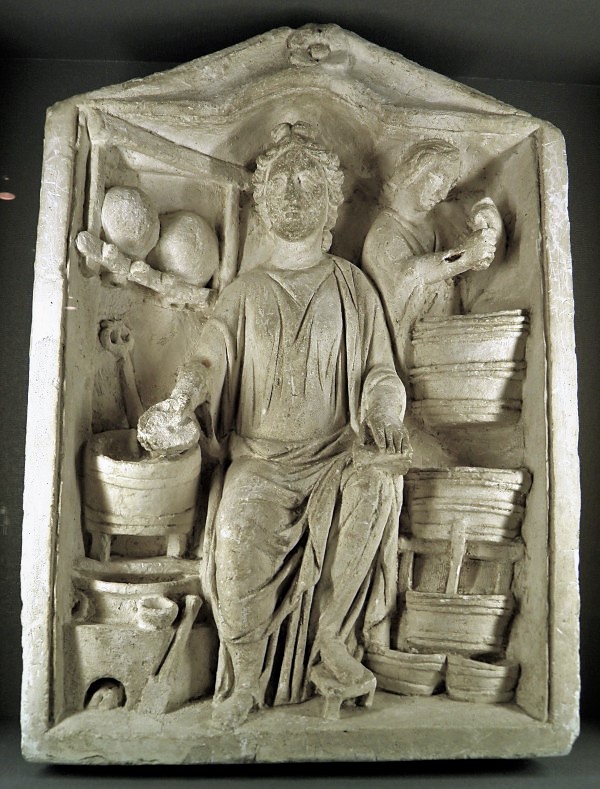
Festus is the first to mention the deity, and most scholars believe she was invented a posteriori to explain the origin of the celebration. It is worth noting that the etymology of her name matches Varro’s explanation, since the name Meditrina also derives from the root medeor.
According to a modern tradition which, it must be stressed, no ancient source attests, the goddess would be roughly equivalent to the Greek Iaso (goddess of healing). She would thus be a Roman deity of health, longevity and wine, daughter of Aesculapius, the god of medicine, and sister of Hygieia. Their roles would differ: the former would cure illnesses, while the latter would preserve health.
However, it is more likely that the god honoured at the Meditrinalia was in fact Jupiter (if we are to trust the Fasti Amiternini, a calendar of lucky and unlucky days dating from the reign of Tiberius), to whom the Vinalia priora of 23 April were also dedicated. The ritual of the Meditrinalia is moreover reminiscent of an episode reported by Livy. During a decisive battle intended to restore Rome’s honour after the disaster of the Caudine Forks, the consul Lucius Papirius Cursor promises Jupiter Victor, even as the fighting rages around him, that if victorious he will offer him a cup of honeyed wine before drinking undiluted wine himself. This apparently pleases Jupiter greatly, and he turns the battle in the Romans’ favour.
“It was this same strength of mind that prevented the dispute over the auspices from making him call off the battle, and that led him, even at the decisive moment when it was customary to vow temples to the immortal gods, to vow to Jupiter Victor that, if he routed the enemy legions, he would offer him a small cup of honeyed wine before drinking undiluted wine himself. This vow pleased the gods, and the auspices turned favourable.”[4]
The ritual of the Meditrinalia
In practical terms, very little is known about the ritual of the Meditrinalia. Varro tells us only that new wine and old wine were poured as a libation and tasted. This testimony can nevertheless be compared with other Roman rites involving an offering of wine to Jupiter. In De agricultura, Cato describes the offerings made to Jupiter Dapalis (who presides over sowing).
“This is how the offering must be made: present to Jupiter Dapalis a cup of whatever wine you wish. That day will be a holiday for the oxen, the oxherds and those who make the offering. At the moment of the sacrifice you will say this prayer: ‘Jupiter Dapalis, I fulfil my duty by offering you this cup of wine in my house and among my household; for this reason, deign to accept it.’ Then wash your hands, take the wine and say: ‘Jupiter Dapalis, accept this feast that I owe you. Receive this wine placed before you.’ If you wish, make an offering to Vesta. The feast offered to Jupiter consists of a piece of roast pork and an untouched cup of wine. Make this offering without touching it; when the feast is over, sow millet, panic grass, garlic and lentils.”[5]
Here, the ritual probably consisted in presenting a cup containing a blend of cooked must and wine, and in pronouncing a formula similar to the one quoted by Cato. One then washed one’s hands and poured the mixture on the altar (this is the libation proper) while reciting a prayer. Finally, one drank the rest of the cup, reciting the phrase recorded by Varro: Novum vetus vinum bibo, novo veteri morbo medeor.
Wine and health: Columella weighs in…
The explanation for the healing properties of the mixture is not obvious, but part of the answer can be found in Columella, quoted by Georges Dumézil. He explains how to turn mustum (must) into defrutum (cooked wine): the raw must is boiled so that it reduces. But, Columella adds:
“Even when carefully prepared, cooked wine tends to turn sour, like natural wine. Since this mishap can occur, let us remember that wine must be treated with year-old cooked wine whose quality has been proven: for a bad remedy would spoil the produce that has been gathered.”[6]
Throughout the paragraphs devoted to wine, Columella uses the vocabulary of conditura (the preparation or seasoning of wine) and of medicamentum (“remedy”). Hence the hypothesis put forward by Georges Dumézil and later developed by Olivier de Cazanove: the previous year’s product would “heal” the new must when added to it, by preventing it from turning sour. The healing virtue of the wine would then be passed on symbolically to the drinker. This interpretation would explain the play on the verb medeor, “to heal”. By extension, the word meditrinalia would designate “the workshop where healing is done” – where the wine is healed, that is.
Modern studies consulted
- Fowler, William Warde, The Roman Festivals of the Period of the Republic: An Introduction to the Study of the Religion of the Romans, London, Macmillan, 1899, especially p. 239-240, with comparison to the Vinalia p. 85-87 and 204 sq.
- Bömer, Franz, “Iuppiter und die römischen Weinfeste”, Rheinisches Museum für Philologie, 90, 1941, p. 30-58, especially p. 51-58.
- Scullard, Howard Hayes, Festivals and Ceremonies of the Roman Republic, London, Thames and Hudson, 1981, especially p. 106, 189, 192 and notes p. 254.
- de Cazanove, Olivier, “Jupiter, Liber et le vin latin”, Revue de l’histoire des religions, 205/3, 1988, p. 245-265, especially p. 253-254 on the Meditrinalia. This is the study that most precisely develops the idea of a “medication of wine by wine”
[1] See the article Gleukos, a sip of must?
[2] Varro, De lingua Latina, VI, 21: Octobri mense Meditrinalia dies dictus a medendo, quod Flaccus flamen Martialis dicebat hoc die solitum vinum novum et vetus libari et degustari medicamenti causa; quod facere solent etiam nunc multi cum dicunt: ‘Novum vetus vinum bibo: novo veteri morbo medeor.’
[3] Paul the Deacon, Epitome of Festus, s.v. Meditrinalia, p. 110 Lindsay: Mos erat Latinis populis, quo die quis primum gustaret mustum, dicere ominis gratia: ‘Vetus novum vinum bibo, veteri novo morbo medeor.’ A quibus, verbis etiam Meditrinae deae nomen conceptum, ejusque sacra Meditrinalia dicta sunt.
[4] Livy, Ab Urbe condita, X, 42, 7: Ab eodem robore animi neque controverso auspicio revocari a proelio potuit et in ipso discrimine quo templa deis immortalibus voveri mos erat voverat Iovi Victori, si legiones hostium fudisset, pocillum mulsi priusquam temetum biberet sese facturum. Id votum dis cordi fuit et auspicia in bonum verterunt.
[5] Cato, De agricultura, CXXXII: Dapem hoc modo fieri oportet. Iovi dapali culignam vini quantam vis polluceto. Eo die feriae bubus et bubulcis et qui dapem facient. Cum pollucere oportebit, sic facies: Iuppiter dapalis, quod tibi fieri oportet in domo familia mea culignam vini dapi, eius rei ergo macte hac illace dape polluenda esto. Manus interluito postea vinum sumito: Iuppiter dapalis, macte istace dape polluenda esto, macte vino inferio esto. Vestae, si voles, dato. Daps Iovi assaria pecuina urna vini. Iovi caste profanato sua contagione. Postea dape facta serito milium, panicum, alium, lentim.
[6] Columella, De re rustica, XII, 20: Quin etiam diligenter factum defrutum, sicut vinum, solet acescere; quod cum ita sit, meminerimus anniculo defruto, cuius iam bonitas explorata est, vinum condire; nam vitioso medicamento tunc fructus, qui perceptus est, vitiatur.
First published October 2022, revised October 2023. The first version of this article is based on the one published in October 2013 on the blog La toge et le glaive
Other articles in English from the Nunc est bibendum blog