Translated from French (please notify us of errors)
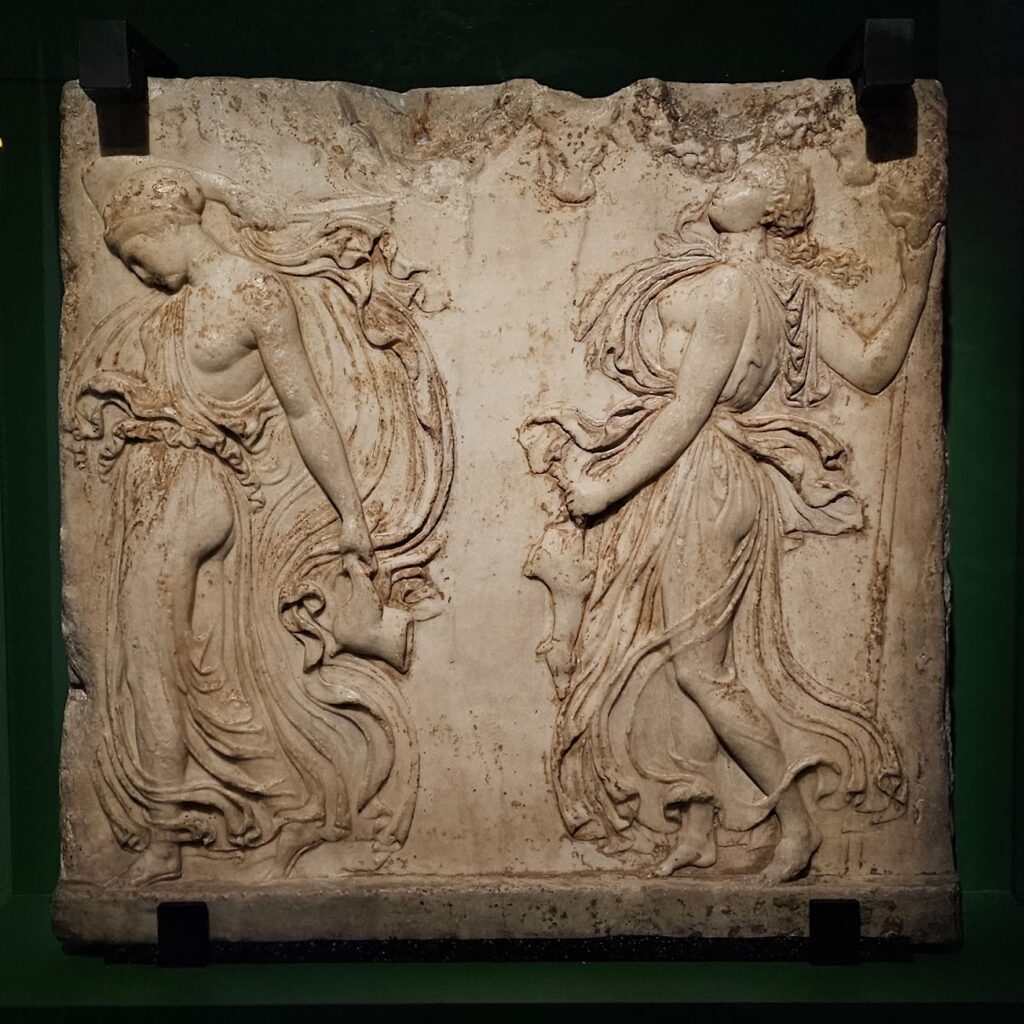
Children torn apart during orgies, mothers devouring their offspring, a god of wine slaking his thirst with blood. Over the centuries, these images have clung to Dionysus (Bacchus to the Romans), the most elusive of the gods. But behind the sensational tale, the historical traces are slim: scarce sources, often late or partisan, from Livy to Plutarch, and a long chain of interpretations.
For more than forty years, scholars have gradually dissected this ancient rumour: that of a cult in which children were supposedly eaten.
A myth of horror and rebirth
It all begins with a myth: the dismemberment of the infant Dionysus by the Titans. The story, handed down in the Orphic tradition (preserved by testimonies of different dates, notably those of Clement of Alexandria and the Neoplatonists[1]), tells how the young god is lured with toys, captured, cut up, boiled and roasted, then eaten before being reborn. To avenge him, Zeus strikes the Titans with his thunderbolt. Only Olympiodorus, in the sixth century, adds that humankind is born from the soot of their bodies, compounded of divine flesh and criminal dust.
This, it is believed, would be the origin of a bloodthirsty cult.
But for Maria Daraki, author of L’enfant dionysiaque (1981), it is a cosmic allegory: the god’s death is merely one stage in the cycle of life.
“The god receives as a sacrifice his own childlike form”, she writes, stressing that destruction and rebirth answer each other like two moments of a single movement. In this view, the “child stew” has nothing criminal about it: it is a metaphor for the regeneration of the world.
Symbolic violence
In Le sacrifice humain en Grèce ancienne (1994), Pierre Bonnechere disputes that the Dionysian legends prove the existence of historical human sacrifice. The Greek words sparagmós (σπαραγμός, “tearing apart”)[2] and ōmophagía (ὠμοφαγία, “eating raw”)[3] are not enough to establish a practice involving humans. He does not, however, rule out occasional dismemberment and consumption of raw flesh involving animals.
In his view, Dionysian sacrifice is a mirror of the Greek city: myths and rites stage a temporary inversion of norms that helps to reaffirm the social order.
The guilty mothers
Yet in tales of family murders, the horror often centres on women.
The image of the bacchant mothers –Agave at Thebes, the Minyads of Orchomenus, or the women of Argos seized by the madness of the Proetids– has largely fed the legend. In these tragic tales, high-ranking women, struck by Dionysian frenzy, leave their homes, crowned with ivy and armed with the thyrsus, to make for the mountain. There, intoxicated by the god, they believe they are celebrating sacred mysteries; but ecstasy turns to horror: thinking they are tearing apart a fawn, they rip their own child to pieces.
Thus Agave, sister of Semele, tears apart her son Pentheus in the Bacchae of Euripides[4], believing she is killing a lion (the tragedy does not say that she eats him).
The Minyads, the three daughters of King Minyas, refuse to take part in the cult. To punish them, Dionysus inspires in them a vengeful madness: they tear to pieces Hippasus, the son of one of them, Leucippe, and are then transformed into a bat and two night birds[5].
Daraki shows that these stories belong to the moral discourse of the city: they serve to denounce women’s cults and to set an orderly male sacrifice against the savage violence of women. The ritual killing of the child thus becomes the symbol of a tamed disorder.
Stéphanie Wyler, in her study Des ragoûts d’enfants dans les orgies dionysiaques? (2012), points out a decisive detail: in these myths, the mothers kill, but they do not eat. Only one ancient text attributes such a meal to them, the Library of Pseudo-Apollodorus, concerning the women of Argos.
Salamis and the “human sacrifice”
Some ancient authors sought to give substance to this mythical violence. Plutarch thus relates that before the battle of Salamis, Themistocles is said to have sacrificed three young Persians to Dionysus Omestès (“eater-of-raw-flesh”)[6]. Pierre Bonnechere sees it as no more than a “so-called” sacrifice. Although he draws on an earlier source, Phanias of Lesbos, Plutarch was writing nearly six centuries after the battle. The victims are prisoners of war described as “young men”, with no indication of age.
The god and his victim
From mothers led astray by trance to priests accused of crimes, everything comes back to a play of boundaries. The cult of Dionysus readily blurs limits.
In several traditions, the god receives animal victims that resemble him: a kid for Dionysus Eriphios (“the kid”). As a bull-god, whom the Argives call Bougenès (“born of a cow”), he also receives calves: on Tenedos, Aelian reports[7], a pregnant cow is treated like a woman in childbed after calving; her calf is shod in buskins, then sacrificed to the god called anthrôporraistès (“dismemberer of humans”).
For Daraki, this fusion of god and offering reflects a religious logic: each sacrifice symbolically repeats the god’s death and rebirth. She also sees in it a substitution: the city channels Dionysian violence by transposing it onto the animal world. The cruelty remains, but in a tamed form.
Rome, fear and scandal
When the cult reaches Rome, fear takes on a new face.
The Bacchanalia, severely repressed and regulated in 186 BCE, are described by Livy as mixed gatherings of men and women of every rank, including young people. The historian paints a scene of nocturnal debauchery:
“The violence remained hidden, for amid the howling and the din of drums and cymbals, no voice of those crying for help in the midst of rapes and murders could be heard.”[8]
Further on, reporting the statements of Hispala Faecenia, a freedwoman and renowned courtesan, he goes on to add, as if to finish frightening his reader:
“Those who could not bear dishonour and were reluctant to commit crime were slaughtered as sacrificial victims.”[9]
This double register –orgy and sacrifice– is enough to turn a popular cult into a threat to the city.
Wyler stresses that the account of these crimes and debaucheries justifies the senatorial repression, probably motivated by political and religious concerns tied to civic order. She also denounces a slippage: Livy’s young people have been equated by modern interpreters with the small children of initiation imagery, although the text does not warrant this connection.
These accusations have often been read as Rome’s way of projecting savagery onto the other. In his thesis Eating People Is Might (2022), Christopher Weimer takes the opposite view. In his opinion, it is unlikely that these accusations were invented out of thin air: they arise within the same culture as those who make them, and Bacchus has been honoured in Italy for centuries. Moreover, the Senate targets not the god but his followers, whose power it fears. Livy speaks of murders and sacrifices, never of cannibal feasts. Already in the myths, Dionysus is a figure of domination: he is feared not for his feasts but for his strength. Cannibalism is no longer an act: it is a metaphor for devouring power.
A legend, not a crime
Of the Dionysian “child stews”, nothing remains but myths, fears and images. No reliable ancient source describes an actual child sacrifice. What was long taken for testimony is merely a symbolic discourse on violence, gender and power.
For Daraki, the myth expresses the circulation of life; for Bonnechere, the mastering of disorder through the temporary inversion of norms; for Wyler, the making of a legend; for Weimer, the expression of a power that devours.
In this imaginary world, Dionysus appears as a god of the mingling of forms, beings and boundaries.
The real scandal is not that children were eaten in his honour, but that people dared to conceive of a deity capable of swallowing up every opposition: life and death, human and beast, victim and god.
Modern studies consulted
- M. Daraki, L’enfant dionysiaque, Raison Présente, no. 59, 1981.
- P. Bonnechere, Le sacrifice humain en Grèce ancienne, Liège, PULG, 1994.
- P. Bonnechere, Victime humaine et absolue perfection dans la mentalité grecque, in Sacrifices humains. Perspectives croisées et représentations, Liège, Presses universitaires de Liège, 2013, pp. 21–60.
- S. Wyler, Des ragoûts d’enfants dans les orgies dionysiaques?, in S. Dubel and A. Montandon (eds), Mythes sacrificiels et ragoûts d’enfants, Clermont-Ferrand, Presses universitaires Blaise Pascal, 2012.
- C. Weimer, Eating People Is Might: Power and the Representation of Anthropophagy in Antiquity, City University of New York, 2022.
[1] Clement of Alexandria, Protrepticus, 2, 17, 2 and 18, 1 (fragments 34–35 Kern):
Τὰ γὰρ Διονύσου μυστήρια τέλεον ἀπάνθρωπα· ὃν εἰσέτι παῖδα ὄντα ἐνόπλῳ κινήσει περιχορευόντων Κουρήτων, δόλῳ δὲ ὑποδύντων Τιτάνων, ἀπατήσαντες παιδαριώδεσιν ἀθύρμασιν, οὗτοι δὴ οἱ Τιτᾶνες διέσπασαν, ἔτι νηπίαχον ὄντα […]. οἱ δὲ Τιτᾶνες, οἱ καὶ διασπάσαντες αὐτόν, λέβητά τινα τρίποδι ἐπιθέντες καὶ τοῦ Διονύσου ἐμβαλόντες τὰ μέλη, καθήψουν πρότερον· ἔπειτα ὀβελίσκοις περιπείραντες ὑπείρεχον Ἡφαίστοιο.
“For the mysteries of Dionysus are utterly inhuman. While he was still a child and the Curetes were dancing around him in arms, the Titans crept in by guile; having beguiled him with childish toys, these Titans tore him apart, while he was still an infant […]. The Titans, the very ones who had dismembered him, set a cauldron on a tripod, threw in the limbs of Dionysus and first boiled them; then, having pierced them with spits, they held them over Hephaestus [the fire].”Proclus, Commentary on the Timaeus, II, p. 145, 18 sqq. Diehl (fragment 210 Kern):
ἑπτὰ δὲ πάντα μέλη κούρου διεμοιρήσαντο.
“And they divided all the boy’s limbs into seven parts.”Olympiodorus, Commentary on the Phaedo, 1, 3, Westerink edition (fragment 220 Kern):
εἶτα τὸν Δία διεδέξατο ὁ Διόνυσος, ὅν φασι κατ’ ἐπιβουλὴν τῆς Ἥρας τοὺς περὶ αὐτὸν Τιτᾶνας σπαράττειν καὶ τῶν σαρκῶν αὐτοῦ ἀπογεύεσθαι. καὶ τούτους ὀργισθεὶς ὁ Ζεὺς ἐκεραύνωσε, καὶ ἐκ τῆς αἰθάλης τῶν ἀτμῶν τῶν ἀναδοθέντων ἐξ αὐτῶν ὕλης γενομένης γενέσθαι τοὺς ἀνθρώπους.
“Then Dionysus succeeded Zeus. At Hera’s instigation, it is said, the Titans around him tore him to pieces and tasted his flesh. Zeus, angered with them, struck them with his thunderbolt; from the soot of the vapours rising from their bodies a matter was formed, from which humans were born.”[2] Euripides, Bacchae 1134–1136:
[…] γυμνοῦντο δὲ πλευραὶ σπαραγμοῖς· πᾶσα δ᾽ ᾑματωμένη χεῖρας διεσφαίριζε σάρκα Πενθέως.
“[…] His ribs were laid bare by the tearing; and each woman, her hands covered in blood, tossed Pentheus’ flesh back and forth like a ball.”[3] Euripides, Bacchae, 139, an expression taken from the chorus’s song:
αἷμα τραγοκτόνον, ὠμοφάγον χάριν […].
“The blood of the slaughtered goat, the delight of eating raw flesh […].”[4] Euripides, Bacchae 1114–1139:
πρώτη δὲ μήτηρ ἦρξεν ἱερέα φόνου καὶ προσπίτνει νιν. […] λαβοῦσα δ᾽ ὠλένης ἀριστερὰν χέρα, πλευραῖσιν ἀντιβᾶσα τοῦ δυσδαίμονος ἀπεσπάραξεν ὦμον, οὐχ ὑπὸ σθένους, ἀλλ᾽ ὁ θεὸς εὐμάρειαν ἐπεδίδου χεροῖν· Ἰνὼ δὲ τἀπὶ θάτερ᾽ ἐξειργάζετο, ῥηγνῦσα σάρκας […]
“His mother, as priestess, was the first to begin the slaughter and falls upon him. […] Seizing his left arm by the forearm, her foot braced against the unfortunate man’s ribs, she tore off his shoulder, not by her own strength: the god gave her hands that ease. Ino, on the other side, did the same work, tearing at the flesh […]”[5] Antoninus Liberalis 10:
καὶ μετ᾽ οὐ πολὺ κλήρους εἰς ἄγγος αἱ τρεῖς ἐμβαλοῦσαι ἀνέπηλαν· ἐπεὶ δ᾽ ὁ κλῆρος ἐξέπεσε Λευκίππης, ηὔξατο θῦμα τῷ θεῷ δώσειν καὶ Ἵππασον τὸν ἑαυτῆς παῖδα διέσπασε σὺν ταῖς ἀδελφαῖς. […] ἄχρις αὐτὰς Ἑρμῆς ἁψάμενος τῇ ῥάβδῳ μετέβαλεν εἰς ὄρνιθας· καὶ αὐτῶν ἡ μὲν ἐγένετο νυκτερίς, ἡ δὲ γλαῦξ, ἡ δὲ βύξα.
“Shortly afterwards, all three cast lots into a vessel and shook it. When Leucippe’s lot fell out, she vowed to offer a victim to the god and, with her sisters, tore apart Hippasus, her own son. […] Finally Hermes touched them with his wand and changed them into winged creatures: one became a bat, another a little owl, the third a horned owl.”Ovid, Metamorphoses 4, 414–415:
Tectaque, non silvas celebrant lucemque perosae nocte volant seroque tenent a vespere nomen.
“They haunt houses, not forests; hating the light, they fly by night and take their name from the late evening.” (Vesper, evening, gave vespertilio, the bat.)[6] Plutarch, Life of Themistocles 13, 2–3; 13, 5:
Θεμιστοκλεῖ δὲ παρὰ τὴν ναυαρχίδα τριήρη σφαγιαζομένῳ τρεῖς προσήχθησαν αἰχμάλωτοι, κάλλιστοι μὲν ἰδέσθαι τὴν ὄψιν, ἐσθῆσι δὲ καὶ χρυσῷ κεκοσμημένοι διαπρεπῶς. ἐλέγοντο δὲ Σανδαύκης παῖδες εἶναι τῆς βασιλέως ἀδελφῆς καὶ Ἀρταΰκτου. τούτους ἰδὼν Εὐφραντίδης ὁ μάντις, ὡς ἅμα μὲν ἀνέλαμψεν ἐκ τῶν ἱερῶν μέγα καὶ περιφανὲς πῦρ, ἅμα δὲ πταρμὸς ἐκ δεξιῶν ἐσήμηνε, τὸν Θεμιστοκλέα δεξιωσάμενος ἐκέλευσε τῶν νεανίσκων κατάρξασθαι καὶ καθιερεῦσαι πάντας ὠμηστῇ Διονύσῳ προσευξάμενον· οὕτω γὰρ ἅμα σωτηρίαν τε καὶ νίκην ἔσεσθαι τοῖς Ἕλλησιν. […] ταῦτα μὲν οὖν ἀνὴρ φιλόσοφος καὶ γραμμάτων οὐκ ἄπειρος ἱστορικῶν Φανίας ὁ Λέσβιος εἴρηκε.
“While Themistocles was sacrificing beside the admiral’s trireme, three prisoners were brought to him, very handsome to look upon and splendidly adorned with clothing and gold; they were said to be the sons of Sandauce, the king’s sister, and of Artayctes. On seeing them, at the very moment when a great, bright flame shot up from the victims and a sneeze was heard on the right, the seer Euphrantides clasped Themistocles’ right hand and ordered him to begin the sacrifice of these young men and to offer them all to Dionysus Eater-of-raw-flesh with a prayer: for thus the Greeks would obtain both safety and victory. […] This is what Phanias of Lesbos, a philosopher not unacquainted with the writings of historians, has related.”[7] Aelian, On the Characteristics of Animals 12, 34:
Τενέδιοι δὲ τῷ ἀνθρωπορραίστῃ Διονύσῳ τρέφουσι κύουσαν βοῦν, τεκοῦσαν δὲ ἄρα αὐτὴν οἷα δήπου λεχὼ θεραπεύουσι. τὸ δὲ ἀρτιγενὲς βρέφος καταθύουσιν ὑποδήσαντες κοθόρνους. ὅ γε μὴν πατάξας αὐτὸ τῷ πελέκει λίθοις βάλλεται δημοσίᾳ, καὶ ἔστε ἐπὶ τὴν θάλατταν φεύγει.
“The people of Tenedos keep a pregnant cow for Dionysus ‘dismemberer of men’; when she has given birth, they tend her like a woman in childbed. They sacrifice the newborn [the calf] after shoeing it in buskins. But the man who struck it with the axe is stoned publicly and flees as far as the sea.”[8] Livy, 39, 8, 8:
Occulebat vim quod prae ululatibus tympanorumque et cymbalorum strepitu nulla vox quiritantium inter stupra et caedes exaudiri poterat.
“What concealed the violence was that, amid the howling and the clash of drums and cymbals, none of the voices crying for help amid the rapes and murders could be heard.” (Quiritare, “to cry for help”, literally means “to call upon the Quirites”, that is, the citizens.)[9] Livy, 39, 13, 11:
Si qui minus patientes dedecoris sint et pigriores ad facinus, pro victimis immolari.
“Those who could not bear dishonour and were reluctant to commit crime were slaughtered as sacrificial victims.” (Livy is reporting Hispala’s statements here in indirect speech.)
Other articles in English from the Nunc est bibendum blog