Translated from french (please notify us of errors)
This is certainly the most mysterious of ancient beverages. Its very name sows confusion: kykeon (κυκεών)[1] , derived from a verb meaning “to stir so as to mix, to muddle”.
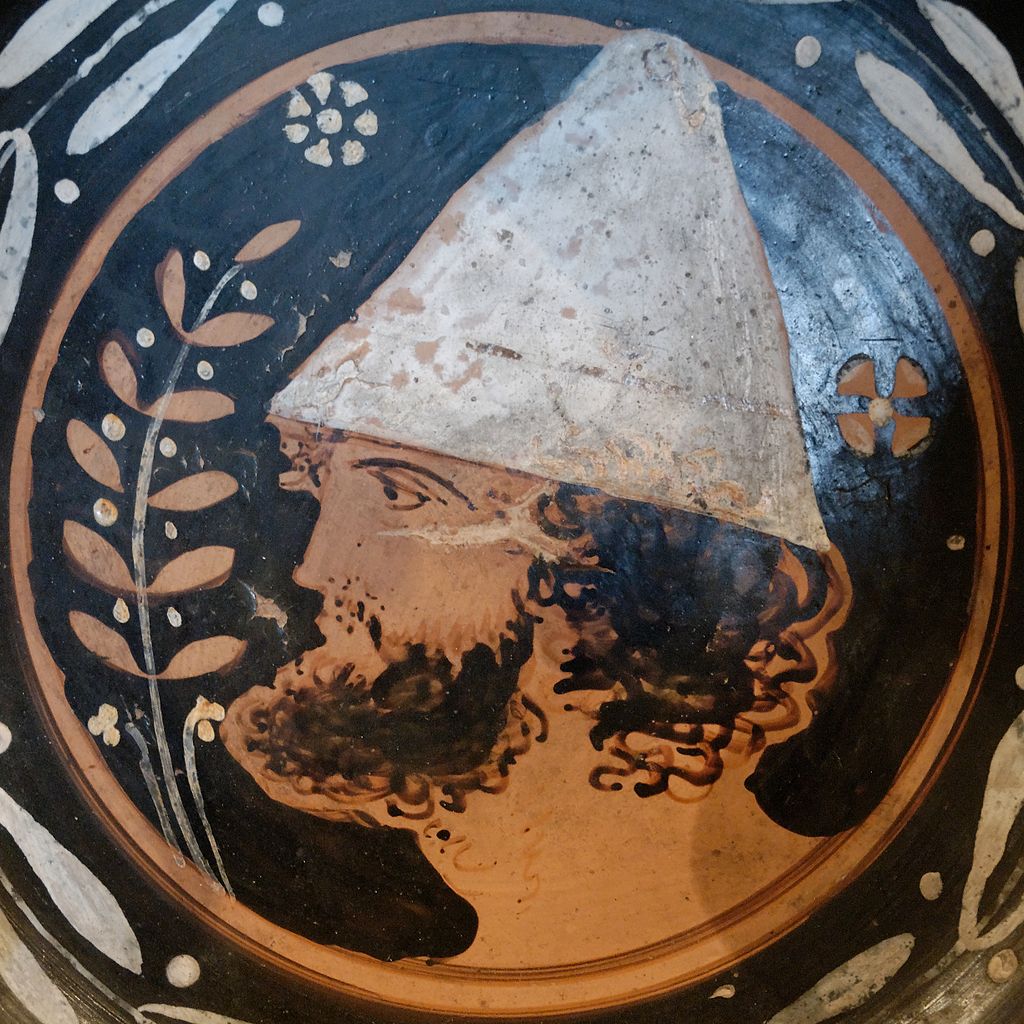
The kykeon is therefore a blend, a mixture. To discover its composition, we can go back to the Homeric narratives. In the Iliad, the valiant Greek hero Machaon is wounded by Paris, a Trojan prince. His companion Nestor then brings him back to the camp, where the captive Hecamede cares for the two men:
“In this cup, the woman resembling the goddesses prepared the mixture for them, with Pramnian wine, grated goat’s cheese with a bronze grater, and sprinkled white flour over it. Then she invited them to drink, once she had prepared the kykeon.”[2]
So there is the recipe: wine, cheese, flour. This was all it took for certain commentators to see in the kykeon the ancestor of Swiss fondue. On the shores of the Aegean Sea, however, it is hard to imagine Greek warriors gathered round a caquelon. Especially as nothing indicates that the kykeon was hot. It is much more certainly a sort of diluted porridge, whose blandness is offset by various additions: grated cheese, mint or honey.
How to disguise a witch’s potion
A second allusion to the mysterious beverage is found in a famous passage of the Odyssey. The sorceress Circe prepares to transform Odysseus’s companions into pigs. To do this, she adds her witch’s potion to the standard kykeon and, doubtless to hide its sourness, honey.[3]
Common ground between the two Homeric episodes: it is a question of giving exhausted men a drink meant to restore their strength. The kykeon is above all an energy drink.
It is no accident that Hippocrates, a Greek physician from the age of Pericles and considered the father of the discipline, praised the kykeon as a remedy against phthisis, that is to say a state of great emaciation. His recipe adds to the standard ingredients a whole series of others: parsley root, dill, rue, mint, coriander, fresh poppy, basil, lentil, juice of sweet pomegranates and of wine-like pomegranates… In a simpler version, the kykeon is also renowned for its digestive virtues.[4]
Given its basic composition, the kykeon is a beverage prized by Greek farmers and consequently, through social distancing, little appreciated by the aristocracy.
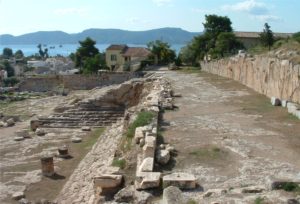
At Eleusis, the kykeon becomes a ritual drink
It is at Eleusis that the popular beverage receives its credentials. The key to the mystery is found in an archaic text, the Hymn to Demeter. This text, wrongly attributed to Homer, recounts the wandering of the goddess of the nourishing earth in search of her daughter Persephone (also called Kore), abducted by Hades, the god of the underworld.
Demeter’s quest leads her to Eleusis, some twenty kilometres west of Athens, where King Celeus reigns. There, in the guise of an old thirsty woman, she is taken in by the queen:
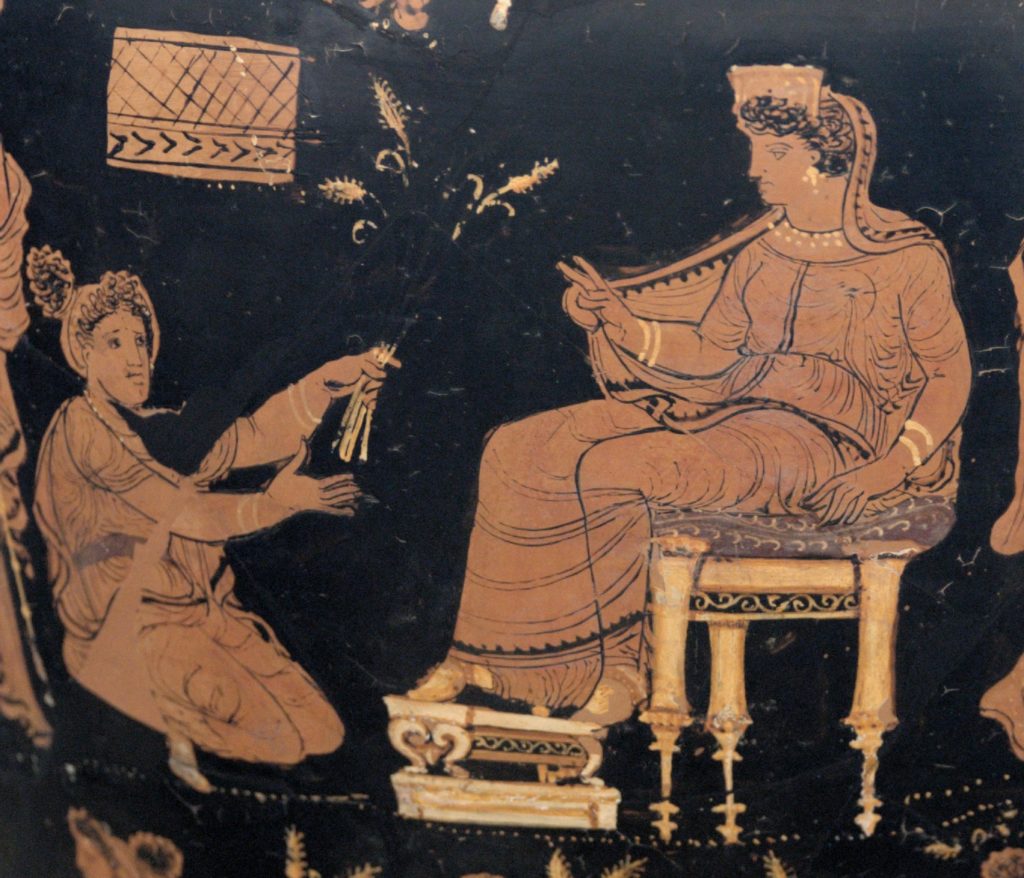
“Metaneira offered her a cup of honeyed wine. But she refused, saying that it was not permitted for her to drink red wine. She asked that they mix barley and water for her, and that they give her this mixture to drink with sweet mint. Then Metaneira prepared and gave to the goddess the kykeon as she had requested.”[5]
From this story is born one of the most famous initiatory cults of Antiquity, practised for a thousand years, from the Archaic period to the end of the Roman era, the Eleusinian Mysteries. Held in absolute secrecy, the initiates never betrayed it, so that we do not know exactly what took place in the sanctuary’s secret. Here is what could be deduced by cross-referencing the rare sources.
The Mysteries unfolded over nine days, according to the supposed duration of Demeter’s wandering. During the first days, in Athens, candidates for initiation had to purify themselves and fast. Then a great procession along the Sacred Way led them to the sanctuary of Eleusis. The secret rites of initiation then took place and finally, the candidates broke their fast by drinking the kykeon, thus reproducing Demeter’s gesture. They were now bound to her. Like Persephone, they had experienced the journey to the underworld and rebirth. For the initiate, the prospect of an individual and happy survival beyond death was now open…
But how could the initiates live through such an intense mystical experience? Could the absorption of the kykeon, after a period of fasting, have had something to do with it?
LSD and kykeon, same effects?
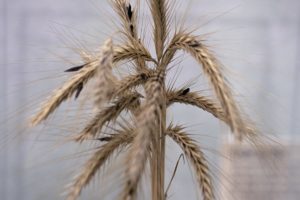
In the late 1970s, the American botanist Richard Evans Schultes and the Swiss chemist Albert Hofmann, discoverer of LSD, advanced the hypothesis that the barley flour beverage contained psychotropic substances. Indeed, like other cereals, barley is parasitised by a fungus, ergot, which contains psychedelic alkaloids. Moreover, the use of drugs during initiatory religious ceremonies is universally widespread in ancient human societies.[6]
The thesis is however contested and attempts at experimental archaeology to reproduce the hallucinogenic kykeon have so far not been very conclusive. In 2005, however, excavations at the Mas Castellar site (Girona, Spain) in a temple dedicated to the two Eleusinian goddesses brought the first concrete evidence in support of Schultes and Hofmann’s thesis. Fragments of ergot were found inside a vase as well as in the dental calculus of a 25-year-old man, which proves that he had consumed ergot.[7]
The mystery of the kykeon is therefore beginning to dissipate… it is up to the most daring of historical re-enactors to continue the quest.
[1] Sometimes spelt “cyceon”, pronounce kee-kay-on.
[2] Iliad, XI, 638-641: ἐν τῷ ῥά σφι κύκησε γυνὴ ἐϊκυῖα θεῇσιν / οἴνῳ Πραμνείῳ, ἐπὶ δ’ αἴγειον κνῆ τυρὸν / κνήστι χαλκείῃ, ἐπὶ δ’ ἄλφιτα λευκὰ πάλυνε, / πινέμεναι δὲ κέλευσεν, ἐπεί ῥ᾽ ὥπλισσε κυκειῶ.
[3] Odyssey, X, 234-236.
[4] Hippocrates, On Regimen, Book II, 41.
[5] Hymn to Demeter, 206-210: τῇ δὲ δέπας Μετάνειρα δίδου μελιηδέος οἴνου / πλήσασ’: ἣ δ’ ἀνένευσ’: οὐ γὰρ θεμιτόν οἱ ἔφασκε / πίνειν οἶνον ἐρυθρόν: ἄνωγε δ’ ἄρ’ ἄλφι καὶ ὕδωρ / δοῦναι μίξασαν πιέμεν γλήχωνι τερείνῃ. / ἣ δὲ κυκεῶ τεύξασα θεᾷ πόρεν, ὡς ἐκέλευε.
[6] Richard Evans Schultes et Albert Hofmann, Plants of the Gods: origins of hallucinogenic use, McGraw-Hill, Londres, 1979 ublished in French under the title: Les Plantes des dieux. Les plantes hallucinogènes, botaniques et ethnologiques, Éditions Berger-Levrault, Paris, 1981 ; reissued Éditions du Lézard, Paris, 1993.
[7] Juan-Stresserras, J. , & Matamala, J. C. (2005). Estudio de residuos microscópicos y compuestos orgánicos en utillaje de molido y de contenido de las vasijas [A study of the microscopic residue and organic compounds in grinding tools and jar contents]. In P. Bueno, R. Balbín, & R. Barroso (cur.), El dolmen de Toledo (pp. 235–241). Alcalá de Henares, Spain: Universidad de Alcalá.