Translated from french (please notify us of errors)

For the peoples of Antiquity, plants had multiple virtues: gustatory, but also medicinal, religious, magical and… aphrodisiac. In this last domain, three of them deserve the Pantheon.
Savory
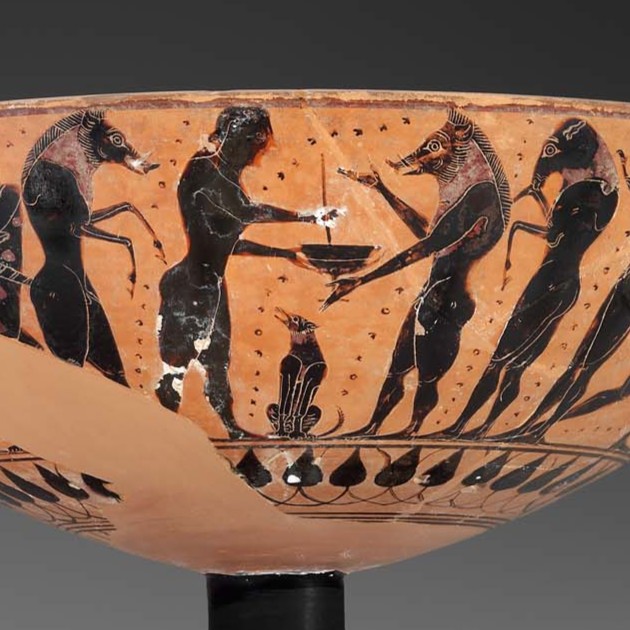
Savory (Satureja) first, a Mediterranean plant, close to thyme, used since time immemorial as a condiment. In the Greek mountains covered by its shrubs, it was according to the beliefs of the time browsed by satyrs. This gave, it was thought, boundless ardor to these lubricious creatures endowed with a man’s body, but with horns and goat’s feet. Men therefore thought they could derive the same benefit from this plant. In the first century of our era, the Roman poet Martial evokes the supposed property of the plant to mock a fellow:
“For a long time now, Lupercus, your member has been without strength;
yet, foolish one, you put everything into restoring its vigor;
but rocket, aphrodisiac bulbs,
stimulating savory are of no help to you.
You have begun to corrupt, with money, pure mouths.
This means, too, does not awaken lascivious sensations in you.
Is it not quite astonishing, quite incredible,
that it has cost you so much, Lupercus, to remain impotent?”[1].
Mint
Lupercus could also have tried to resort to mint (Mentha), a plant that the ancient Greeks, it is said, forbade soldiers to consume, so much did its intoxicating perfume melt courage and boil desire. According to Greco-Roman mythology, Minthe (Μίνθη) was a nymph living in the Underworld who had only one goal: to seduce the master of the place, Hades. So, when he forsook her for Persephone, she saw red and became a real pest. But as one should not too much seek lice on a goddess daughter of Zeus, Minthe ended up trampled and transformed into a plant. What remains is this perfume which, by crushing the mint, recalls all the seductive power of the nymph.

The perfume, yes, but not the consumption. For modern science has established that prolonged consumption of mint can decrease testosterone levels[2]. On the other hand, certain varieties of savory mentioned above contain, among their flavonoids, eriodictyol, present in small quantities and to which experimental studies attribute vasorelaxant and vasodilatory effects[3].
Crocus
The third story is the most romantic. It is that of Crocus, a young man who had two passions: playing with the god Hermes and love with the nymph Smilax. From there, the sources are multiple and fragmentary. Several versions of the myth therefore coexist[4]. Here is one: Crocus dies in an accident, causing his nymph’s despair. To save their love, the gods transform them into plants: the crocus, of course, and sarsaparilla, a climbing plant of Mediterranean regions whose leaves are heart-shaped. From the precious red stigmas of the crocus, evoking the passion for Smilax, precious saffron will be drawn[5].
According to tradition, confident in the aphrodisiac virtues of saffron, Cleopatra would have made great use of it in her baths. And what if it was not the charm of a nose, but the virtues of a spice, that had changed the course of History?
- Martial, Epigrams, Livre III, LXXV:
Stare, Luperce, tibi iam pridem mentula desit,
luctaris demens tu tamen arrigere.
Sed nihil erucae faciunt bulbique salaces,
inproba nec prosunt iam satureia tibi.
Coepisti puras opibus corrumpere buccas:
sic quoque non vivit sollicitata Venus.
Mirari satis hoc quisquam vel credere possit,
quod non stat, magno stare, Luperce, tibi?- Grant P. et al., Spearmint herbal tea has significant anti-androgen effects in polycystic ovarian syndrome. A randomized controlled trial, Phytotherapy Research 24(2):186-188 (2010).
- Rauwald et al., 1999, Vasorelaxant activity of flavonoids isolated from Satureja obovata. Journal of Pharmacy and Pharmacology, 51(6), 713–718.
- The story of Crocus and Smilax is mentioned, without details, by Pliny the Elder, Natural History, XVI.63.1, Ovid, Metamorphoses, IV.280 and Nonnus, Dionysiaca, 12.86.
- The cultivation of crocus and the harvesting of saffron is already depicted on the walls of the palace of Knossos, in Crete, around 1500 years before our era.
Other articles in English from the Nunc est bibendum blog