Translated from french (please notify us of errors)
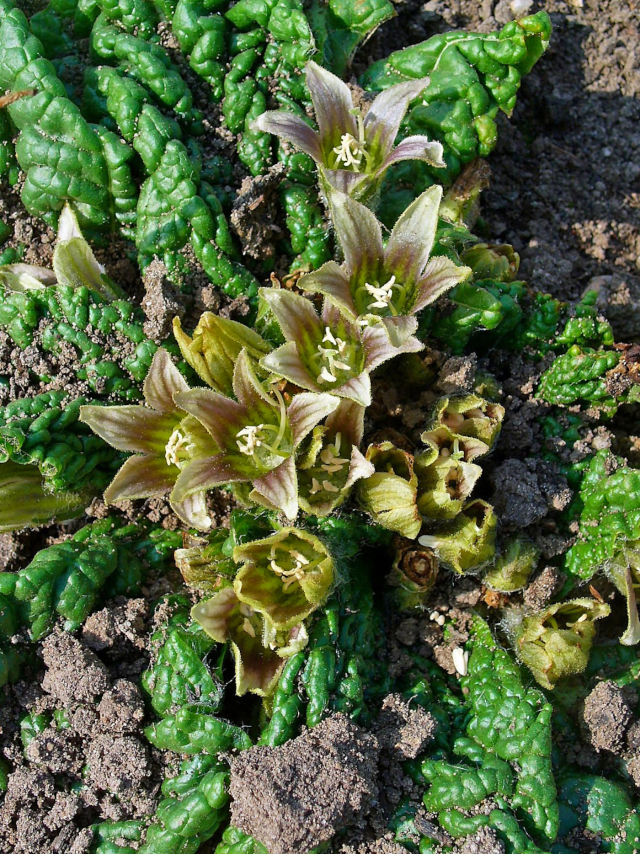
Its name is Mandragora, but the Ancients also knew it as kirkaia (κιρκαία) or Circaeon – the plant of Circe the sorceress.[1] The mandrake is one of the rare plants to have crossed the centuries with its reputation intact: mysterious, formidable, and stubbornly resistant to any who sought to seize it.
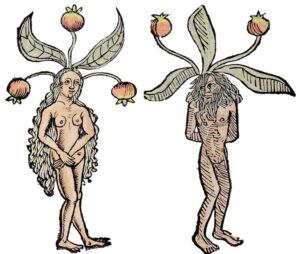
Pliny the Elder, in the 1st century of our era, gives a precise description of the mandrake: two varieties, which he designates as male and female – a distinction that corresponds to no botanical reality, the mandrake not being a dioecious plant –, reddish fleshy roots, and fruits the size of a hazelnut.[2] He follows in the tradition of Theophrastus, who had been the first to record its therapeutic properties: the leaf for wounds, the root against gout and erysipelas, and a use to induce sleep.[3]
But it is Pliny who draws up the most complete and surprisingly modern pharmacological inventory:
“Although in some regions its fruits are eaten, their overpowering smell strikes the ignorant dumb; if one drinks of it more freely, one may even die from it. Its soporific power varies according to the constitution of those who drink it; the average dose is one cyathus. It is also drunk before incisions and cauteries, so that they may not be felt; for this purpose, some have found it sufficient to seek sleep through the smell alone.”[4]
What Pliny describes here is anaesthesia – through ingestion or simple inhalation. He specifies dosages and compares the efficacy of preparations. The mandrake does indeed contain powerful alkaloids – atropine, scopolamine, hyoscyamine – whose sedative, anaesthetic, and hallucinogenic effects explain today what the Ancients had established through experience. His contemporary Dioscorides confirms the use: a decoction of root in wine is useful, he says, “when one cannot sleep, or to deaden severe pain, or before cauterising or amputating a limb”.[5]
How to enhance the aphrodisiac effect
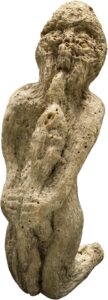
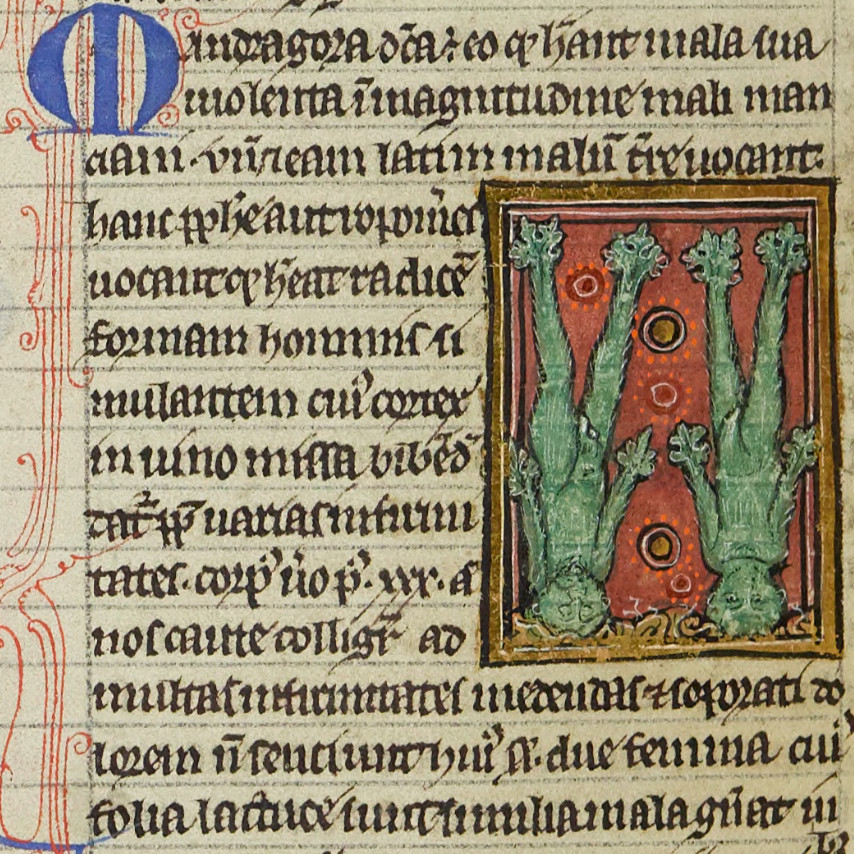
Using the mandrake is one thing. Harvesting it is quite another. Its imposing root – reddish on the outside, white within, capable of weighing several kilograms – plunges deep into the earth and often takes on a vaguely human form: a torso, legs, sometimes a head. This resemblance is not insignificant. According to the doctrine of signatures, which holds that the form of a plant reveals its uses, a root shaped like a man acts upon man.[6] It partly explains why the mandrake was regarded as a sovereign love philtre – a use that Theophrastus mentions explicitly.[7]
The harvesting ritual is commensurate with this reputation. Theophrastus, in the 4th century before our era, establishes the protocol:
“One must draw a circle around the mandrake three times with a sword, and cut it while facing west. Then, with what remains of the plant, one must dance around it and speak as many words as possible concerning the pleasures of love.”[8]
Pliny faithfully repeats these prescriptions three centuries later.[9] Every detail has its meaning. The west is the direction of the world of the dead. The mandrake, deadly, is associated with it. The triple circle drawn with the sword creates a magically enclosed space: it imprisons the demon that inhabits the plant and isolates the operation from the outside world. The sword itself must give way, for the uprooting, to an instrument of ivory or bone: iron offends the plant and risks killing it.[10] As for the words spoken of love, they belong to the principle of sympathy – activating through speech the aphrodisiac virtues of the plant one is about to harvest.
A sacrificed dog
Sometimes the plant is so formidable that any direct contact is excluded. This is what Flavius Josephus, a Roman historian of Jewish origin, describes in the 1st century, concerning a plant called baaras:
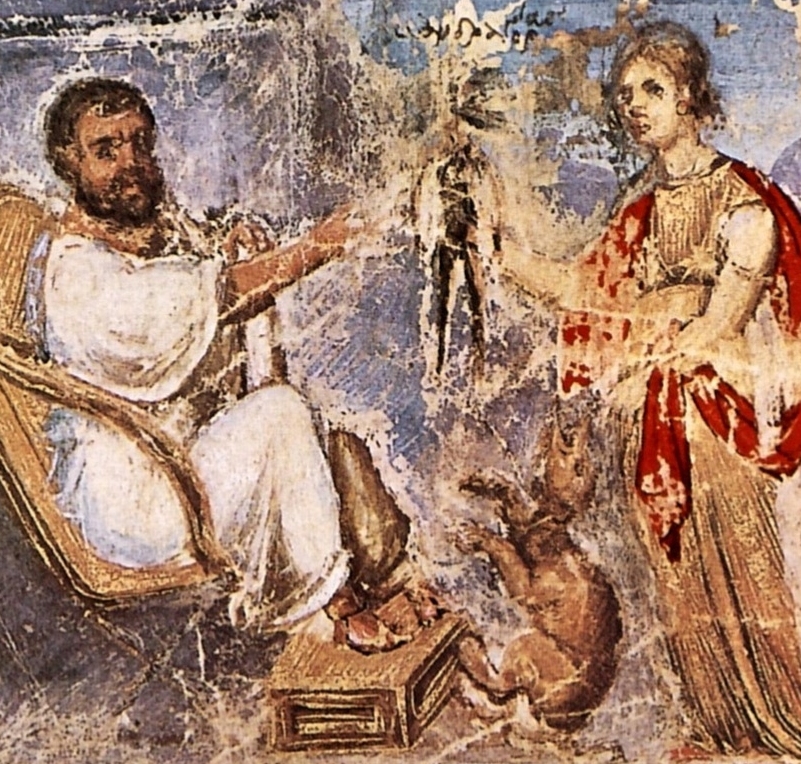
“It may be seized without danger in the following manner: one digs all around the plant, leaving only a very small part of the root still hidden. A dog is then tied to it; when the animal lunges forward to follow the one who tied it, the root is easily pulled free, but the dog dies immediately, as a substitute victim for the one who wished to remove the plant. Despite so many dangers, it is sought for a single virtue: what are called demons – the spirits of wicked men entering the living – this plant drives out swiftly, even if merely brought near the sick.”[11]
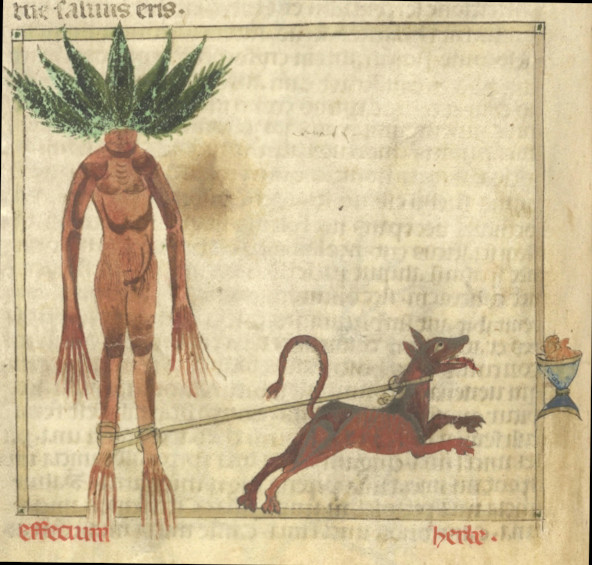
The baaras of Josephus is not formally the mandrake: Josephus does not identify it as such, and no Greek author describes this ritual for the mandrake itself.[12] But the two plants share enough traits for the Middle Ages to effect the transfer. From the early 6th century, the scene crystallises in iconography: the celebrated Codex Vindobonensis (Vienna Dioscorides), a manuscript of Dioscorides copied around 512 in Constantinople, already depicts an uprooted mandrake, whilst a dying dog, jaws agape, lies at its feet.[13]
Another motif has in the meantime grafted itself onto the myth. The Herbarius Apulei, a Latin herbal of the 4th century that was widely copied, spread the idea that anyone who hears the mandrake shriek during its uprooting risks madness or death. Hence the necessity of stopping one’s ears with wax and letting the dog bear the curse in one’s stead.[14]
The root torn from the earth of the dead, the inaudible shriek, the dying dog: motifs that modern botany has not sufficed to erase. They are found almost intact in the world of Harry Potter, where the mandrake at Hogwarts grows in human form, shrieks fatally, and heals the petrified – faithful, despite the centuries and the sciences, to its ancient reputation.
Indeed, the mandrake has known how to defend itself against oblivion too.
[1] Dioscorides, De Materia Medica, IV, 75: the mandrake is called kirkaia “because love philtres are made from its root”. Pliny also mentions the name Circaeon (H. N., XXV, 147: Mandragoran alii Circaeon vocant). The term refers to Circe, the sorceress of the Odyssey.
[2] Pliny the Elder, Natural History, XXV, 147–148. The distinction male/white and female/black most probably corresponds to two forms that modern botany names Mandragora officinarum L. and Mandragora autumnalis Bertol.
[3] Theophrastus, Enquiry into Plants, IX, 9, 1: καὶ πρὸς ὕπνον. Theophrastus (c. 371–287 BC), successor to Aristotle as head of the Lyceum, is the author of the first systematic study of the plant world.
[4] Pliny the Elder, Natural History, XXV, 150: Quamquam mala in aliquis terris manduntur, nimio tamen odore obmutescunt ignari, potu quidem largiore etiam moriuntur. Vis somnifica pro viribus bibentium; medio potio cyathi unius. Bibitur et ante sectiones punctionesque, ne sentiantur; ob haec satis est aliquis somnum odore quaesisse. The cyathus is a Roman measure of capacity equivalent to approximately 4.5 cl.
[5] Dioscorides, De Materia Medica, IV, 75,3: χρώμενοι ἐπὶ τῶν ἀγρυπνούντων καὶ περιοδυνώντων κυάθῳ ἐνὶ καὶ ἐφʼ ὧν βούλονται ἀναισθησίαν τεμνομένων ἢ καιομένων ποιῆσαι – “for those who cannot sleep and are in pain, at a dose of one cyathus, and for those in whom one wishes to produce insensibility before an incision or cauterisation”; and πλείων δὲ ποθεὶς ἐξάγει τοῦ ζῆν – “if one drinks more of it, it leads out of life.” From the 9th century onwards, the mandrake would enter into the composition of ‘soporific sponges’ (spongia soporifera) used in surgical operations – one of the first documented general anaesthesias in the history of medicine.
[6] On the doctrine of signatures and the laws of botanical magic, see our article Rooted in the cosmos, magical plants in antiquity.
[7] Theophrastus, Enquiry into Plants, IX, 9, 1: καὶ πρὸς φίλτρα – “and for love philtres.”
[8] Theophrastus, Enquiry into Plants, IX, 8, 8: Περιγράφειν δὲ καὶ τὸν μανδραγόραν εἰς τρὶς ξίφει, τέμνειν δὲ πρὸς ἑσπέραν βλέποντα· κύκλῳ περιορχεῖσθαι καὶ λέγειν ὡς πλεῖστα περὶ ἀφροδισίων.
[9] Pliny the Elder, Natural History, XXV, 148: Effossuri cavent contrarium ventum et III circulis ante gladio circumscribunt, postea fodiunt ad occasum spectantes – “Those who are about to dig it up take care against the contrary wind and first draw three circles around it with a sword; then they dig facing west.”
[10] The prohibition on iron during the gathering of magical plants is a well-attested general principle. Pliny states it with regard to the balsam tree: “it detests the touch of iron in its vital parts and dies at once” (H. N., XII, 115). For the mandrake, the prescribed instrument is a rod of ivory (Pseudo-Apuleius, Herbarius).
[11] Flavius Josephus, The Jewish War, VII, 182–185: κύκλῳ πᾶσαν αὐτὴν περιορύσσουσιν, ὡς εἶναι τὸ κρυπτόμενον τῆς ῥίζης βραχύτατον· εἶτʼ ἐξ αὐτῆς ἀποδοῦσι κύνα, κἀκείνου τῷ δήσαντι συνακολουθεῖν ὁρμήσαντος ἡ μὲν ἀνασπᾶται ῥᾳδίως, θνήσκει δʼ εὐθὺς ὁ κύων ὥσπερ ἀντιδοθεὶς τοῦ μέλλοντος τὴν βοτάνην ἀναιρήσεσθαι· φόβος γὰρ οὐδεὶς τοῖς μετὰ ταῦτα λαμβάνουσιν. ἔστι δὲ μετὰ τοσούτων κινδύνων διὰ μίαν ἰσχὺν περισπούδαστος· τὰ γὰρ καλούμενα δαιμόνια, ταῦτα δὲ πονηρῶν ἐστιν ἀνθρώπων πνεύματα τοῖς ζῶσιν εἰσδυόμενα καὶ κτείνοντα τοὺς βοηθείας μὴ τυγχάνοντας, αὕτη ταχέως ἐξελαύνει, κἂν προσενεχθῇ μόνον τοῖς νοσοῦσι.
[12] Guy Ducourthial, Flore magique et astrologique de l’Antiquité, Belin, 2003, p. 174: ‘The image of the dog tied to the root of the mandrake before extracting it from the ground is particularly well known. The scene is depicted in numerous medieval manuscripts, but no Greek author mentions this practice.’
[13] Codex Vindobonensis (Vienna, Österreichische Nationalbibliothek, cod. med. gr. 1), copied in Constantinople around 512 AD. It is one of the oldest illustrated manuscripts of medical botany still extant.
[14] Herbarius Apulei (Pseudo-Apuleius), an illustrated Latin herbal of the 4th century, widely copied and circulated until the 16th century. It is the first text to associate explicitly the mandrake’s shriek with certain death for any who hear it. The motif develops and takes on greater detail from the 9th century onwards in medieval medical literature.
Other articles in English from the Nunc est bibendum blog